Recurrent myocardial infarctions up 90.8% in a decade... Interventional cardiology society distributes guidebook for patients after discharge
- Input
- 2026-11-10 10:00:38
- Updated
- 2026-11-10 10:00:38
[Financial News] For myocardial infarction, what happens after treatment is completed and the patient is discharged matters even more. That is because the risk of recurrence is concentrated in the first year after discharge, particularly within the first three months.
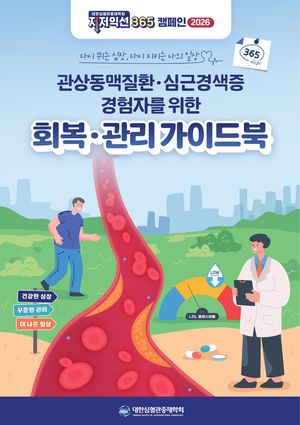
The Korean Society of Interventional Cardiology announced on the 10th that, as part of its “Lower Is Better 365 Campaign,” it had produced and would distribute a “Recovery and Management Guidebook” for patients to help people who have experienced coronary artery disease or myocardial infarction recover after discharge and prevent recurrence.
Recurrent myocardial infarctions are increasing rapidly. According to the Korea Disease Control and Prevention Agency’s “2023 Statistics on Cardiovascular and Cerebrovascular Disease Incidence,” there were 3,373 cases of recurrent myocardial infarction in South Korea in 2023, up about 90.8% from 1,768 in 2013. This is 2.5 times the increase in first-time myocardial infarctions over the same period (about 36.4%).
Preventing recurrence requires active management from the early stages after discharge. It is important to check your LDL cholesterol (LDL-C) level and target, and to consistently continue medication and healthy lifestyle habits.
The guidebook explains how to manage one’s health at each stage after discharge so that these recurrence-prevention measures can be put into practice in daily life. It lays out a step-by-step management roadmap covering one week after discharge (stabilization), one month (first outpatient visit and return to daily life), three months (reviewing targets), and 365 days (long-term management).
The guidebook places particular emphasis on checking LDL-C targets and managing levels proactively. Korean clinical guidelines recommend that patients at very high risk of cardiovascular disease, such as those with coronary artery disease including myocardial infarction, lower their LDL-C to below 55 mg/dL and reduce it by at least 50% from baseline. Since stopping medication can cause LDL-C levels to rise again and return to pretreatment levels within two to three months, the guidebook advises patients not to stop their prescribed medication on their own, even after reaching their target.
The guidebook also includes practical self-management information. It features a “My LDL-C Record” page for charting LDL-C levels at each hospital visit to check whether targets have been reached; questions to be sure to ask healthcare providers during appointments; information on stepwise drug therapy; and four heart-protective lifestyle practices, including exercise, diet, smoking cessation, and limiting alcohol consumption.
It also covers three key rules to follow after discharge—regular hospital visits, lowering LDL-C as much as possible, and managing LDL-C with appropriate medication—as well as frequently asked questions (FAQs) and management guidelines that families and caregivers can follow together. The guidebook will be distributed to member hospitals that request it through the society’s website.
Society chair Gu Bon-gwon said, “Myocardial infarction is a condition that requires ongoing management to prevent recurrence even after a patient is discharged following a procedure,” adding, “It is important for patients to know their LDL cholesterol targets and to consistently continue medication and lifestyle management.” He added, “I hope this guidebook will help patients easily understand and put into practice the care they need at each stage after discharge,” and said, “We will continue to carry out various activities through the ‘Lower Is Better 365 Campaign’ so that patients recognize the importance of preventing recurrence even after treatment and can maintain healthy daily lives.”
Earlier, in September, to mark World Heart Day, the society released a video titled “Simsim Dangbu Talk” featuring comedian Kim Su-yong, who experienced acute myocardial infarction, and Yoon Young-jin, a professor in the Department of Cardiology at Wonju Severance Christian Hospital. Drawing on Kim’s account of the onset of his illness and his experience managing his health after treatment, the video highlighted the importance of preventing recurrence, including returning to the hospital and having a lipid test as soon as possible and within one month of treatment, and keeping LDL cholesterol below 55 mg/dL. The video is available on the society’s official YouTube channel.
[email protected] Jung Myung-jin, medical correspondent Reporter