Osaka casino resort in Japan set to open in 2030... Call for Jeju to diversify its tourism market
- Input
- 2026-11-10 09:55:54
- Updated
- 2026-11-10 09:55:54
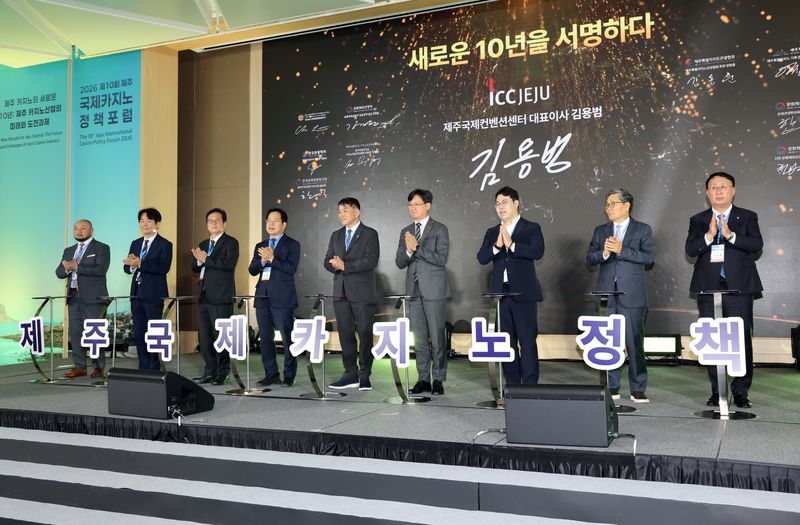
【Financial News, Jeju = Jeong Yong-bok, staff writer】With a large-scale casino integrated resort in Osaka, Japan, being developed with a target opening in 2030, calls have emerged for Jeju’s casino industry to move quickly to diversify its tourism markets and pursue a differentiated strategy.
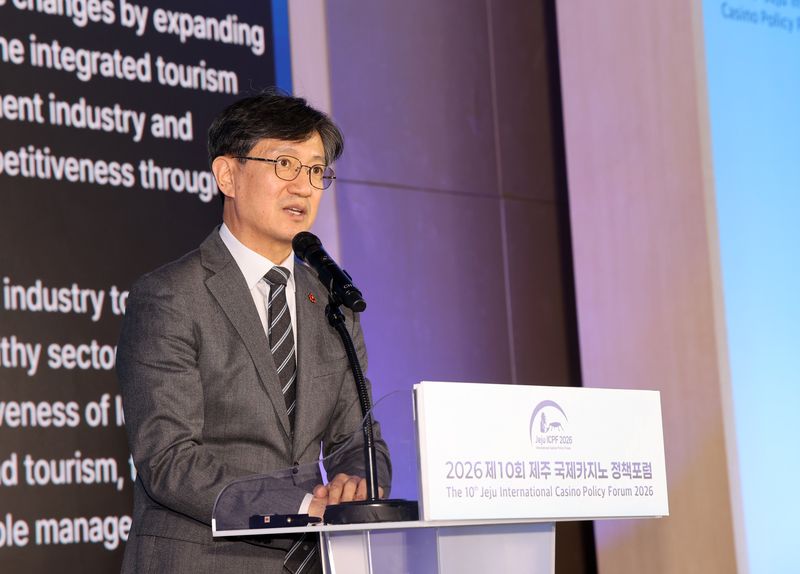
According to Jeju Special Self-Governing Province on the 10th, at the ‘2026 10th Jeju International Casino Policy Forum,’ which opened on the 9th at International Convention Center Jeju in Seogwipo City, Jeon Byeong-geuk, former First Vice Minister of the Ministry of Culture, Sports and Tourism, urged Jeju’s casino industry to diversify its markets and strengthen its competitiveness in integrated tourism.
In his keynote address, titled ‘Changes in the Global Tourism Environment and Future Strategies for Jeju’s Casino Industry,’ former Vice Minister Jeon Byeong-geuk emphasized that “competition in the international casino market is intensifying, centered on large-scale integrated resorts,” and that “a differentiated strategy is needed ahead of the opening of the Osaka integrated resort in 2030.”
He particularly proposed reducing reliance on tourism markets centered on Chinese-speaking regions and expanding the customer base to Southeast Asia, Japan and elsewhere. He also suggested combining casinos with cuisine, culture and performances, and adopting artificial intelligence (AI) and digital technologies to increase tourists’ length of stay and spending.
The Osaka integrated resort is a project to develop a casino, hotels, an international convention center, exhibition facilities, performance venues and other attractions together on Yumeshima, an artificial island in Osaka City, Japan. Osaka City is pursuing the project with the aim of opening the resort in the fall of 2030. Because it is an integrated tourism facility designed to attract not only casino patrons but also demand for accommodation, international conferences and performances, competition with Jeju to attract tourists is expected.
Jeju’s casino industry continues to grow in scale. According to Jeju Province, revenue at the province’s eight foreigner-only casinos totaled 646.5 billion won in 2025, up 40.8% from 458.9 billion won the previous year. It also surpassed the previous record of 511.2 billion won, set in 2018.
The number of foreign visitors using casinos rose 37.8%, from 662,976 in 2024 to 913,890 last year. Casino contributions also increased, from 43.1 billion won to 62 billion won. These contributions are a major source of the Jeju Tourism Promotion Fund, which is used to support tourism businesses and expand tourism infrastructure, among other purposes.
However, how much of the increase in casino revenue translates into growth across local businesses and employment needs to be examined separately. This is why calls are being made to pursue more business with local tourism companies, expand employment and spread tourist spending more broadly while responding to competition from large overseas integrated resorts.
The Jeju International Casino Policy Forum, now in its 10th edition, addressed both industry growth and shared prosperity with the local community. Hosted by Jeju Province and co-organized by the Jeju Casino Business Supervisory Committee and International Convention Center Jeju, the event drew some 300 attendees, including experts from the United States, Macau, Singapore, the Philippines and Japan, as well as casino industry representatives, civic groups and Jeju residents.
On the first day, presentations and discussions focused on three topics: sustainable growth of the casino industry and shared prosperity with the local community; expansion into tourism and entertainment; and policy responses to the shift to AI.
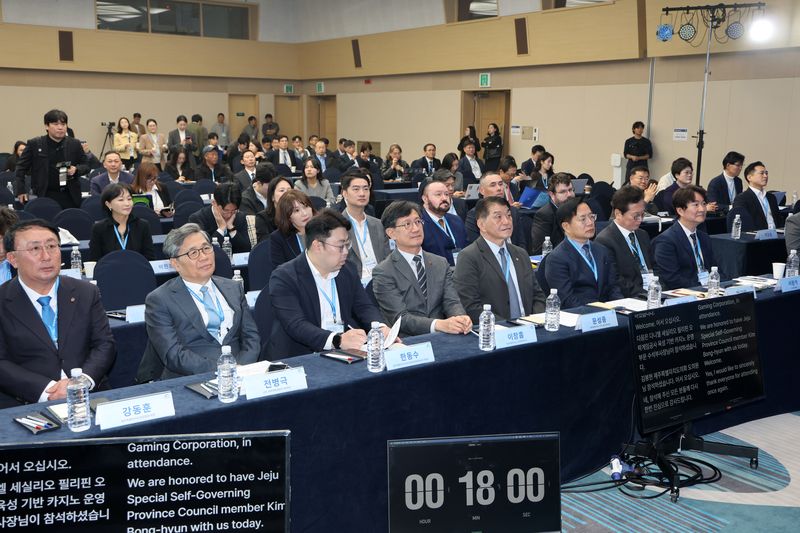
Representatives of the Nevada Gaming Control Board in the United States and the Philippine Amusement and Gaming Corporation, along with Japanese tourism experts, shared examples of casino regulation and industry operations in their respective countries. In Jeju, participants discussed the casino industry’s contribution to the local economy, ways to strengthen its public interest role, and links with the tourism industry.
The importance of management and oversight was also emphasized alongside the casino industry’s growth. Side events at the forum included demonstrations of casino gaming equipment using radio-frequency identification (RFID) technology, gambling-problem prevention outreach and screening, and job consultations with casino operators in Jeju Province. RFID is a technology that uses electronic tags to identify information about gaming equipment or chips.
Mun Seong-jong, chair of the Jeju Casino Business Supervisory Committee, emphasized that “policies that harmonize industry innovation, the public interest and social responsibility are needed if the casino industry’s competitiveness is to help revitalize the local economy.”
Hwang Gyeong-seon, director of Jeju Province’s Tourism and Exchange Bureau, said, “This forum was an opportunity to look back on the achievements of the past 10 years and explore the future direction of Jeju’s casino industry,” adding, “We will continue to strengthen international exchanges and policy cooperation so that the casino industry can grow alongside the local tourism industry.”
On the 10th, the forum’s final day, participants are scheduled to visit local attractions, including Oedolgae Rock, Saeyeongyo Bridge and Seogwipo Maeil Olle Market.
Jeju’s casino industry faces two challenges: expanding revenue and intensifying international competition. The remaining task is to develop concrete policies and implementation plans to ensure that market diversification and integrated tourism strategies lead to actual growth in local employment and tourist spending.
[email protected] Jeong Yong-bok Reporter