International oil prices plunge; merger synergies come into focus ... Airline stocks rally early [Stock Now]
- Input
- 2026-11-10 10:05:02
- Updated
- 2026-11-10 10:05:02
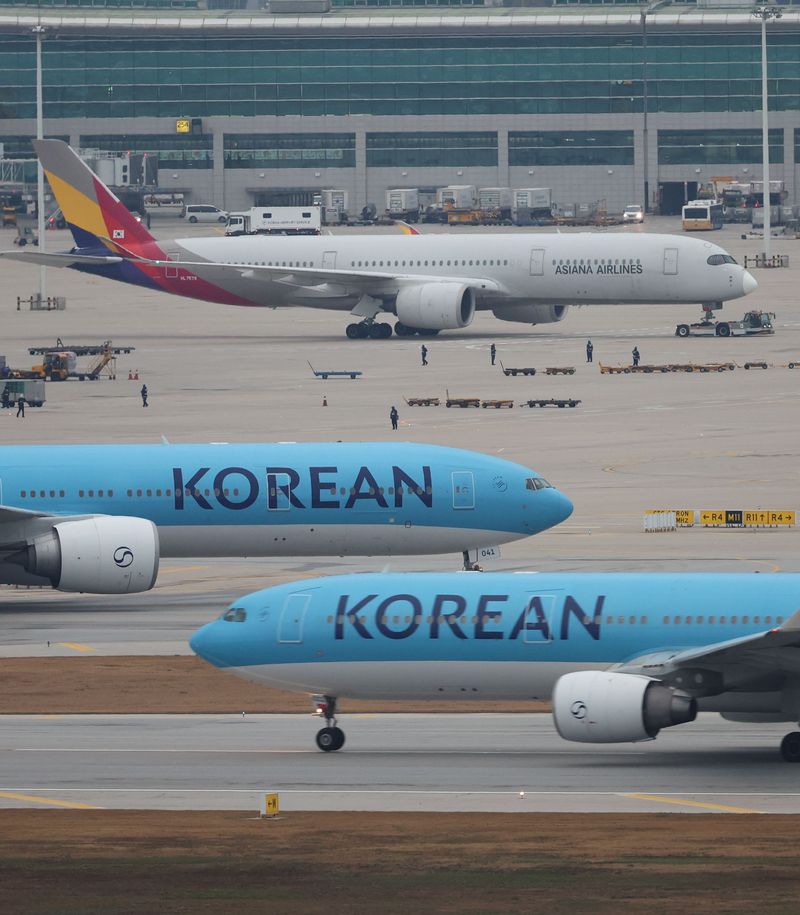
[Financial News] With the KOSPI trading higher, airline stocks are surging early in the session amid a sharp drop in international oil prices, among other factors. Expectations for merger synergies between Korean Air and Asiana Airlines have also come into focus, spreading optimism across the sector.
According to the Korea Exchange, as of 9:46 a.m. on the 10th, Korean Air was trading at 31,800 won, up 2,700 won (9.28%) from the previous trading day. Airline stocks are broadly surging, including Asiana Airlines (8.60%), Jin Air (9.43%) and Jeju Air (6.73%).
The broad gains in airline stocks today appear to reflect a sharp overnight drop in international oil prices in the global crude market, which fueled expectations of improved profitability. Brent crude oil futures, a global benchmark, settled at $92.57 a barrel, down 5.85% from the previous trading day.
Fuel costs typically account for around 30% of airlines’ total operating expenses, making them stocks whose earnings are directly linked to fluctuations in international oil prices.
Securities analysts also forecast that merger synergies between Korean Air and Asiana Airlines will begin to materialize in earnest next year.
NH Investment & Securities said today in its analysis of Korean Air that increased transfer demand through adjustments to overlapping routes and the normalization of Asiana Airlines’ international fares would drive revenue growth, while savings on ancillary costs such as maintenance and lease expenses would also materialize.
Jeong Yeon-seung, a researcher at NH Investment & Securities, said, “Passenger demand remains solid, supported by strong inbound demand and strength on routes to the Americas. Given the easing of war risks and the narrowing of the risk premium associated with maritime transport, fuel costs are also expected to stabilize at lower levels with a time lag,” adding, “Cargo capacity after integration is expected to increase by about 10% compared with this year, and revenue synergies are expected to expand gradually over the next 2–3 years.”
[email protected] Ju Won-gyu Reporter