KT reports Q3 operating profit of 505.3 billion won, down 6.1% year on year; steps up AX business
- Input
- 2026-11-10 10:23:17
- Updated
- 2026-11-10 10:23:17
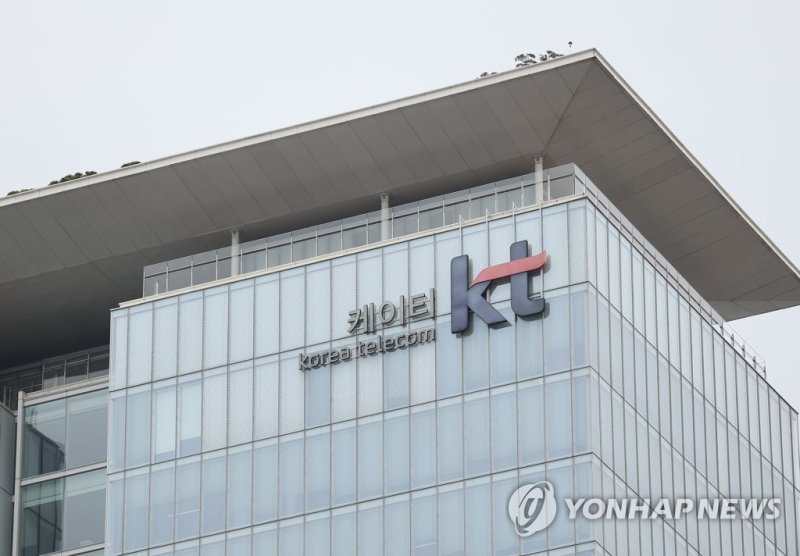
5G accounts for 83.5% of subscribers...Growth in corporate AX orders
KT said in a regulatory filing on the 10th that its consolidated operating profit for the third quarter of this year, calculated under Korean International Financial Reporting Standards (K-IFRS), was provisionally tallied at 505.3 billion won, down 6.1% from the same period last year. Revenue fell 1.8% year on year to 6.9975 trillion won, while net profit declined 17.5% to 367.3 billion won.On a standalone basis, revenue was 4.9878 trillion won and operating profit was 299.3 billion won. Operating profit was affected by costs related to a customer appreciation program that ended in July and the company’s push to expand its AX business.
Wireless service revenue fell 3.9% year on year due to the customer appreciation program. It has, however, been recovering since July, helped by the launch of flagship smartphones and increased sales of premium plans. At the end of the third quarter, 5G subscribers accounted for 83.5% of all handset subscribers.
In the fixed-line business, high-speed internet and IPTV subscribers rose 1.4% and 0.5%, respectively, year on year. The share of high-speed internet subscribers using gigabit internet climbed to 70.3%. However, total fixed-line business revenue declined due to lower home phone revenue and a drop in advertising and pay-per-view (PPV) revenue in the media business.
Orders related to AI infrastructure and AX are growing in the corporate services division. Despite growth in its enterprise internet and data business and AX business, revenue fell 0.7% year on year due to a base effect from the completion of a large-scale deployment project last year. Cumulative orders for the first three quarters, however, rose by more than 20% from the previous year.
Large-scale project orders continue to come in, particularly for AI data center (AIDC) construction and AI computing center network development. KT expects growth in its corporate business to accelerate from the fourth quarter as revenue from previously secured projects begins to be recognized in earnest.
KT fleshes out 1 GW AIDC roadmap...Steps up AI platform business
KT is expanding its AX business with a focus on supplying AI infrastructure and commercializing AI services. It plans to increase AIDC capacity to more than 1 GW by 2031. It will bring six new data centers online in stages, beginning with Bucheon Centers 1 and 2 in 2027, followed by Gaebong, Gunsan and Yongin in 2028, and Ansan in 2029.KT is also investing in its network to strengthen its global AI infrastructure capabilities. It will secure more than 90 Tbps of additional submarine cable capacity and diversify its landing station hubs, currently centered in Busan, to include Jeju and the southwestern and southeastern regions. The company also plans to connect AI edge infrastructure using around 3,500 telecom facilities nationwide, building an AI infrastructure system spanning data centers to global networks.
KT is also fleshing out its AI platform business. On the 30th of last month, it launched KT Token Factory, which integrates AI model selection, cost management, and trust and safety features. KT plans to form Korea’s first official partnership with OpenRouter, a global AI model routing platform, and expand the number of supported models to more than 500. Its partnership with Palantir is also expanding to non-financial conglomerates, following an August contract for a full-scale project in the financial sector.
Key group companies also contributed to earnings growth. kt cloud continued to grow revenue, helped by higher utilization at its Gasan data center and greater demand from public institutions for cloud migration. KT Estate’s revenue rose 39.1% year on year, driven by its Dunsan presale project in Daejeon and growth in its hotel and rental businesses.
KT is continuing its shareholder return policy. It completed a 250 billion won share buyback in September and set its third-quarter cash dividend at 600 won per share. The dividend is scheduled to be paid on the 12th.
Min Hye-byeong, KT’s chief financial officer (CFO), said, “The third quarter was a period in which we fleshed out our AX growth strategy and sustained growth at our key group companies amid changes in the internal and external business environment. Going forward, we will do our utmost to enhance corporate value as an AX platform company by restoring profitability in our core telecom business and accelerating growth in B2B and AX.”
[email protected] Yoon Hong-jip Reporter