45.4% of small businesses with Jeju-backed guarantees show signs of distress... Province steps up financial support and neighborhood commercial district recovery
- Input
- 2026-11-10 09:34:13
- Updated
- 2026-11-10 09:34:13
【Financial News, Jeju = Reporter Jeong Yong-bok】 With signs of business distress or insolvency risk identified at more than four in 10 small businesses using guarantees from the Jeju Credit Guarantee Foundation, Jeju Province is focusing its policy efforts on financial assistance and the recovery of neighborhood commercial districts.
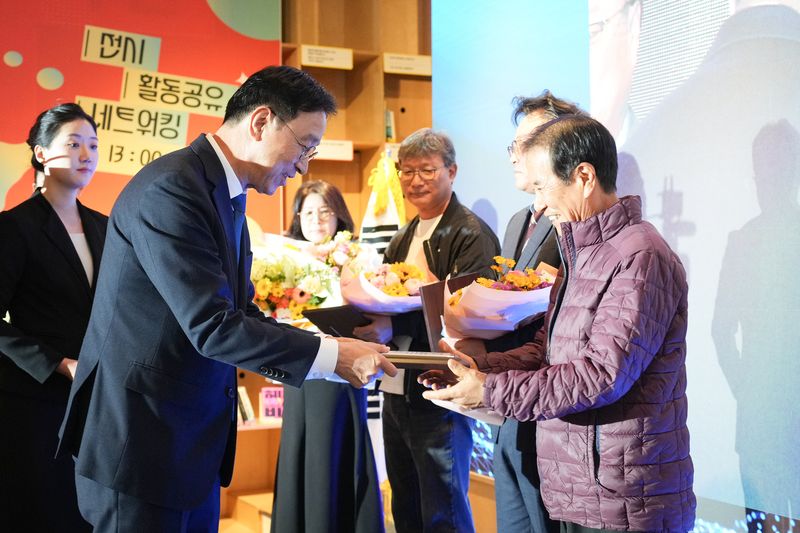
According to Jeju Special Self-Governing Province on the 10th, Governor Wi Seong-gon attended an event marking the 2026 Small Business Day, held on the 9th at the Jeju Communication and Cooperation Center in Jeju City, and stressed that stabilizing livelihoods and easing the business burdens of small businesses were priorities for the provincial administration.
“I am well aware of the hard work of small-business owners who have kept their shops open even as sales have fallen and debt has risen,” Governor Wi said. “I will make livelihood stability our top priority and focus our policy efforts on creating changes that small-business owners can feel on the ground.”
The business burdens facing small businesses in Jeju were also evident in an analysis of financial risks. Jeju Province analyzed 13,039 businesses using guarantees from the Jeju Credit Guarantee Foundation last month, classifying 5,238 as being at risk of business distress and 683 as being at risk of insolvency. The combined 5,921 businesses account for 45.4% of those analyzed. The findings apply to businesses using guarantees, not to all small businesses in Jeju.
Jeju Province is responding by linking the Livelihood Economy Situation Room, which reports directly to the governor, with an early-warning model for signs of crisis among small businesses. The model analyzes business conditions using 10 indicators, including changes in income, outstanding loan balances, credit scores and whether a business has multiple debts, and connects businesses to financial assistance, business improvement programs or debt restructuring according to their level of risk.
The province is also pursuing a plan to initially provide expert consultations and business improvement implementation grants of up to KRW 3 million per business to 65 businesses in the at-risk group.

Support programs for small businesses have also been included in next year’s budget proposal. Of Jeju Province’s total 2027 main budget proposal of KRW 8.0406 trillion, KRW 32 billion has been allocated to issuing and operating the local currency Jeju Pay, and KRW 38 billion to interest subsidies to help small businesses and SMEs stabilize their operations. The province plans to expand low-interest refinancing loans, special guarantees and business consultations as well.
The province also plans to foster alley-type shopping districts and link Jeju Pay with the public delivery app Mukkebi and easy-payment services to boost local spending. The aim is to ensure that spending flows to neighborhood shops and traditional markets rather than being concentrated in large retail facilities.
“Neighborhood commercial districts need to thrive for the local economy to thrive, and the livelihoods of residents can improve only when small businesses regain their vitality,” Governor Wi said. “We will reflect small-business owners’ voices in our policies and continue providing support to stabilize their businesses and revitalize neighborhood commercial districts.”
Around 100 people attended the event, hosted by Jeju Province and organized by the Jeju Economic and Trade Promotion Agency, including Governor Wi Seong-gon, Jeju Special Self-Governing Provincial Council Chair Song Young-houn, Jeju Province Small Business Association Chair Park In-cheol, and representatives of merchant groups and related organizations. Eight local small-business honorees received commendations, and an event was also held in support of Jeju’s bid to host the 2028 G20 Summit.
Small Business Day is a statutory observance designated under the Framework Act on Small Businesses to be held every year on November 5. Jeju Province plans to identify business risks in commercial districts across the province at an early stage and promote the recovery of the local economy and livelihoods by linking financial assistance with policies to stimulate consumer spending.
[email protected] Jeong Yong-bok Reporter