“Thumb aches after making kimchi” ... Muscle fatigue or arthritis? [Health Talk]
- Input
- 2026-11-10 09:36:20
- Updated
- 2026-11-10 09:36:20
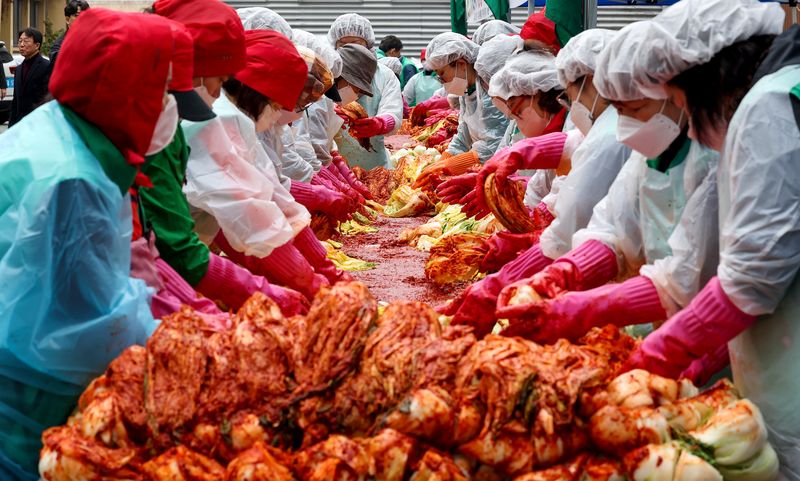
[Financial News] If the base of your thumb aches after making kimchi, it is best not to dismiss it as simple fatigue. It could be a sign of thumb carpometacarpal osteoarthritis, in which the cartilage in the joint at the base of the thumb wears down.
During kimchi-making season, people use their hands more than usual as they salt napa cabbage, mix the seasoning and prepare various ingredients. It is easy to assume that an aching wrist or pain at the base of the thumb after making kimchi is temporary fatigue from overwork. But if the pain recurs whenever you open a bottle or pick something up, you should consider seeing a doctor.
The thumb carpometacarpal joint is where the thumb’s metacarpal meets the trapezium, a wrist bone. It plays an important role in pinching and gripping objects. Because it is located at the base of the thumb, close to the wrist, pain there can easily be mistaken for a wrist condition.
Thumb carpometacarpal osteoarthritis is a degenerative form of arthritis that causes pain and restricted movement as the cartilage in this joint wears down. It usually develops with age, but repetitive movements that put force on the thumb, such as those involved in making kimchi, can increase stress on the joint, causing pain or worsening existing symptoms.
The main symptom is pain at the base of the thumb, where it meets the wrist. At first, the pain may occur intermittently only when force is applied to the thumb. As the condition progresses, however, pain can worsen even during everyday activities such as turning a key or wringing out a towel. The area around the joint may also become tender or swollen, movement may feel stiff, and grip strength may weaken.
Several conditions can cause pain around the thumb and wrist, so it is important to distinguish between them. De Quervain’s tenosynovitis is a condition in which the tendons that move the thumb and the sheath surrounding them become inflamed. It affects a different area from thumb carpometacarpal osteoarthritis, which results from degenerative changes in the joint. It causes pain and tenderness on the thumb side of the wrist, which worsens when moving the thumb or bending the wrist.
Carpal tunnel syndrome occurs when the median nerve passing through the carpal tunnel is compressed. It is characterized by tingling or numbness in the thumb, index finger and middle finger, among others. Tingling may become severe at night and wake you, and shaking your hand may briefly relieve the symptoms. It is therefore important to consider together where the pain occurs, how symptoms change with movement, and whether finger tingling is also present.
If pain at the base of the thumb keeps recurring, it is best to see an orthopedic specialist. During the examination, the doctor will check the location of the pain, joint movement and tenderness, among other things. If needed, an X-ray will be used to assess whether the joint space has narrowed or bone spurs have formed.
Treatment is determined by the condition of the joint and the severity of the symptoms. Early treatment is conservative and may include reducing activities that use the thumb, wearing a brace and taking medication. If symptoms persist despite these treatments, or joint function declines and significantly interferes with daily life, surgery may be considered.
Hong Gyeong-ho, head of the Upper Extremity Center in the Department of Orthopedic Surgery at Seran General Hospital, said, “The joint at the base of the thumb is involved in various hand functions, such as pinching and gripping objects, so pain there can make daily life much more difficult. Even if pain develops after making kimchi, don’t dismiss it as simple muscle fatigue. If the pain recurs or your grip weakens, it is best to see an orthopedic specialist to find out the cause.”
[email protected] Jung Myung-jin, Medical Correspondent Reporter