Busan Jinhae Free Economic Zone Authority: “Drawing Up a New Growth Platform to Meet Demand for Future Industries and Logistics”
- Input
- 2026-11-10 09:49:24
- Updated
- 2026-11-10 09:49:24
[Financial News] The Busan Jinhae Free Economic Zone Authority, headed by Park Sung-ho, said on the 10th, “This year, we focused on fleshing out a regional development plan to expand the free economic zone, attracting domestic and foreign investment, strengthening support for businesses, and normalizing long-standing development issues.”
The groundwork was seen as having been laid for new development projects stretching from the Tri-Port Global Integrated Logistics District to Geoje and Gimhae in South Gyeongsang Province.
As domestic and foreign companies continued to make new and increased investments, the authority established a comprehensive investment support system in cooperation with private-sector professional institutions and pursued follow-up steps to normalize the Ungdong District 1 development project.
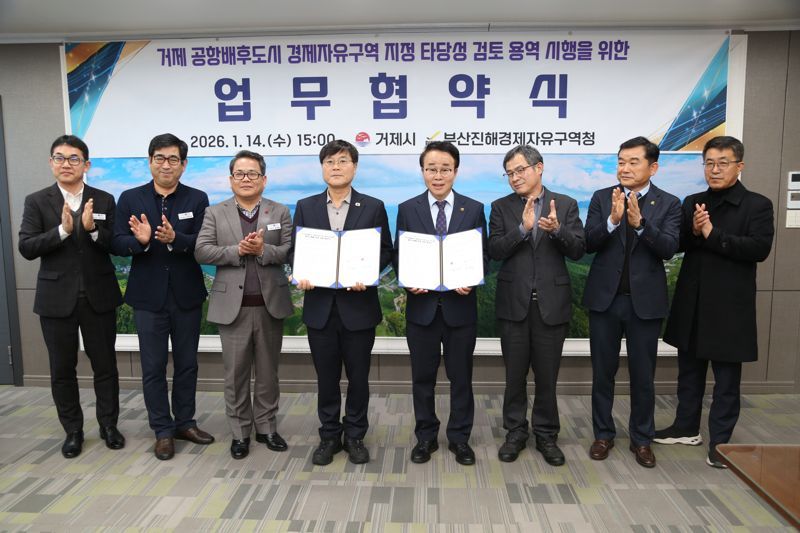
This year, the authority pursued major projects to expand the free economic zone, including the Tri-Port Global Integrated Logistics District, the Geoje Airport Hinterland City, and the Gimhae International Business City.
The Busan-Jinhae Free Economic Zone currently covers 50.28 km2 and consists of five areas and 22 districts. Its development rate has reached 98.7%. The authority has therefore begun securing new development space to meet future demand for industry and logistics.
The Tri-Port Global Integrated Logistics District, being developed across 2.86 km2 in Hwajeon-dong, Songjeong-dong and Noksan-dong in Gangseo-gu, Busan, will link Busan New Port, Gadeokdo New Airport and the rail network. After being selected as a national and regional strategic project in February last year, the authority submitted a draft development plan for the free economic zone to Busan City last month. It plans to pursue an expanded designation after completing related procedures, including preliminary consultation with the Ministry of Trade, Industry and Energy.
For the Geoje Airport Hinterland City, the authority began a feasibility study in February for a 7.40 km2 area in Jangmok-myeon, Geoje City. The study is examining demand for a hinterland city for Gadeokdo New Airport and the potential to boost tourism along the southern coast, with completion targeted for December.
For the Gimhae International Business City, the authority began a basic planning study in July this year for a 29 km2 area in Hwamok-dong, Gimhae City, and Jukdong-dong, Busan City. It plans to review development conditions and implementation options in stages through July next year.
Investment by domestic and foreign companies continued despite uncertainty in the global investment environment.
As of the end of September this year, reported foreign direct investment (FDI) totaled $300 million, of which about $258.7 million (86.2%) was in advanced industries. Domestic investment attraction totaled 32 companies and 158.2 billion won.
In April, the authority signed a foreign investment agreement worth $39 million with Busan Cable & Engineering, together with Busan City. The company plans to build its third plant in the Jisa Foreign Investment Zone in Busan to expand production capacity for specialty industrial cables and other products. In September, the authority signed an investment agreement worth about $38 million in Shanghai, China, together with South Gyeongsang Province and a Korea-China joint venture involving Taewoong Logistics Co., Ltd. The joint venture plans to build an integrated logistics center in Phase 2 of the Jinhae Ungdong Hinterland Complex by 2028.
On the 20th of last month, the authority signed investment agreements totaling 300 billion won with Dongwon Global Terminal Busan and Young Chemical, together with South Gyeongsang Province and Changwon City.
By 2028, Dongwon Global Terminal Busan will invest about 200 billion won to expand advanced port operating facilities, including automated transport equipment, in the area of the West Container Terminal at Busan New Port.
Young Chemical plans to invest 100 billion won by 2029 to build new medical supplies and cosmetics manufacturing facilities in Phase 2 of the Jinhae Ungdong Hinterland Complex. The two companies plan to create a total of 148 new jobs.
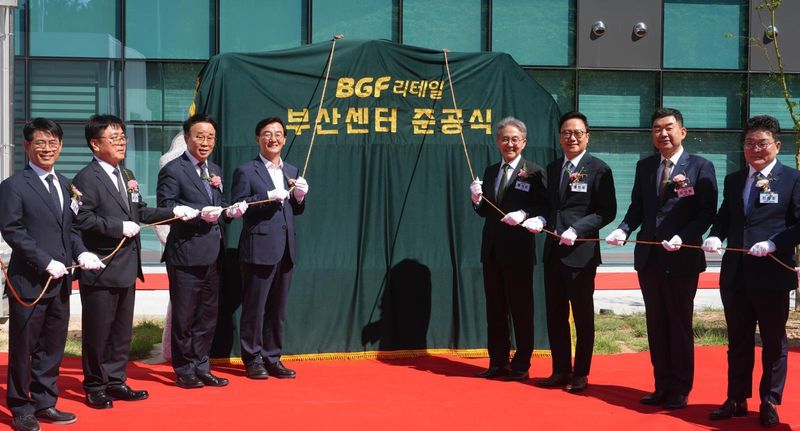
Advanced logistics facilities also began operating one after another. Lotte Mart’s Zeta Smart Center officially opened in August, followed by the opening of BGF Retail’s Busan Logistics Center in September.
The authority conducted overseas investment promotion activities in China, Taiwan, Japan and other locations. In July, it launched a council of foreign-invested companies, further strengthening cooperation with tenant companies.
This year, the authority established BJ-INVESTIA, a comprehensive investment-attraction ecosystem for business support. The name combines “Invest,” meaning investment, with the suffix “-ia,” meaning world. It is a public-private partnership that connects companies with the specialized services they need from investment review through establishment, settlement and growth.
Starting with Kim & Chang in June, the authority established cooperation with law firms Bae, Kim & Lee LLC (BKL), Sejong, Kukje and Jeongin; Samil and Seonghyeon accounting firms; the National Agricultural Cooperative Federation (NACF); and Samjong Accounting Corporation. It also expanded the range of participating institutions to include finance, customs and logistics, and human resources and labor.
The authority identifies companies’ difficulties and consultation needs and connects them with partner institutions, which then provide expert consultations, advice and preferential benefits. It plans to broaden the scope of support to include site selection and design, as well as patents and technology commercialization.
Follow-up steps are also underway to normalize the Ungdong District 1 development project. The authority is focusing on installing the remaining infrastructure, finding uses for undeveloped land, and resolving complaints related to affected fishers.
The authority is proceeding with unfinished infrastructure projects, including 1.02 km of roads and about 176,000 m2 of green space. The work, with a total budget of 18.6 billion won, completed detailed design in June this year, and contracting and construction-start procedures were carried out in September. Completion is targeted for September 2028.
For the approximately 538,000 m2 of remaining project land, the South Gyeongsang Development Corporation is conducting a basic planning and feasibility study. It plans to establish a development direction after reviewing the potential for facilities such as accommodations and cultural and leisure facilities, as well as investment demand.
The authority plans to seek solutions to complaints related to affected fishers while pursuing follow-up procedures next year, including revisions to the development and implementation plans.
Park Sung-ho, head of the authority, said, “This year, we worked to prepare new growth space to meet future demand for industry and logistics while strengthening the support system that underpins companies’ investment and establishment. We are also working with relevant organizations to find a way to normalize long-delayed development issues.”
He added, “We will continue to closely connect the industrial and logistics infrastructure of Busan and South Gyeongsang Province and create an environment where companies can continue to invest and grow. We will take responsibility for ensuring that the projects pursued this year lead to concrete results.”
[email protected] Byun Ok-hwan Reporter