Jeju proposes ‘basic dividend for residents’ from renewable energy revenue ... Funding remains a challenge
- Input
- 2026-11-10 09:28:46
- Updated
- 2026-11-10 09:28:46
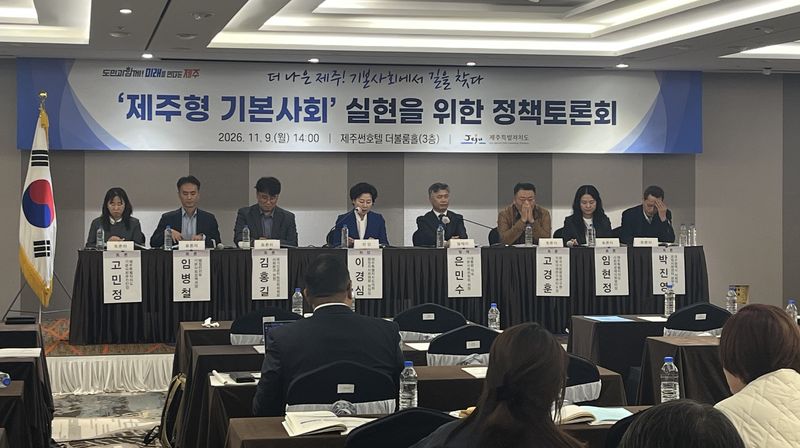
【Financial News, Jeju = Staff Writer Jeong Yong-bok】 A policy proposal has been put forward to share revenue generated by renewable energy in Jeju with residents as a basic dividend and to provide income support for young people’s care and ecological conservation activities. The proposal envisions guaranteeing basic services regardless of where people live, but securing stable funding and coordinating with existing policies were identified as challenges.
According to Jeju Special Self-Governing Province on the 10th, these proposals were discussed at the Policy Forum on Realizing a Jeju-Style Basic Society, held at Jeju Sun Hotel on the 9th. The forum, hosted and organized by Jeju Province, was attended by residents, the Jeju Special Self-Governing Provincial Council, the Presidential Committee on Basic Society, the Ministry of the Interior and Safety, and experts in the social and solidarity economy, among others.
Eun Min-su, a member of the Presidential Committee on Basic Society and president of the Korea Human Resource Development Institute for Health and Welfare, gave a presentation on the topic. Eun described a basic society as one in which everyone is guaranteed basic services and opportunities for social participation regardless of where they live. The idea is to guarantee not only cash assistance but also services needed in daily life, including healthcare, transportation and care.
The Jeju-style initiatives proposed by Committee member Eun include an energy basic dividend, demand-responsive mobility support, and participation income in youth and ecological fields.
The energy basic dividend is a proposal to share profits generated by renewable energy projects with residents. It would return to residents revenue from local energy resources such as wind and solar power, and is also linked to Jeju’s policy of sharing profits from renewable energy.
The healthcare and transportation linkage proposal would provide transport services based on residents’ travel needs, including trips to hospitals. The aim is to complement the existing transport system, which depends on fixed routes and schedules, and reduce regional disparities in access to healthcare services.
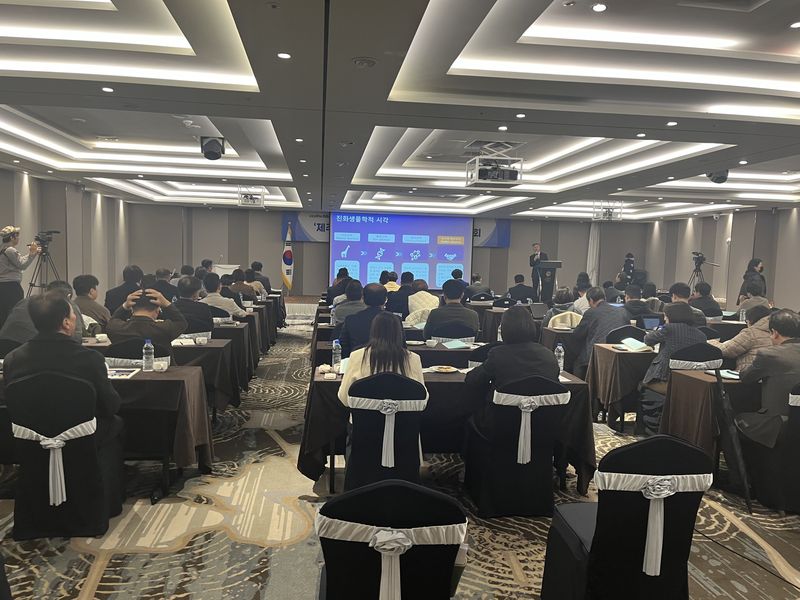
Participation income was also proposed for young people’s social care and ecological conservation activities. Participation income provides financial support to people who take part in socially necessary activities such as care or environmental conservation. It is distinct from basic income, which is paid unconditionally to all residents. These proposals share the aim of connecting local resources and social activities with residents’ livelihood security.
At the ensuing general discussion, Lee Gyeong-sim, chair of the Administrative Autonomy Committee of the Jeju Special Self-Governing Provincial Council, served as moderator. Participants included Kim Hong-gil, a member of the National AI Strategy Committee; Ko Gyeong-hun, head of the Center for Local Council Research at the Korea Research Institute for Local Administration; Lim Hyeon-jeong, director of the Jeju Province Social Economy Support Center; Park Jin-young, head of the Daegu City Social Economy Support Center; Lim Byeong-cheol, director of the Basic Society Policy Division at the Ministry of the Interior and Safety; and Ko Min-jeong, head of Jeju Province’s Basic Society Promotion Task Force.
The discussants proposed that the first step in pursuing a Jeju-style basic society should be to establish livelihood-guarantee standards with residents’ participation. They also stressed linking existing welfare, transportation and healthcare programs and reducing regional disparities in services.
In particular, participants said that stable funding, a service delivery system and possible overlap with existing policies should be reviewed in connection with participation income for youth care and support for ecological conservation activities.
Jeju Province plans to flesh out policy tasks for a Jeju-style basic society based on the discussions and incorporate them into its implementation plan. Whether individual programs will be introduced, when they will be implemented and how much funding they will receive will be decided after further review.
Ko Min-jeong, head of Jeju Province’s Basic Society Promotion Task Force, said, “This forum was an opportunity to explore ways to realize a Jeju-style basic society,” adding, “We will connect existing policies with local resources to narrow service gaps and build a basic society that residents can feel in their daily lives.”
[email protected] Jeong Yong-bok Reporter