The 'golden hour' has an address, too: Mortality rate reaches 38.8% when the hospital is an hour away [Health Check]
- Input
- 2026-11-10 08:55:06
- Updated
- 2026-11-10 08:55:06
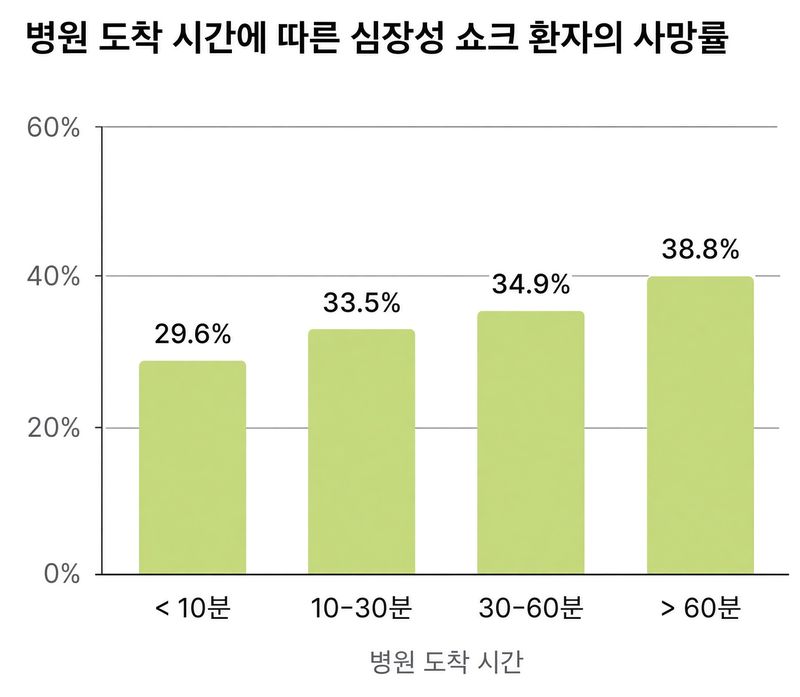
[Financial News] Cardiogenic shock patients in areas where it takes more than an hour by car to reach the nearest tertiary general hospital were nearly 10 percentage points more likely to die in the hospital than patients in areas where the hospital could be reached within 10 minutes. The farther away the hospital, the greater the risk of dying from cardiogenic shock.
A team of professors from Samsung Medical Center—Yang Jeong-hun of the Department of Critical Care Medicine, Choi Gi-hong of Cardiology, and Danbee Kang of the Center for Clinical Epidemiology—published an analysis of 80,263 adult cardiogenic shock patients newly admitted to intensive care units at tertiary general hospitals in South Korea from 2017 to 2022 in the latest issue of the international journal Critical Care Medicine, which focuses on critical care.
Cardiogenic shock is a condition in which the heart’s pumping function rapidly declines, preventing blood from circulating properly throughout the body. It is so severe that the 30-day mortality rate exceeds 40%, making it necessary to begin appropriate treatment before organs suffer permanent damage.
The research team estimated travel times to hospitals using regional average daytime travel times from Korea Transport Institute (KOTI) data, rather than individual ambulance records. Based on the time it took to travel by car during the day from a patient’s residence to the nearest tertiary hospital, they divided areas into four groups: less than 10 minutes, 10–30 minutes, 30–60 minutes, and more than 60 minutes.
The analysis found that in-hospital mortality rose in steps as travel time increased. The in-hospital mortality rate was 29.6% for patients in areas less than 10 minutes away, rising to 33.5% for those 10–30 minutes away, 34.9% for those 30–60 minutes away, and 38.8% for those more than 60 minutes away. The risk of in-hospital death in areas more than 60 minutes away was about 1.5 times that in areas less than 10 minutes away, and the difference remained after adjusting for age, severity, and whether treatment was received.
The same pattern was seen in one-year mortality. The cumulative one-year mortality rate rose from 41.4% in areas less than 10 minutes away to 52.9% in areas more than 60 minutes away. After adjustment, the relative risk was 1.31 times higher for areas more than 60 minutes away.
The trend was the same when the analysis was limited to patients who survived after discharge. The risk of death within one year of discharge for patients in areas more than 60 minutes away was 1.21 times as high. Similar results were found for shock caused by acute myocardial infarction and shock caused by other factors.
The research team stressed that the pre-hospital transport system is as important as treatment inside the hospital.
Professor Yang Jeong-hun said, "We need to build close networks among hospitals centered on cardiogenic shock hub hospitals in each region and establish a system to quickly identify critically ill patients in the field," adding, "Greater public attention and outreach are needed to treat more patients quickly."
The study was conducted with support from the Korea National Institute of Health.
[email protected] Medical correspondent Jung Myung-jin Reporter