KEF urges caution on extending the retirement age and calls for urgent amendments to the Trade Union Act... submits 19 legislative proposals to the National Assembly
- Input
- 2026-11-10 12:00:00
- Updated
- 2026-11-10 12:00:00
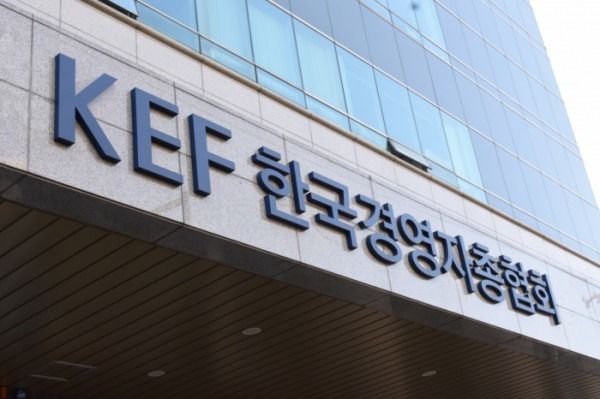
[Financial News] The Korea Enterprises Federation urged the National Assembly to carefully consider extending the statutory retirement age and introducing the Worker Presumption System, and to clarify the scope of employers under the amended Trade Union and Labor Relations Adjustment Act. The call came amid concerns that a blanket extension of the retirement age could discourage companies from hiring new workers and worsen employment difficulties for young people. It also put forward 19 legislative proposals, including enacting a Special Act on Super-Regional Special Zones to spur corporate investment and improving the Serious Accidents Punishment Act.
KEF said on the 10th that it had announced and submitted to the National Assembly a set of recommendations from the business community for the second half of 2026. KEF emphasized that, with growth in the 3% range expected for the Korean economy on the back of rising exports, an institutional foundation to support corporate investment and employment is needed to sustain that growth.
The recommendations comprise 19 proposals across three categories: bills requiring swift passage by the National Assembly, pending bills requiring careful review, and bills requiring swift introduction.
KEF first called for supplementary legislation to minimize disruption in the industrial sector following the amended Trade Union Act’s entry into force. It believes that expanding the definitions of employers and labor disputes under the amended Act could increase uncertainty in labor-management relations.
In particular, KEF argued that the scope of employers should be clearly defined as “a person with decision-making authority over working conditions sufficient to be treated as equivalent to that of the employing employer.” It also stressed that it should be made clear that the scope of labor disputes excludes matters such as the distribution of profits resulting from high-level management decisions and the assignment or reassignment of personnel. KEF said this is necessary to protect management rights and shareholder interests and prevent a decline in corporate investment.
KEF also called for the swift passage of the Special Act on Super-Regional Special Zones to attract corporate investment. It forecast that introducing measures in the bill, including improvements to flexible work arrangements and the white-collar exemption (exempting high-income professionals from working-hour regulations), would help companies expand investment and employment. It also identified improving the system for addressing unfair labor practices and clarifying provisions in the Serious Accidents Punishment Act and rationalizing the level of penalties as tasks requiring swift legislation.
By contrast, KEF said a cautious approach was needed to extending the statutory retirement age. A blanket extension, it said, could increase companies’ labor costs and reduce their capacity to hire new workers, thereby limiting employment opportunities for young people. Rather than raising the statutory retirement age across the board, KEF proposed extending employment by rehiring workers after retirement as an alternative.
KEF also expressed concern about introducing the Worker Presumption System to protect workers in special employment arrangements and others. It said the system does not fit the current labor-law framework and could increase the operating burden on small businesses and microbusiness owners, leading to job losses. KEF also classified the Basic Act for Working People and the class-action system as proposals requiring careful review.
Among the proposals requiring swift introduction, KEF listed improving procedures for changing rules of employment to reform wage systems, improving the system for holding votes on whether to take industrial action, and enacting an Industrial Accident Prevention Support Act to help prevent workplace accidents.
KEF Executive Vice Chairman Lee Dong-geun said, “I hope the National Assembly will listen to the voices on the ground about what companies truly need amid a rapidly changing business environment,” adding, “Companies will be able to strengthen their competitiveness only if measures to protect core technologies from leakage are swiftly put in place, along with expanded tax support to promote investment.”
[email protected] Kim Dong-ho Reporter