Pro-Korea figures who stress the U.S.-South Korea alliance likely to lead key foreign affairs and security committees in U.S. Congress
- Input
- 2026-11-10 07:49:17
- Updated
- 2026-11-10 07:49:17
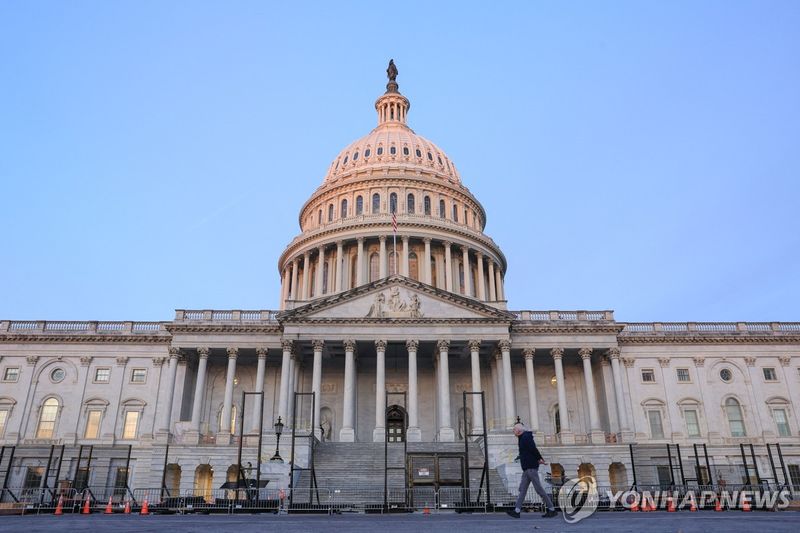
[Financial News] Following the Democrats’ midterm election victory, many lawmakers who understand the importance of the U.S.-South Korea alliance are expected to take the helm of the foreign affairs and security committees in both chambers of Congress.
With President Donald Trump intent on continuing his unilateral approach undeterred by the crushing defeat, South Korea, like other U.S. allies, could also be caught in the crossfire. Congress appears to have gained some capacity to rein him in.
However, concerns remain that Congress has limited power to curb the president’s unilateral actions and that the Democrats’ foreign policy could come into conflict with South Korea’s interests.
Concerns that Democrats’ foreign policy could conflict with South Korea’s interests
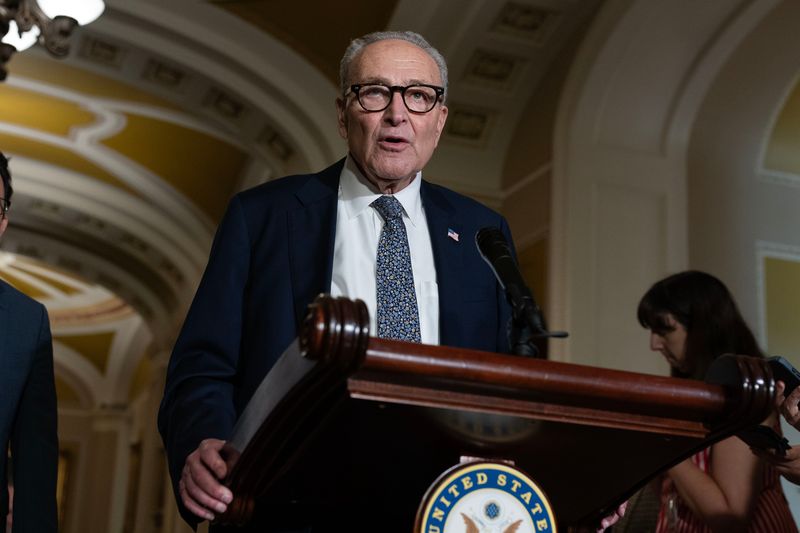
The committees in the U.S. Congress considered to have a relatively direct impact on South Korea are the foreign affairs and armed services committees.
Democratic Sen. Chris Coons, who won a fourth term in this midterm election, is the leading contender to chair the Senate Foreign Relations Committee. Sen. Jeanne Shaheen had served as the committee’s top Democrat, but announced she would not run in this midterm election.
Coons has visited South Korea several times with fellow senators and met President Lee Jae Myung in New York last September, when Lee was in the United States to attend the United Nations General Assembly.
He is also the top Democrat on the Senate Foreign Relations Committee’s Subcommittee on East Asia, the Pacific, and International Cybersecurity Policy. He is well versed in East Asia and the U.S.-South Korea alliance, having issued a statement opposing a reported consideration of reducing U.S. Forces Korea during the first Trump administration.
Sen. Jack Reed, currently the top Democrat on the Senate Armed Services Committee, is all but certain to become its chair.
Reed has already served as chair of the Senate Armed Services Committee from 2021 to 2024, making him more familiar than anyone with the Trump administration’s military-related issues, including pressure over defense cost-sharing and the possibility of changing the role of U.S. Forces Korea.
In August, when President Trump ordered a major reduction in U.S.-South Korea joint military exercises, Reed also publicly criticized him, saying, “If President Trump cuts joint exercises to flatter a dictator or punishes South Korea for not joining a war he started, both our allies and adversaries will come to believe that U.S. commitments are negotiable.”
At the House Foreign Affairs and Armed Services committees, pro-Korea lawmakers who have each previously chaired their respective committees are also expected to take the helm.
Democratic ranking member Gregory Meeks is the leading contender to chair the House Foreign Affairs Committee
Gregory Meeks, currently the top Democrat on the House Foreign Affairs Committee, is the leading contender to become its chair.
He believes the United States prospers through cooperation with its allies and clearly recognizes the importance of the U.S.-South Korea alliance. When elected chair of the House Foreign Affairs Committee in 2020, he said, “South Korea now has a friend in the U.S. House who appreciates the U.S.-South Korea alliance.”
This is a contrast with Republican Rep. Brian Mast, the current chair of the House Foreign Affairs Committee, who has few ties to South Korea and has therefore been difficult to approach.
Rep. Adam Smith, who has held the post before, is also expected to return as chair of the House Armed Services Committee.
He publicly criticized President Trump for pressuring South Korea to pay five times as much in defense cost-sharing, saying excessive demands could create unnecessary strain on the alliance. He has voiced support for the importance of the U.S.-South Korea alliance, including the role of U.S. Forces Korea.
Ami Bera, the top Democrat on the House Foreign Affairs Committee’s East Asia and Pacific Subcommittee, is the leading contender to chair it

Rep. Ami Bera, the top Democrat on the House Foreign Affairs Committee’s East Asia and Pacific Subcommittee, is expected to become its chair. The subcommittee is currently chaired by Republican Rep. Young Kim, who is Korean American.
Bera is pro-Korea and has generally taken a cooperative stance toward South Korea on Korea-related issues in the U.S. Congress.
In an interview with Yonhap News Agency in April, he offered an optimistic outlook on South Korea’s acquisition of nuclear-powered submarines and expansion of its authority to enrich uranium and reprocess spent nuclear fuel, saying, “I believe Congress will support them as well.”
It is positive that lawmakers with a deep understanding of the U.S.-South Korea alliance are taking key posts on the U.S. Congress’s foreign affairs and security committees, but it remains unclear whether South Korea’s interests will be actively reflected.
There is hope that if President Trump’s unilateral actions, following his crushing midterm defeat, spill over and affect South Korea, Congress will be able to remind him of the importance of the U.S.-South Korea alliance and put the brakes on his excesses.
However, because the president has considerable discretion in foreign and security policy, Congress has no clear means of immediately stopping President Trump if he launches heavy-handed pressure on allies.
Democrats call for tougher sanctions on North Korea and criticize its human rights situation
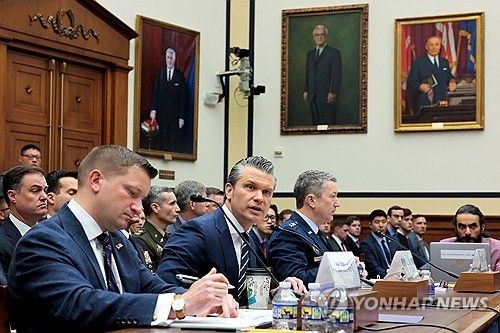
The Democrats, who oppose many of the policies and actions taken under the Trump administration, are also considering how to shape relations with South Korea with an emphasis on countering China. Another factor is that lawmakers cannot ignore opinion in their districts.
That is why Democratic control of Congress could work either for or against South Korea, depending on the issue, including efforts to block reductions in U.S. Forces Korea or expand its role, South Korea’s acquisition of nuclear-powered submarines, the construction of U.S. warships in South Korea, and the transfer of wartime operational control.
Democrats are also critical of President Trump’s willingness to resume talks with North Korea. They are expected to call for tougher sanctions, criticize North Korea’s human rights situation and take a negative stance toward Trump’s approach to North Korea.
In the House Judiciary Committee, Republican Chair Jim Jordan, who had led efforts to build public sentiment around the claim that the South Korean government discriminates against U.S. companies, using Coupang as a focal point, is set to step down.
Pressure on the South Korean government from the House Judiciary Committee may ease. However, Jordan, a close Trump loyalist, has launched a bid for House Republican leader, challenging current leader Steve Scalise.
[email protected] Lee Seok-woo, international affairs specialist Reporter