Iranian Foreign Ministry: South Korea should refrain from deploying forces to Hormuz amid fears the situation could worsen
- Input
- 2026-11-10 06:36:15
- Updated
- 2026-11-10 06:36:15
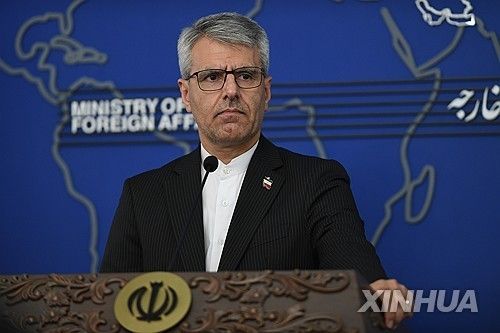
[Financial News] The Iranian government has expressed strong concern over the possibility of the Republic of Korea Navy deploying to the region to help resume traffic through the Strait of Hormuz, and has urged South Korea to refrain from getting involved.
At a regular briefing on the 9th (local time), Iranian Foreign Ministry spokesperson Esmail Baghaei was asked about the Cheonghae Unit’s expanded operational area. He said, “South Korea should refrain from deploying military forces to the region under the pretext of supporting the reopening of the Strait of Hormuz” and “should avoid getting involved in a situation that is already complicated enough.”
On relations between the two countries, spokesperson Baghaei said, “Iran and South Korea have maintained longstanding friendly ties for at least 60 years, based on mutual respect and the interests of both countries.”
He stressed, “However, the Iranian people do not want countries other than the United States, the Zionist (Israeli) regime and some of their allies—which directly or indirectly supported the recent military aggression—to side with them.”
He warned, “I hope South Korea will not align itself with the United States and others and be seen as complicit in military aggression.”
Spokesperson Baghaei added, “I hope the international community, including South Korea, will pay attention to the broad and harmful repercussions of the illegal actions by the United States and Israel,” and “I hope it will refrain from any action that could further complicate the situation in the region.”
Under pressure from the United States, the South Korean government has decided to expand the Cheonghae Unit’s area of operations to waters south of Oman, closer to the Strait of Hormuz. The unit protects commercial vessels in the Gulf of Aden off Somalia.
It has also decided to deploy additional assets, including maritime patrol aircraft, an explosive ordnance disposal team (EOD) and unmanned mine-clearance equipment.
[email protected] Lee Seok-woo, international affairs specialist Reporter