AI chip export controls to China likely to tighten; Trump also in hot water over allegations he turned a blind eye to the Jensen Huang affair
- Input
- 2026-11-10 07:04:46
- Updated
- 2026-11-10 07:04:46
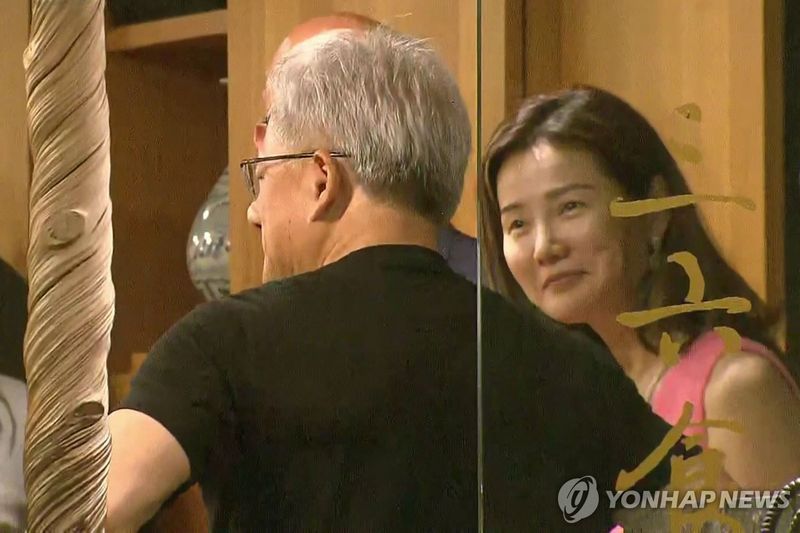
[Financial News] The possible involvement of NVIDIA CEO Jensen Huang in espionage activities by Chinese intelligence agencies has been raised, widening the reverberations to the U.S.-China rivalry for AI supremacy.
With Huang, who has advocated easing U.S. export controls on advanced AI chips, at the center of controversy, political pressure on NVIDIA’s China business is mounting, and analysts say U.S. technology restrictions on China could be tightened further.
Democrats, who won majorities in both the House and Senate in the Nov. 3 midterm elections, as well as Republicans, are raising national security concerns, making restrictions on advanced semiconductor exports to China a potentially bipartisan issue.
Sources said on the 9th that the NVIDIA affair is likely to expand into a sweeping congressional investigation of the overall U.S.-China technology relationship. It could be the first in a series of major investigations to be conducted in the House and Senate.
Some restrictions could be imposed on particular types of economic and technological exchanges between the U.S. and China, and bipartisan action on related issues is also possible.
Despite concerns within and outside the administration and Congress that exports of advanced AI chips to China could threaten national security, President Trump has pursued industry-friendly policies, including allowing exports to China of some of NVIDIA’s older chips. The incident could also put the brakes on this policy approach by the Trump administration.
Scrutiny of routes for accessing U.S.-made advanced AI chips likely to intensify

Scrutiny could intensify not only of NVIDIA’s China business but also of the routes Chinese companies use to access U.S.-made advanced AI chips through data centers in third countries.
Democrats are calling for an investigation into NVIDIA and tighter technology restrictions on China.
House Democratic Leader Hakeem Jeffries said in an interview with CBS that day that the issue would “certainly be a subject of discussion and a significant concern.”
Sen. Elizabeth Warren, the ranking Democrat on the Senate Banking Committee, earlier called in a statement for Huang to explain himself to Congress, saying, “We must pass the bipartisan legislation already in place to prevent advanced U.S. technology from ending up in China.”
Democratic senators have been urging Congress to pass bills including the AI OVERWATCH Act, which would restrict exports of advanced AI chips to China; the MATCH Act, which would regulate exports of semiconductor manufacturing equipment; and the Chip Security Act, which would require tracking the location and use of semiconductors exported overseas.
Republicans are also calling for a congressional investigation to establish the facts of the incident.
Three Republican committee chairs—House Foreign Affairs Committee Chairman Brian Mast, John Moolenaar, chairman of the House Select Committee on Strategic Competition between the U.S. and China, and Intelligence Committee Chairman Rick Crawford—sent Huang a joint letter on the 4th asking him to attend a closed-door joint briefing on the 18th.
Bipartisan Congress raises “serious national security concerns”

In the letter, they raised “serious national security concerns” about China’s access to advanced U.S. technology, stressing that “it is important for Congress to determine the extent to which U.S. national security is at risk.”
The NVIDIA affair could end up hurting China more than helping it.
Chinese technology companies such as Alibaba and ByteDance use U.S.-made advanced AI chips, access to which is restricted in mainland China, through data centers in Southeast Asia. If the U.S. blocks these routes as well, it could place a greater burden on China’s AI development.
Breakingviews predicted that the incident would put pressure on the U.S. to enforce semiconductor export controls more strictly and close loopholes in existing restrictions.
On the other hand, tighter U.S. restrictions could further hasten China’s drive for self-sufficiency in semiconductor technology.
Analysts say that if Chinese companies accelerate their shift to products from domestic companies such as Huawei to reduce their dependence on U.S.-made semiconductors, NVIDIA and other firms could lose further ground in the Chinese market.
Some observers say, however, that whether the U.S. actually tightens its restrictions will depend on U.S.-China trade negotiations and President Trump’s policy decisions.
Even after Huang admitted to having an affair with Alice Huang, President Trump defended him as “a great person” and said he would bring Huang along on his visit to China in the middle of this month for the Asia-Pacific Economic Cooperation (APEC) summit.
It cannot be ruled out that President Trump may seek a solution to the semiconductor export issue through direct talks with Chinese President Xi Jinping despite congressional pressure to tighten restrictions, making the outcome of future discussions between the U.S. and Chinese leaders another point to watch.
[email protected] Lee Seok-woo, International Affairs Specialist Reporter