Works in drawers go on display again, arranged by visitors... Photography Seoul Museum of Art’s “Taking It Out to Look”
- Input
- 2026-11-10 06:30:00
- Updated
- 2026-11-10 06:30:00
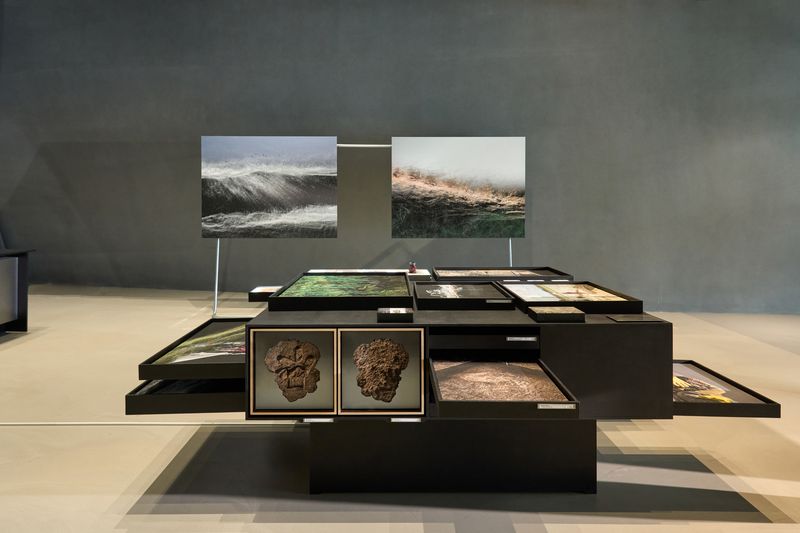
According to the Seoul Museum of Art on the 10th, “Taking It Out to Look,” a related program for Kim Young-kyung’s solo exhibition “Machine Vision: A Tactile Way of Seeing,” will take place in the first-floor lobby of the Photography Seoul Museum of Art in Dobong District, Seoul, on the 15th and Dec. 9. Both sessions run from 2 to 3 p.m.■ Photographs of farmland in drawers and a simulated excavation sceneKim Young-kyung’s installation “On a Different Table,” located in the center of the lobby, is a wooden cabinet with drawers stacked in layers. It contains about 30 works, ranging from photographs documenting farmland to images of future agriculture generated with artificial intelligence (AI).
The “Flowing Earth” series is set in a future where farmers have disappeared. In the studio, the artist created an excavation site out of papier-mâché, then photographed a scene in which a work cap and rubber boots are unearthed as relics.
During the exhibition, Kim alternately opens the drawers to show different works. Program participants decide for themselves which works to take out and where to place them.
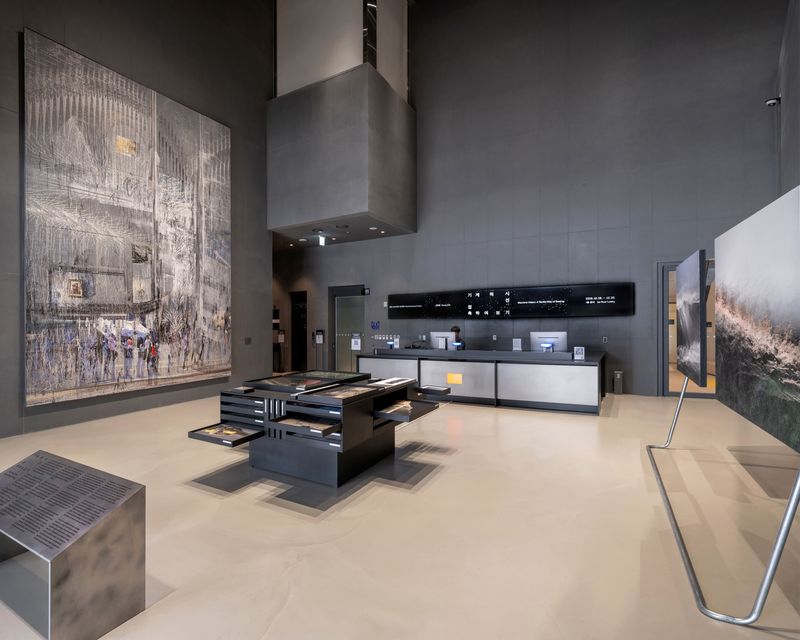
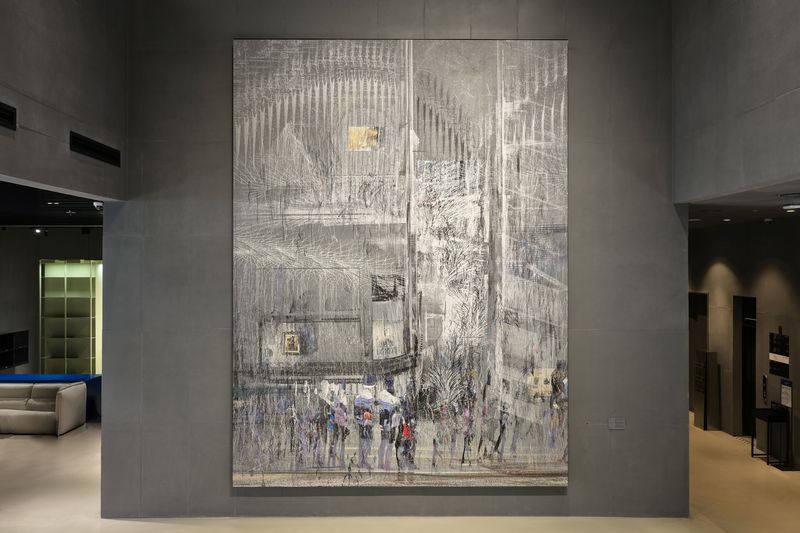
Participation is free. Ten adults aged 19 or older will be accepted for each session on a first-come, first-served basis. Applications can be submitted through the Seoul Museum of Art website until 5 p.m. on the 12th for the first session, and from 5 p.m. on Dec. 3 until 5 p.m. on Dec. 8 for the second session.■ A 5.6-meter cityscape drawn by scanning errorsOpening on the 28th of last month, this is the third installment of the “Photo Discovery Project,” which uses spaces outside the galleries. It presents 35 photographic and installation works by Kim in a lobby with curved walls and a high ceiling.
Kim incorporated LiDAR (Light Detection and Ranging), which measures space by firing a laser and analyzing the returning signal. She calls the technique of coloring coordinates obtained from an object’s surface to create a landscape “Lazography.”
Seoul Museum of Art Director Choi Eun-joo said, “I hope the experience of visitors rearranging the works themselves will offer a special opportunity to reflect on the present and future of the photographic medium.”
The exhibition is open free of charge, without a reservation, through Dec. 20. Hours are 10 a.m. to 8 p.m. Tuesday through Friday, and 10 a.m. to 6 p.m. on weekends and public holidays. Admission closes one hour before the exhibition closes. The museum is closed every Monday.
[email protected] Jang In-seo Reporter