From a house perched on the edge of a seventh-floor rooftop to a red-fabric staircase... ‘Do Ho Suh: On Site’ through documentaries
- Input
- 2026-11-10 06:00:00
- Updated
- 2026-11-10 06:00:00
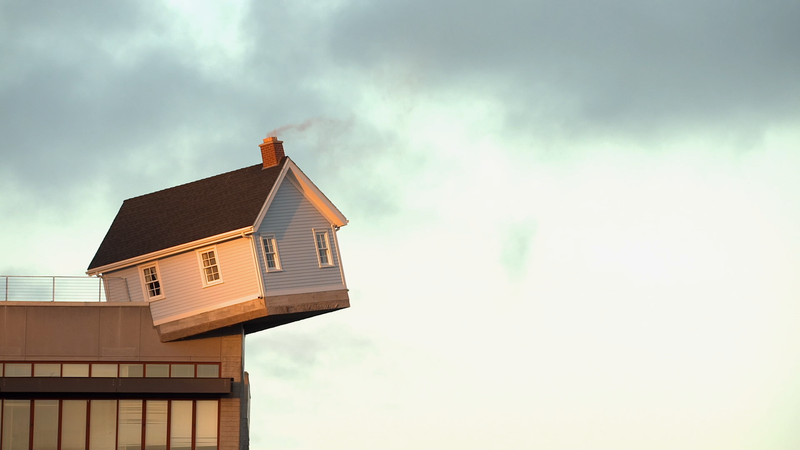
According to the National Museum of Modern and Contemporary Art, Korea, the Film and Video program ‘Do Ho Suh: On Site’ opens on the 11th at the MMCA Film and Video Gallery on the first basement level of MMCA Seoul. In conjunction with the solo exhibition ‘Do Ho Suh,’ 13 documentaries will be screened in six programs through January 10 next year.■Houses that changed the urban landscapeVera Brunner-Sung and Valerie Stadler’s ‘Fallen Star’ (2016) follows the installation of Do Ho Suh’s work of the same name (2012) on the roof of the engineering building at the University of California San Diego. The house is modeled at three-quarters scale on a home in Providence, Rhode Island. Because the slope of the floor differs from the tilt of the house as a whole, visitors’ sense of direction is unsettled when they step inside.
Speaking about collaboration in ‘Fallen Star,’ Do Ho Suh said, “I often feel that, in a way, artworks are an excuse. What matters more is how you achieve that goal.”
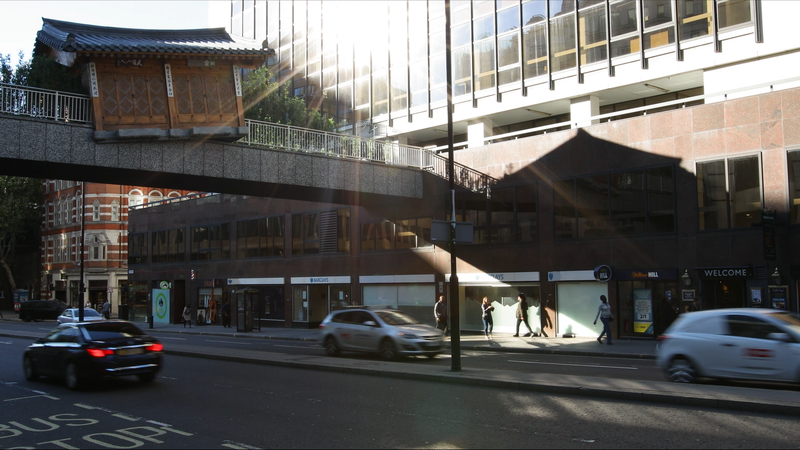
‘Bridging Home, Liverpool’ (2010) shows a hanok being fitted between two buildings. Gauthier Deblonde’s ‘Bridging Home, London’ (2024) captures the hanok taking shape atop the Wormwood Street pedestrian bridge.
‘In-Between Hotel’ (2015) features a one-person hotel built on a truck for the 2012 Gwangju Biennale and driven through alleys and parking lots.
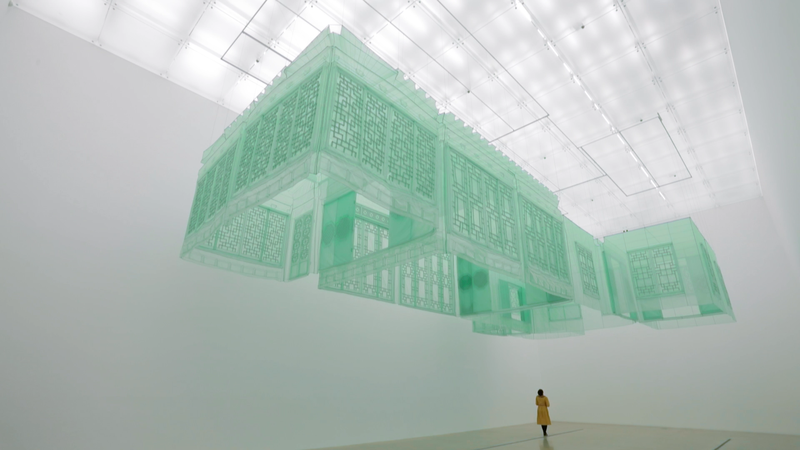
Directed by Hugh Brody, ‘A Bridge to Where?’ (2025) begins with Do Ho Suh imagining a point in the Arctic Ocean equidistant from Seoul, New York and London as the site of a ‘perfect home.’ In ‘Doreen Nutaaq Simmonds’ (2025), an Iñupiaq elder from Alaska recounts a life lived amid colonialism and climate change.
Post-screening talks will follow the sessions on December 11 at 3 p.m., December 12 at 6 p.m. and December 16 at 3 p.m. Architecture scholars Jeon Bong-Hee and Nam Seong-taek will discuss hanok; philosopher of science Kang Hyeong-gu and architect Park Kyeong will examine the ‘Bridge Project.’ Art historian Jeon Yeong-baek and curator Seol Won-ji will explore fabric architecture.
The screenings and talks are free, with capacity limited to 100 people per session. Reservations for screenings opened at 10 a.m. on the 9th. Reservations for later sessions can be made on the museum’s website on a first-come, first-served basis from 10 a.m. on the Wednesday of the preceding week. Reservations for sessions that include talks open at 10 a.m. on December 2. There will be no screening on January 1 next year.
[email protected] Jang In-seo Reporter