Child protection obligations for AI chatbot providers... ChildFund Korea urges legal amendments at National Assembly
- Input
- 2026-11-09 19:29:25
- Updated
- 2026-11-09 19:29:25
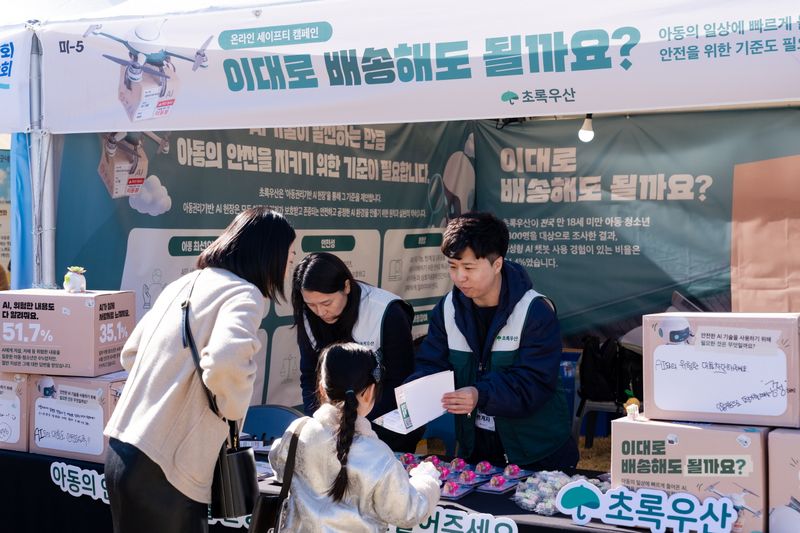
According to ChildFund Korea on the 9th, around 1,000 members of the public visited the campaign booth set up by the foundation at the “2026 National Assembly Legislative Fair,” held in Yeouido, Seoul, on the 5th and 6th. Visitors voted for the item they considered most important among the six principles of the “AI Charter Based on Children’s Rights,” including safety, transparency and personal information protection, and left comments on safe AI use.
The “Our Children’s AI Safety Package Act” highlighted by ChildFund Korea in its campaign refers to two proposed amendments to the Basic Act on Artificial Intelligence and the Act on Promotion of Information and Communications Network Utilization and Information Protection. Cho In-chul, a lawmaker from the Democratic Party of Korea (DPK), introduced the bills as lead sponsor on June 22. The amendment to the Basic Act on Artificial Intelligence would include children and adolescents among AI-vulnerable groups and require the national basic plan for artificial intelligence to include measures to prevent harm and protect them.
Under the current Act on Promotion of Information and Communications Network Utilization and Information Protection, operators of interactive services must make efforts to prevent children under 14 from encountering inappropriate information. The amendment would expand the group to be protected to include children and adolescents, and bring generative AI services specified by Presidential Decree within its scope. Operators would be required to verify that legal representatives have consented to children’s and adolescents’ use of the services and, at the request of the child or adolescent concerned or their legal representative, restrict usage time, methods and other aspects of use.
On September 8, the National Assembly’s Science, ICT, Broadcasting, and Communications Committee placed the two amendment bills on the agenda at a plenary meeting and referred them to a subcommittee.
In a survey conducted by ChildFund Korea in March among 3,300 children and adolescents aged 14 or older nationwide, 94.4% said they had used a generative AI chatbot. Around 35% also said they had felt that a chatbot was a real person. In a report in July, the National Assembly Research Service analyzed that chatbots’ ability to remember conversations and respond to emotions could lead to excessive dependence among children and adolescents.
In its online campaign “Could We Deliver It Like This?,” launched last month, ChildFund Korea likened AI technology to a parcel arriving in children’s everyday lives. The signatures collected through the campaign page are to be delivered to the National Assembly and the government.
Hwang Young-key, chair of ChildFund Korea, said, “Alongside the development of artificial intelligence (AI), we must also promptly establish the legal and institutional foundations needed to protect children’s rights and safety,” adding that they would work with the National Assembly, the government and others to create an environment where children and adolescents can use AI with confidence.
[email protected] Jang In-seo Reporter