[Editorial] The 'reconstruction excess profit recovery system' blocking housing supply must be redesigned from the ground up
- Input
- 2026-11-09 18:32:39
- Updated
- 2026-11-09 18:32:39
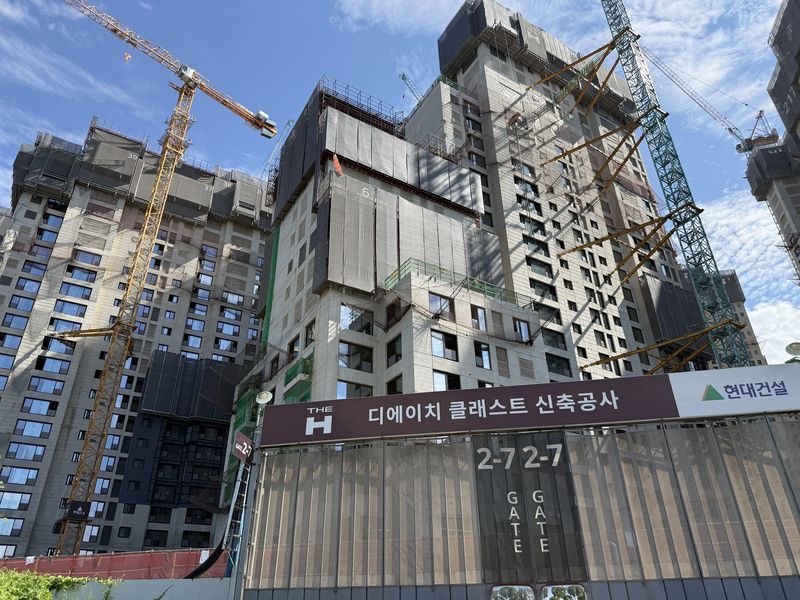
If excess profit per association member exceeds 80 million won, 10% to 50% of the amount above that threshold is levied on a progressive basis. There are 46 sites subject to the levy in Seoul alone, and each household may have to pay several hundred million won, up to around 1 billion won. With the private sector responsible for about 90% of Seoul's housing supply, the hefty levies threaten to bring reconstruction to a halt. The government and the National Assembly should redesign from the ground up a system that runs counter to policies aimed at expanding and stabilizing housing supply.
The levies for each complex are staggering. For Banpo Hyundai, whose residents moved in in 2021, the levy is estimated at around 100 million to 220 million won per member. Eunma Town Apartments in Daechi-dong, which is at the project implementation approval stage, is estimated to face an average levy of around 463.34 million won per member, or 2.0044 trillion won for the complex as a whole. The levy for Raemian Trini One, which is under construction, is estimated to reach as much as 700 million won per member. With additional contributions already ballooning due to rising material and labor costs, members who lack sufficient cash may give up moving into their homes. There are also concerns that disputes among members over their ability to pay could delay projects.
Equity concerns have also come under scrutiny. For Shinbanpo 18th in Seocho-gu, a one-to-one reconstruction project, the levy for its 178 members is estimated at 53.5 million won. By contrast, Yongmun-dong Sections 1, 2 and 3 in Daejeon, where 2,763 homes are to be built for 758 association members, is estimated to face levies of 121 million to 276 million won. The amounts thus vary sharply depending on the region and project structure. Redevelopment, another type of urban renewal project, is not subject to the levy, and it is also controversial that the levy is assessed on paper gains from homes that have not been sold. Critics say the burden is compounded when land contributions to the public and future capital gains taxes are also taken into account.
The impact could spread to projects awaiting approval. In Seoul's three Gangnam districts, 20 major projects are at stages beyond project implementation approval, while four complexes in Yeouido have completed the approval process. Another 115 projects in Seoul are at the stage of receiving approval to establish an association. If the levies turn out to be higher than expected, projects are likely to be delayed or scrapped.
The principle of recouping some development gains for society is sound. Nor should concerns that easing regulations could stoke home prices in Gangnam be taken lightly. There are also safeguards, such as tax reductions for long-term owners of a single home and payment deferrals for older people. But there is a problem if the principle of recoupment conflicts with the policy goal of expanding supply. Delays to urban reconstruction mean fewer new homes, which also runs counter to the system's purpose of stabilizing home prices and the cost of both lump-sum and monthly rentals.
Even so, debate in the National Assembly remains stalled. Bills to abolish or ease the Reconstruction Excess Profit Recovery System are pending after the ruling and opposition parties failed to reach agreement. The parties have also failed to reach a conclusion on easing floor-area-ratio limits for private-sector urban renewal projects: the ruling party is calling for a 1.2-fold increase, while the opposition is seeking a 1.3-fold increase. The government and the National Assembly should revisit the system with all options, including abolition, on the table.
The government should first consider adjusting the timing of the levy so that it is imposed when the gains are actually realized. The way land contributions to the public are accounted for and disparities in calculations across regions also need to be addressed. The government previously eased the standard for contributions of park and green space in urban renewal projects from 3 square meters to 2 square meters per household under its August 13 measures. However, critics say the effect of the deregulation is limited because the standard of 5% of the site area remains unchanged. Even elementary school students know the economic principle that prices fall when supply exceeds demand. It is time to revise regulations that work at cross-purposes with supply policy and improve predictability in the market.