Projects selected to revitalize island villages at risk of disappearing... four fishing ports in Incheon to be regenerated
- Input
- 2026-11-09 17:51:09
- Updated
- 2026-11-09 17:51:09
【Financial News, Incheon = Han Gab-soo, reporter】 A total of 14 billion won in central government funding will go to fishing villages on Incheon’s islands, which are losing vitality amid population decline and an aging population. The funding is intended to improve living conditions in the villages by upgrading aging piers and inadequate infrastructure and expanding residents’ income base.
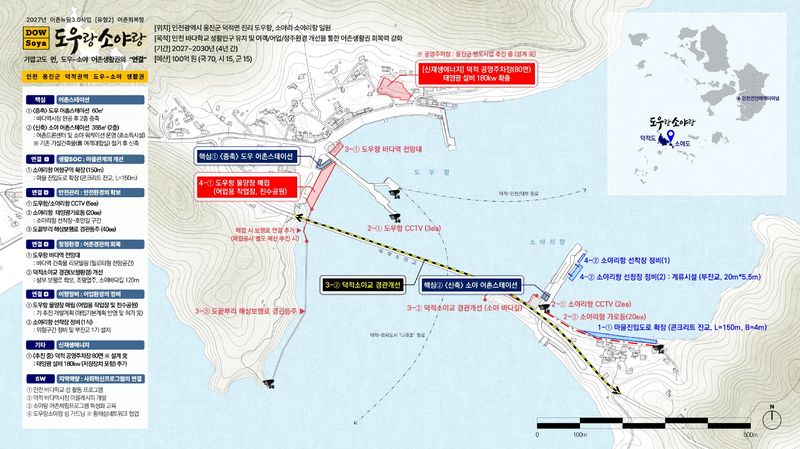
Incheon Metropolitan City said on the 9th that two project sites had been selected in the Ministry of Oceans and Fisheries’ call for proposals for the 2027 Fishing Village New Deal 3.0 program: Bunori and Miruji ports in Ganghwa County, and Dowoo and Soyari ports in Ongjin County.
The projects will receive up to 10 billion won per site, including 14 billion won in central government funding. Work will begin with the preparation of a master plan in 2027, proceed through a series of stages, and aim for completion in 2030.
At Bunori and Miruji ports in Ganghwa County, a fishing village station and a foot-washing facility will be built to support residents’ welfare and income generation. Floating piers and a communal worksite will also be built to boost fishing productivity.
At Dowoo and Soyari ports in Ongjin County, the focus will be on improving mobility for residents and visitors. The village access road will be widened, and pedestrian conditions on Deokjeok Soyagyo will be improved. Fishing infrastructure will also be expanded by reclaiming land along the landing quay and upgrading the pier. A fishing village station for residents to use together will also be established.
The Fishing Village New Deal 3.0 is a government initiative to transform fishing villages and ports at risk of disappearing because of population decline and a weakening industrial base into residential and economic hubs. Its core aim is not merely to repair aging facilities, but to improve both residents’ living environment and the competitiveness of the fishing industry.
Since the fishing village and port regeneration program began in 2019, the city has continued related projects, being selected every year for government calls for proposals. Its success has been driven by gathering residents’ opinions from the proposal stage and developing projects tailored to the characteristics of each area.
Whether facility upgrades will lead to an actual influx of people and higher incomes remains a challenge to be addressed. Ensuring the sustainability of fishing villages will require not only better infrastructure but also follow-up measures to secure stable jobs and sources of income and attract young people.
Kim Ik-jung, director of the city’s Agriculture, Fisheries and Food Bureau, said, “We will actively incorporate residents’ opinions from the master plan stage and deliver results that they can see and feel on the ground.”
[email protected] Han Gab-soo Reporter