Korea Popmusic Industry Association Regrets NYT Report on NewJeans Contract: “It Cannot Be Judged Solely Through a Western Lens” [Full Statement]
- Input
- 2026-11-09 17:39:00
- Updated
- 2026-11-09 17:39:00
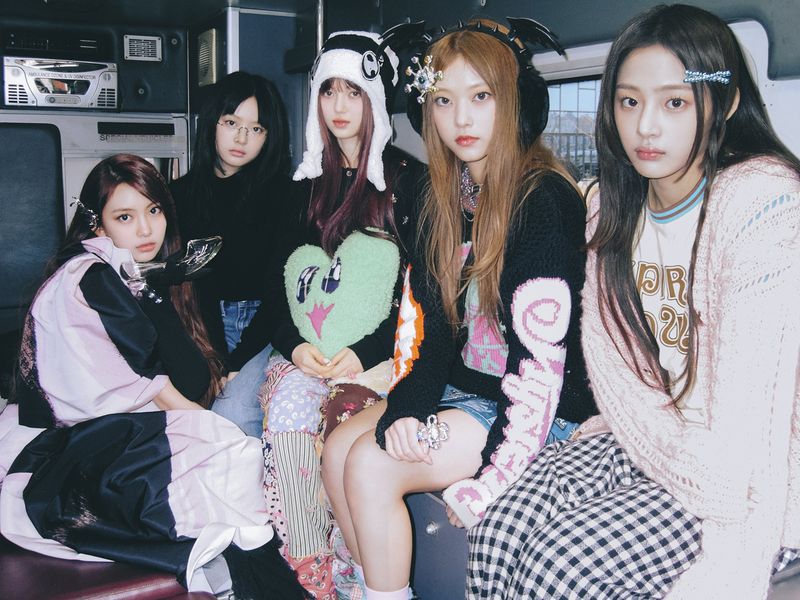
[Financial News] The Korea Popmusic Industry Association expressed deep concern over The New York Times (NYT)’s recent report on the NewJeans exclusive contract it obtained.
On the 9th, the association said, “This report is a one-sided and biased assessment that not only fails to adequately consider the legality and legitimacy of contracts made under the laws and institutional regulations of the Republic of Korea, but also fails to sufficiently consider the characteristics and value of the distinctive incubating system that has helped K-pop grow into a global industry.” It added, “We regret that The New York Times has expanded a controversy surrounding a specific individual contract into a structural problem across the K-pop industry as a whole.”
The New York Times previously reported in an article titled “The Strict Control of a Top K-pop Girl Group Revealed by a Confidential Contract” that behind NewJeans’ success was an unusually strict contract its members signed when they were between 14 and 17 years old.
The association emphasized, “The fairness and legality of an exclusive contract must be assessed by taking into account not only individual provisions but also supplementary agreements, relevant laws and regulations, the circumstances in which the contract was signed, and whether it was actually carried out.” It warned, “Otherwise, there is a risk of spreading distorted perceptions of the K-pop industry and unfairly damaging the industry’s achievements and credibility, built up over a long period.” It added, “The K-pop incubating system is a talent-development framework with distinctive characteristics and competitive strengths that cannot be judged solely through a Western lens.”
The following is the full text of the statement:
The Korea Popmusic Industry Association, an incorporated association, expresses deep concern regarding The New York Times (NYT)’s recent report citing the exclusive contract of a particular K-pop artist. We believe this report is a one-sided and biased assessment that not only fails to adequately consider the legality and legitimacy of contracts made under the laws and institutional regulations of the Republic of Korea, but also fails to sufficiently consider the characteristics and value of the distinctive incubating system that has helped K-pop grow into a global industry.
The K-pop industry, now admired around the world, is the fruit of a partnership between entertainment companies and artists. Providing institutional support for this partnership are the “Standard Contract for Popular Culture and Arts” and the “Popular Culture and Arts Industry Development Act,” enacted by the South Korean government. These two frameworks establish balanced principles: they protect entertainment companies that invest large sums and take on the risk of losses, while also safeguarding and ensuring the rights and interests of artists, who may be comparatively vulnerable. Today, all entertainment companies and artists in South Korea respect the spirit of the standard contract and work together under the rules of the Popular Culture and Arts Industry Development Act to draw up and carry out contracts and grow. The many artists who have renewed their contracts after their terms expired are proof of this. The protection of artists’ rights and interests is thus an important issue on which K-pop companies and the South Korean government have long focused, making sustained efforts to pursue institutional and practical improvements.
Nevertheless, we regret that The New York Times has expanded a controversy surrounding a specific individual contract into a structural problem across the K-pop industry as a whole, without adequately highlighting these institutional developments and the industry’s efforts to reform itself. The fairness and legality of an exclusive contract must be assessed by taking into account not only individual provisions but also supplementary agreements, relevant laws and regulations, the circumstances in which the contract was signed, and whether it was actually carried out. Otherwise, there is a risk of spreading distorted perceptions of the K-pop industry and unfairly damaging the industry’s achievements and credibility, built up over a long period.
Protecting artists’ rights and interests and respecting production companies’ legitimate rights are not opposing values. The rights and interests of underage artists must be guaranteed. At the same time, production companies’ legitimate investments and contractual rights must also be protected. The K-pop industry has grown on the foundation of companies’ long-term investment and artists’ creative work. Contracts lawfully concluded and judicial decisions must be respected.
K-pop companies have already been lawfully implementing various measures for teenage trainees and active artists. Major K-pop companies, including HYBE, are all entering into national-standard supplementary agreements for minors with their trainees. These agreements include provisions protecting personal rights, the right to sleep, the right to education, and the right to rest. In addition, major K-pop companies affiliated with the association have designated people responsible for protecting minors in accordance with relevant laws and have been providing related oversight.
The K-pop incubating system is a talent-development framework with distinctive characteristics and competitive strengths that cannot be judged solely through a Western lens. Major K-pop companies operate multifaceted care programs, even employing in-house medical professionals, and carefully protect artists’ rights to health and personal dignity. This dedicated care and upfront-investment system is a distinctive industrial ecosystem unique to Korea and must not be disparaged as “oppressive control.” It is in this very ecosystem that the famous boy groups and girl groups cheered by people around the world today have emerged, and countless trainees are working hard as they dream of becoming the K-pop stars of tomorrow.
Lastly, the Korea Popmusic Industry Association expresses deep concern that the contents of an exclusive contract in a matter currently subject to legal proceedings have been made public through overseas media, despite being covered by confidentiality obligations between the parties, and that one-sided claims and public-opinion campaigns are spreading on that basis. We must guard against unverified claims or a one-sided perspective being accepted as objective fact, and against issues in individual disputes leading to negative assessments of the K-pop industry as a whole.
The Korea Popmusic Industry Association will do its utmost to protect artists’ rights and interests and establish sound contractual practices so that the K-pop ecosystem can endure as a robust “system,” undisturbed by distorted views from outside or the misconduct of particular individuals. At the same time, we will respond firmly to ensure that distorted public-opinion campaigns that undermine the trust and standing of the industry as a whole, and inappropriate conduct motivated by private gain, cannot take hold.
[email protected] Shin Jin-a Reporter