Arctic route has already made 22 calls at Port of Ulsan... “It will replace the Panama Canal”
- Input
- 2026-11-09 16:58:41
- Updated
- 2026-11-09 16:58:41
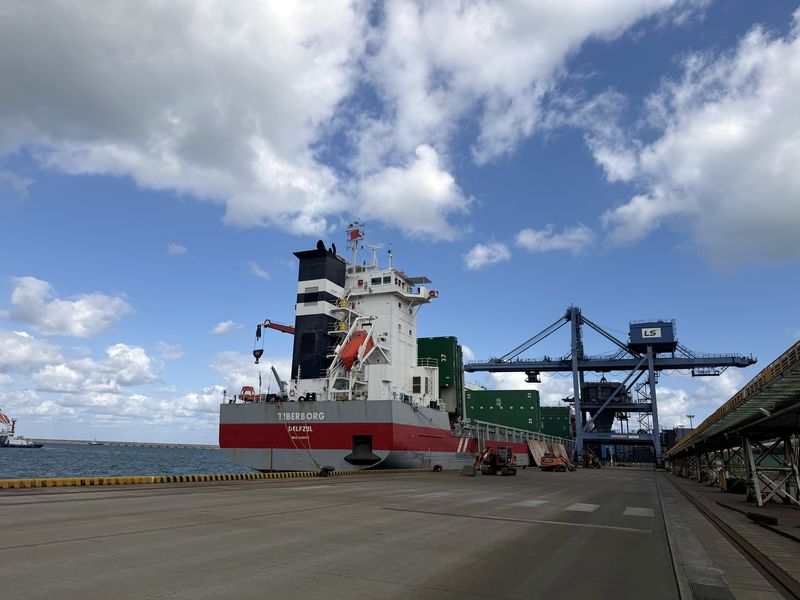
[Financial News, Ulsan—Reporter Kim Yun-ho]Over the 10 years through this year, the number of Arctic-route calls at Port of Ulsan has reached 22. Ulsan Port Authority aims to prepare for the government’s plan to launch regular services by 2030 and establish the route as an alternative to the Panama Canal.
On a visit to Ulsan Port Authority on the 9th, officials spoke emphatically about its vision for an Arctic route based at Port of Ulsan. It said it was learning from the expertise of Dutch shipping company Royal Wagenborg, which has operated on the Arctic route every year since 2018.
From Port of Ulsan, the Arctic routes include a 13,000-kilometer northeast route to Europe, a 19,300-kilometer northeast route to New York, U.S., and a 13,500-kilometer northwest route to New York. These routes are 35% shorter than the route via the Suez Canal, and 35.7% and 8.1% shorter than the routes via the Panama Canal, respectively.
Port of Ulsan plans to work with Port of Busan to establish the Arctic route. Recently, Panstar, a Korean shipping company, sent the Acro along the route from Busan. The government plans to develop the Arctic route into a regular service by 2030.
The Arctic route substantially shortens travel distances, but because it passes through the Arctic, a shortage of intermediate ports of call remains a challenge. Concerns are also widespread among regulatory bodies, including the International Maritime Organization (IMO), and environmental groups. Even so, Port of Ulsan is working hard to advance the Arctic route alongside the government and Port of Busan because it is seen as a potential alternative route in the future. It could also replace the Panama Canal route, which is currently blocked as climate change intensifies the El Niño phenomenon.
A Ulsan Port Authority official emphasized, “During the summer, severe drought caused by El Niño leads to restrictions on passage through the Panama Canal, while the Arctic route opens in summer. Even just as a supply chain replacing the Panama Canal for Korea’s trade with the U.S. and Europe, it is valuable enough.”
Ulsan Port Authority plans to share information and expertise on the Arctic route with Royal Wagenborg through a business agreement, together with the Korea Ocean Business Corporation. It will use that knowledge to produce manuals and white papers and secure ice-class vessels. It will also expand incentives to encourage use of the Arctic route.
Ulsan Port Authority President Byeon Jae-young said, “When ships entering via the Arctic route call at the port, we reduce berthing fees for the shipping company and provide incentives worth around 10 million won if the ships take on fuel. We are also considering ways to offer incentives to cargo owners.”
[This article was produced with support from The Sea’s Embrace Foundation and the Korea Maritime Journalists Association.]
[email protected] Kim Yun-ho Reporter