Ruling and opposition parties split ahead of real estate tax review; DPK and government differ on comprehensive real estate tax
- Input
- 2026-11-09 16:37:21
- Updated
- 2026-11-09 16:37:21
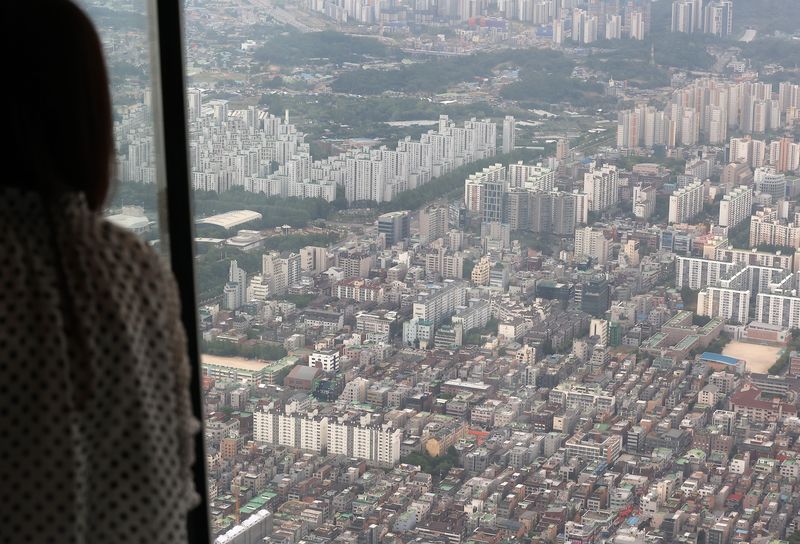
The National Assembly Budget Office (NABO) held a forum on the 2026 tax law revision proposal at the National Assembly that day. The ruling and opposition party floor coordinators on the National Assembly Planning and Finance Committee also attended and stated their respective parties’ positions, bringing the issues facing the upcoming tax law review into focus.
Rep. Oh Gi-hyoung, the DPK’s floor coordinator on the National Assembly’s Strategy and Finance Committee and chair of its tax subcommittee, said, “There are excessive tax benefits for owning a single ‘premium’ home. We need to address this for the single-premium-home phenomenon to disappear,” adding, “We have to come up with an answer on this one way or another.”
Rep. Oh was referring to the long-term holding special deduction (LTSD). Under the current system, a household with one home that has owned and lived in it for at least 10 years can deduct up to 80% of its taxable capital gain. Rep. Oh backed the government’s move to reduce the benefit, saying, “Some degree of adjustment is inevitable.”
He nevertheless stressed that the real estate tax reform should create conditions in which single-home owners can anticipate and respond to policy changes. He also questioned whether the fair market value ratio for the comprehensive real estate tax should be raised at this point. The government proposal would gradually raise the ratio from its current 60%, applying a 70% ratio to single-home owners starting next year. Concerns have been raised that this could sharply increase their tax burden.
The DPK was also reported to have proposed at a high-level party-government consultation on the 8th raising the basic deduction for the comprehensive real estate tax for non-resident single-home owners from the 1.2 billion won in the government proposal to 1.4 billion won. The move is seen as taking into account public sentiment on real estate, which has deteriorated amid a policy of increasing tax burdens, particularly among lawmakers with constituencies in Seoul. The DPK’s Seoul chapter also reiterated the same demand that day after a press conference at the National Assembly calling for the passage of the Urban and Residential Environment Improvement Act.
There are also signs of displeasure within the presidential office and the government that the proposal was made without prior consultation. The proposal also conflicts with the reform principle of increasing the tax burden on non-resident homes, another point that has caused discomfort in the presidential office and government. With the DPK prioritizing relief for single-home owners and the government emphasizing higher taxes on non-resident homes, coordination between the party and government has emerged as a new challenge.
The People Power Party launched a barrage of criticism at the government’s real estate tax reform proposal. Rep. Bae Jun-young, the party’s floor coordinator on the National Assembly’s Strategy and Finance Committee, said, “This (real estate) tax reform has already damaged the market and made people unhappy before it has even begun,” adding, “Home prices in Seoul outside the three Gangnam districts, as well as in surrounding cities, have risen to record levels. The supply of jeonse rentals has dried up, and both jeonse and monthly rents are soaring.”
Rep. Bae said, “For people, a home is something to live in (‘living’), but also something to buy (‘buying’),” adding, “The government is overlooking the fact that a home is the primary asset for most people.” He also noted that real estate taxes can be passed on to tenants, meaning the taxpayer and the person who actually bears the tax burden may be different.
He also criticized the government proposal for having been revised several times since it was first made public. Regarding the temporary suspension of the heavier capital gains tax for owners of multiple homes, Rep. Bae criticized the government, saying, “They said extending the suspension until May 9 would be the last time, but now they have effectively extended it by another two years,” adding, “It has turned out worse than doing nothing.” He argued that policy reversals had eroded trust. With the calculations around the LTSD and the comprehensive real estate tax differing among the various parties, attention is focused on whether the tax subcommittee can find common ground that takes both the tax burden and market stability into account.
[email protected] Kim Hyeong-gu Reporter