"Do I Have to Give Up Ramen?" ... The "Worst Habit" You Unconsciously Have When Eating Cup Noodles [Health Talk]
- Input
- 2026-11-10 04:30:00
- Updated
- 2026-11-10 04:30:00
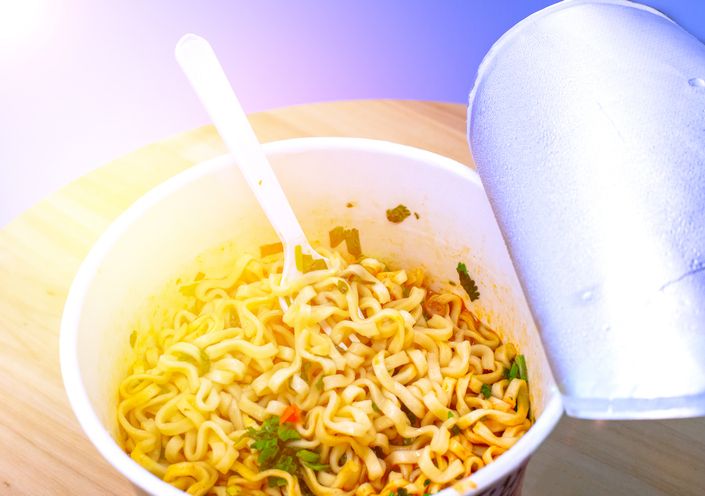
[Financial News] Cup noodles, a go-to food that offers a quick and easy meal amid busy daily routines, have come under scrutiny after an overseas study found microplastics in them, fueling consumer anxiety. Concerns about health have been raised by reports that even products people trusted because they came in paper containers are not exempt. Experts, however, advise taking a balanced look at the limitations of the study conditions and whether the particles actually pose a risk to human health.
Fine particles found in cup noodle containers... Is the inner waterproof coating to blame?
A recent study by researchers at China Agricultural University, published in the international journal Journal of Food Composition and Analysis, found fine particles in every container analyzed. The researchers tested 10 brands of cup noodles (20 samples in total) sold in four countries: South Korea, China, Japan and Thailand. The paper’s abstract reports an average of about 318 particles per cup of noodles.
The main substances detected included polyethylene (PE), a polyethylene-polypropylene (PE-PP) composite, and rayon. The researchers identified the waterproof coating inside the containers as a major source of the particles. Even containers with paper exteriors have a thin plastic coating (such as PE) on the inside to keep broth from seeping through. The researchers explained that fine particles may separate from the coating when it comes into contact with hot water.
Three limitations of the study to consider before becoming alarmed
There is no need to develop an unfounded fear of eating cup noodles because of this study. Its experimental design and data interpretation have limitations that leave a considerable gap between the findings and actual eating habits.
First, the containers were left standing for an excessive amount of time, far removed from typical cooking conditions. In the experiment, 500 mL of water heated to 95°C was poured in, the container was covered with aluminum foil and left for 15 minutes, then the foil was removed and it was left for another 20 minutes, for a total of 30 to 35 minutes. Critics say the conditions exposed the container to high temperatures for far too long compared with a typical meal, in which consumers usually start eating after just 3 to 4 minutes.
Second, the paper contains inconsistent figures, and laboratory contamination is possible. The abstract lists an average of 318 particles per cup of noodles, while the summary gives 351 and parts of the main text estimate as many as 704, revealing inconsistencies in the data. Adjusting for contamination in the control samples that could have come from the air in the laboratory would substantially reduce the actual particle count. It should also be taken into account that rayon, which made up the largest share of the particles detected, is a regenerated cellulose fiber made from natural raw materials, not a conventional synthetic plastic.
Third, the experiment used empty containers without noodles or soup. The researchers measured the containers after leaving only hot, pure water in them for an extended period, without accounting for the complex chemical interactions involving the broth’s viscosity, salt content and oiliness that occur during actual cooking. This creates clear limitations in using the results to represent the amount consumers are actually exposed to.
Health risks: no clear causal link established yet
The detection of microplastics in food does not necessarily mean they directly cause disease or other adverse health effects in humans.
Major international health authorities are also maintaining a cautious stance. The U.S. Food and Drug Administration (FDA) has said that no scientific evidence has yet been identified showing that the levels of microplastics and nanoplastics currently detected in food pose a significant risk to human health.
The European Food Safety Authority (EFSA) has also highlighted the possibility of external contamination during analysis and particles being misidentified. It plans to establish a scientific opinion on a detailed risk assessment by the end of 2027. South Korea’s Ministry of Food and Drug Safety is likewise gradually conducting surveys of food-contact utensils, containers and packaging materials under its Sixth Basic Plan for Food Safety Management, while closely monitoring the situation.
"Safe cooking tips" to reduce everyday exposure to microplastics
Even before a clear conclusion is reached about the long-term effects on human health, those who want to minimize unnecessary exposure in daily life can adopt a few simple cooking habits.
First, be sure to check for a "microwave-safe" label before cooking. Heating a regular container without a microwave-safe label in a microwave can expose it to intense heat, potentially deforming or damaging its inner coating and sharply increasing the release of chemicals and fine particles.
For more fundamental prevention, it is recommended that you transfer the noodles and soup to a separate heat-resistant vessel, such as a ceramic bowl, glass container or stainless-steel pot, and cook them there. This prevents the hot broth from coming into direct contact with the coating inside the original container.
It is also important to strictly follow the cooking time recommended on the product packaging. Avoid leaving hot broth in the container long after the cooking time has elapsed, and eat the noodles as soon as they are properly cooked. These steps alone can substantially reduce the risk of additional particle release and exposure.
[email protected] Moon Young-jin Reporter