“No Child Should Lose Their Life for Lack of Money...” Lee Kun-hee’s 1 Trillion Won Legacy Filled Gaps in South Korea’s Healthcare System
- Input
- 2026-11-09 15:54:49
- Updated
- 2026-11-09 15:54:49

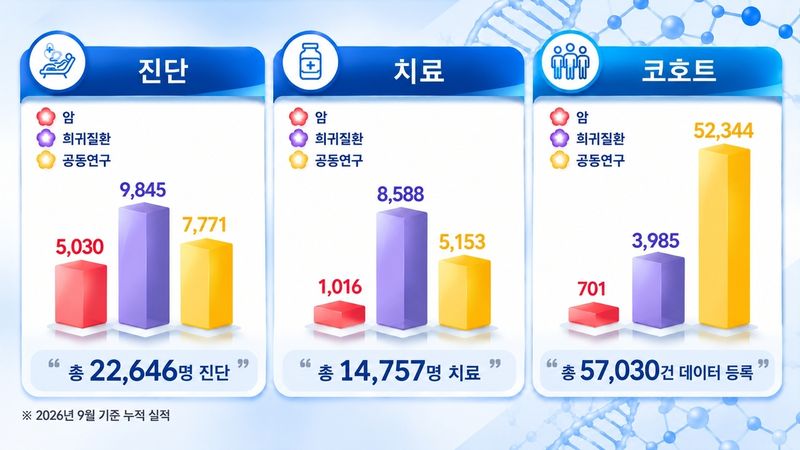
[Financial News] Medical philanthropy launched with donations from the family of the late Lee Kun-hee, former Samsung chairman, is drawing renewed attention. Through diagnosis and testing for rare diseases in children, around 20,000 children have gained access to treatment opportunities.
A diagnosis is the first step toward treatment, but for children with rare diseases, even finding a medical institution with the experience and testing capabilities to diagnose them has been difficult. There is no doubt that the 1 trillion won in medical donations made by the late chairman’s family in 2021 changed that daunting first step. The funding is helping children gain greater access to diagnosis and treatment—for example, patients can now receive rare-disease test results within 4–6 weeks even at regional hospitals through a nationwide diagnostic network—while also building hospitals and research infrastructure to prepare for the next pandemic.
■ Results within 4–6 weeks when samples are sent from regional hospitals
The Pediatric Cancer and Rare Disease Support Project team at Seoul National University Hospital said on the 9th that, from the project’s launch in 2021 through September this year, 22,646 patients had been diagnosed and 14,757 had received treatment. The 300 billion won provided by the family, in keeping with the late chairman’s belief that children should not lose access to treatment because of the financial burden, has helped expand both patient support and the foundation for cooperation among medical institutions nationwide.The number of research projects has risen from seven in the project’s first year to 190 this year. As of September, 1,411 medical professionals at 185 institutions nationwide were taking part. South Korea has 69 specialists in pediatric hematology and oncology, and more than 70% of childhood cancer patients living outside Seoul receive treatment in other regions. Against this backdrop, the network is seen as a channel for sharing diagnostic capabilities that regional hospitals would struggle to develop on their own.
In October 2024, family members, including Lee Jae-yong, chairman of Samsung Electronics, and Hong Ra-hee, honorary director of the Leeum Museum of Art, also visited Seoul National University Children’s Hospital, where they met and comforted young patients, their families, and medical staff, and honored the late chairman’s legacy of medical philanthropy.
A Samsung representative said, “These donations by the family are intended to carry on the late chairman’s belief that ‘no child should lose a precious life because they cannot afford care while in a blind spot in the medical welfare system.’” The representative explained, “Lee Kun-hee had long been deeply concerned that children with diverse dreams and boundless potential were dying without receiving proper treatment, and had shown a particular interest in social contributions in the medical field.”
■ From infectious disease research onward... KH’s vision lives on
In 1989, Lee Kun-hee began his philanthropic activities by contributing 10.2 billion won of his personal wealth to establish the Samsung Welfare Foundation and opening its first daycare center that same year.In 2013, he donated 20 billion won to build a specialized treatment center for children with developmental disabilities. The donation led to the opening of the Samsung Developmental Center at Seoul Metropolitan Children’s Hospital in 2017.
The late chairman’s desire to lower barriers to childcare and treatment is seen as living on through the family’s 1 trillion won donation, which is supporting a diagnostic network linking hospitals nationwide and the country’s infectious disease response infrastructure.
Of the 700 billion won allocated for infectious disease response, 200 billion won will go toward building research infrastructure to support vaccine and treatment development. As of October, the National Institute of Infectious Diseases and the National Medical Center were pursuing 17 projects, including establishing clinical research infrastructure for pandemic response and ensuring essential medical care during crises.
The remaining 500 billion won will fund the construction of South Korea’s first specialized infectious disease hospital. With 150 beds, it will include advanced negative-pressure rooms for critically ill patients, negative-pressure operating rooms, and biosafety testing laboratories. Designed to allow testing, surgery, and inpatient treatment for severely ill patients to continue while preventing the spread of infection, the hospital is scheduled to break ground next year, with completion targeted for 2030.
[email protected] Jung Myung-jin, Kim Hak-jae Reporter