“Femtech market to grow fourfold in 10 years” ... Support needed from technology development through commercialization
- Input
- 2026-11-09 15:29:18
- Updated
- 2026-11-09 15:29:18
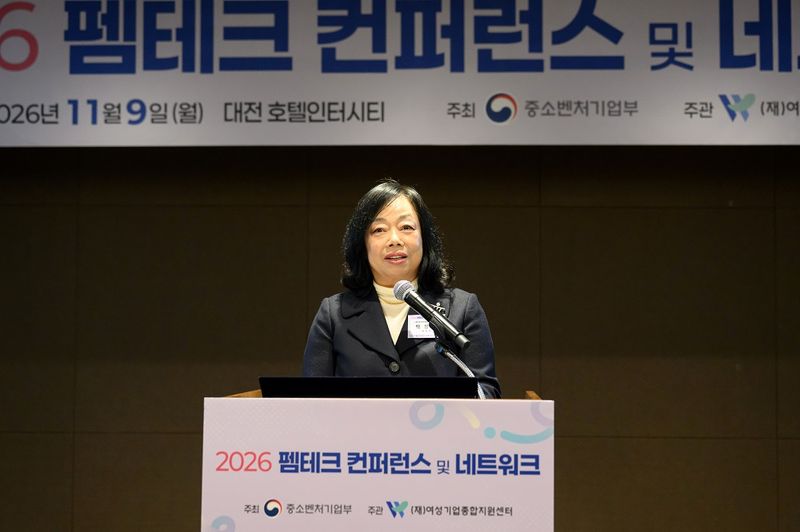
Lee Seung-hyun, a research fellow at the Korean Women’s Development Institute (KWDI), emphasized the need to connect support at each stage of growth, from technology development through validation, regulatory approval, investment and market entry. Lee made the remarks on the 9th at the “2026 Femtech Conference and Network,” held in Daejeon by the Women’s Enterprise Support Center.
The event was organized as part of the “Femtech Industry Promotion Project,” supported by the Ministry of SMEs and Startups, to examine the domestic industry’s current status and growth challenges and expand exchange and cooperation between companies and experts. It was jointly organized by the Korea Women Entrepreneurs Association and the Women’s Enterprise Support Center, and attended by about 180 people, including femtech companies and experts in industry, medicine and investment.
Femtech is a blend of “female” and “technology” and refers to technologies, products and services for women developed using technologies such as artificial intelligence (AI), biotechnology and advanced materials. It encompasses issues ranging from menstruation, infertility, pregnancy and childbirth to menopause, women’s cancers and chronic diseases.
According to the researcher, the global femtech market is projected to grow at an average annual rate of 18.37%, from about $9.12 billion last year to $41.14 billion by 2034.
The researcher emphasized that “evidence needs to be gathered to verify the effectiveness and safety of products and services in order to sustain growth in the femtech industry,” adding that “it is also important to expand opportunities for validation at real-world sites of demand, such as medical institutions, and establish a foundation for follow-on investment after commercialization.”
In countries including the United States, support programs are in place to address challenges at each stage, including technology development, validation and company growth. The United States provides differentiated research and development support according to the development stage of women’s health technologies. Japan is expanding real-world settings where femtech products and services are used. From 2021 to 2025, it carried out 79 demonstration projects using femtech products and other tools to address women’s health issues. The European Union (EU) provides €75,000 in funding and tailored growth training, among other support, to women-led advanced-technology startups.
The researcher emphasized that “women’s health issues should be clearly defined and research and development support connected to the needs of each stage of technological and clinical validation,” adding that “companies should continue to receive support after commercialization funding so they can meet investors and move on to the next stage of growth.”
A subsequent expert panel discussion addressed policy support and ways to collaborate to invigorate the industry, including commercializing femtech companies’ technologies, attracting investment and expanding sales channels. Kim Jun-gil, head of the Statistics and Survey Team at the Women’s Economic Research Institute, presented the findings of the “2026 Femtech Survey” and shared an overview of the domestic industry.
An awards ceremony was also held for the “2026 Outstanding Resident Company Selection Contest,” open to companies housed in the Women’s Startup Business Incubators (BIs) run by the Women’s Enterprise Support Center. Seven women-owned businesses, including Stylemate, received awards. The center operates 230 Women’s Startup Business Incubators (BIs) at 18 regional centers nationwide. It helps strengthen the competitiveness of women’s businesses by providing comprehensive support, from identifying startups through incubation and growth.
Park Chang-suk, chair of the Women’s Enterprise Support Center, said, “It is important to strengthen institutional support and foster an investment environment so the potential of the femtech industry can translate into the growth of real businesses.” Park added, “We will work to expand cooperation in medicine, research and investment, and help outstanding technologies and ideas deliver business results.”
[email protected] Lee Ju-mi Reporter