Delivery apps push back against 631.9 billion won in fines: “So even legitimate competition is illegal?”
- Input
- 2026-11-09 16:05:29
- Updated
- 2026-11-09 16:05:29
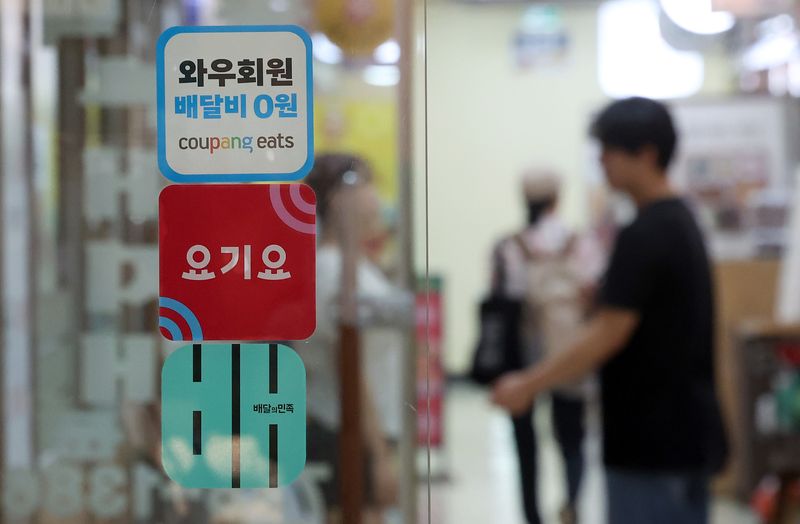
■ Sanctions criticized as unfair ... Coupang Eats launches sharp criticismAccording to industry sources, the KFTC said on the 9th that it would impose fines totaling 631.9 billion won: 331.1 billion won on Woowa Brothers, the operator of Baemin, and 300.8 billion won on Coupang, the operator of Coupang Eats. The KFTC found that the companies restricted market competition by requiring listed restaurants to offer prices and terms no less favorable than those on competing delivery apps—a practice known as MFN treatment. The sanctions against Baemin also include forcing restaurants to switch to its in-house delivery service and deceptive advertising about estimated delivery times.
After the KFTC announced its decision, both companies immediately issued statements arguing that the sanctions were unwarranted. Coupang Eats, in particular, issued a forceful rebuke, saying, “The essence of this case is that efforts to provide customers with better service have instead been ruled ‘illegal.’”
Coupang focused its criticism on the fairness of the fine calculations. It said that Baemin, the market leader, was fined 160.2 billion won over MFN treatment, while Coupang Eats was fined 300.8 billion won—about twice as much. Coupang countered that it was excessive to apply the offense of abusing a dominant market position when it was still a latecomer with just a 7% market share in 2023, the year used as the reference point for reviewing the MFN requirements.
Coupang also argued that the fines were inequitable compared with past sanctions. In 2020, the KFTC fined Yogiyo 468 million won for forcing restaurants to participate in its lowest-price guarantee program, but fined Coupang Eats 300.8 billion won—at least 600 times as much. Coupang also maintained that it was unfair to include in the fine calculation not only the sales of restaurants directly affected by the MFN terms, but also the sales of all listed businesses in areas where the Wow Store program operated.
According to Coupang, the KFTC’s examination report, sent in October last year, estimated a fine of 25 billion to 42 billion won based on 710 billion won in sales related to the alleged violations. Coupang argues that the fine rose to 300.8 billion won in the final review because all delivery sales were counted as related revenue.
Coupang Eats said the calculation included transactions unrelated to the alleged violations and warned that suddenly changing the basis for calculating the fine could infringe a company’s right to defend itself. The KFTC put Coupang Eats’ related revenue from MFN treatment at about 5.0149 trillion won.
A Coupang representative said, “The KFTC found the Wow Store promotion illegal, even though it is a policy that encourages restaurant owners to set reasonable prices voluntarily for customers struggling with high prices and helps boost sales by supporting free delivery.” The representative added, “The KFTC used sales from restaurant owners unrelated to the case as a basis for calculating the fine, increasing it to hundreds of billions of won and undermining the company’s right to defend itself.” Coupang Eats plans to carefully review the final written decision and fully present its position through proper legal procedures.
■ “No illegality or coercion” ... signals legal action Baemin argued that its move was an unavoidable response to an earlier policy by Coupang Eats. It said that after Coupang Eats required listed restaurants in March 2023 not to set prices lower than Baemin’s, Baemin also introduced price conditions in May 2024 as a criterion for selecting Baemin Club stores. Baemin also emphasized that its commission rate at the time was 6.8%, lower than Coupang Eats’ 9.8%.
Baemin also denied the coercion alleged by the KFTC. It said restaurants could continue using their existing delivery services even if they did not meet the price conditions, and that most restaurants were selected as Baemin Club trial stores regardless of whether they met those conditions. Baemin maintains that the restaurants chose the terms of their own accord to receive additional benefits, so the practice cannot be considered coercive.
Baemin said, “We carefully explained that there was no illegality, but we are disappointed that our arguments were not sufficiently accepted.” It plans to review the details after receiving the KFTC’s written decision. However, since it does not acknowledge any illegality, the possibility of legal action remains.
[email protected] Jang Min-kwon Reporter