Will Trump make an unprecedented push for a “Pyongyang visit”? North Korea-China and South Korea-U.S. diplomatic channels are abuzz
- Input
- 2026-11-09 14:28:09
- Updated
- 2026-11-09 14:28:09
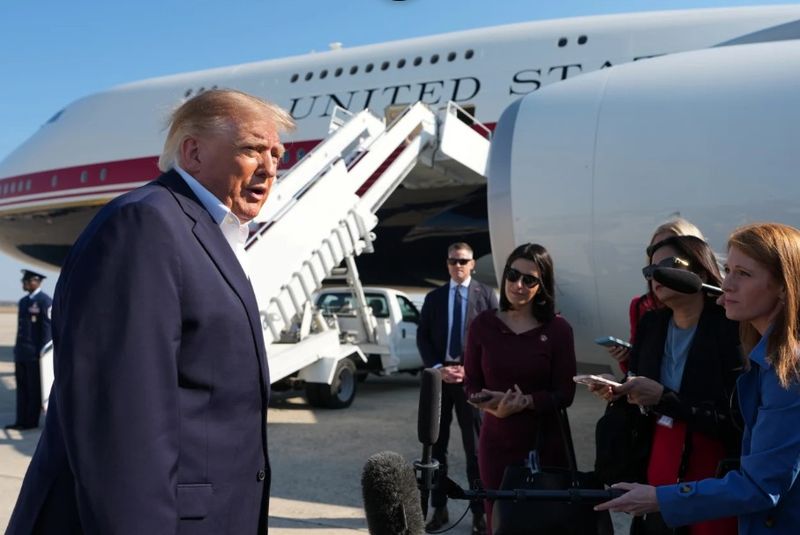
According to diplomatic sources on the 9th, there is speculation that Trump could meet North Korean leader Kim Jong Un in North Korea after visiting China for the Asia-Pacific Economic Cooperation (APEC) summit, which will be held in Shenzhen on the 18th and 19th.
A diplomatic source said, “A visit to Pyongyang by President Trump would effectively be almost the only way to make North Korea-U.S. talks happen while allowing Kim to save face.”
If Trump’s visit to Pyongyang goes ahead, he would make history as the first sitting U.S. president to visit the capital of an adversary, North Korea. Trump could also shift the focus of domestic opinion, which has soured due to the fallout from the Iran war and his midterm election loss, to issues on the Korean Peninsula.
With a little over ten days to go before APEC opens in Shenzhen, China, with Trump in attendance, diplomatic contacts between North Korea and China and between South Korea and the U.S. are continuing.
South Korean Foreign Minister Cho Hyun and U.S. Secretary of State Marco Rubio will be in Paris together for the G7 Foreign Ministers’ Meeting from the 8th to the 11th. With only a week to go before APEC in Shenzhen, the South Korean and U.S. foreign ministers are expected to hold what will effectively be their final meeting in Paris and have behind-the-scenes discussions about the possibility of North Korea-U.S. talks.
Contacts between the diplomatic channels of North Korea and China are also brisk. Kim Sung-nam, international secretary of North Korea’s Workers’ Party, returned to Pyongyang on the 7th after completing a five-day official visit to China. The visit drew attention as it was effectively the last face-to-face, high-level contact between North Korea and China before APEC opens.
China was represented at the North Korea-China talks by Standing Committee member Cai Qi, one of President Xi Jinping’s closest aides, and Foreign Minister Wang Yi, the country’s top diplomat. Their joint participation was seen as going beyond a merely ceremonial exchange.
North Korea is believed to have asked China to speak for its position and act as a shield if the denuclearization of the Korean Peninsula or the North Korea issue comes up at a U.S.-China summit. It is considered highly likely that a message in Kim’s own voice or a personal letter was delivered directly to President Xi.
The Ministry of Unification also believes that the possibility of a meeting between the North Korean and U.S. leaders has not been extinguished. Minister of Unification Chung Dong-young told the National Assembly on the 5th that there was still room for North Korea-U.S. dialogue.
However, Kim Yo Jong, director of the General Affairs Department of North Korea’s Workers’ Party, ruled out dialogue on the 4th until hostile acts—including demands for North Korea’s denuclearization and South Korea-U.S. joint military exercises—are halted. Nevertheless, Minister Chung assessed that North Korea had still not given up on the possibility of dialogue with the U.S.
Minister Chung offered the opposite interpretation of Director Kim’s statement, saying, “It was a signal that the possibility of dialogue remains open if it serves their interests.” He added, “The North is saying that if it wants to turn inter-Korean relations around, it should show respect and consideration for them,” and said, “I want to return those exact words to Pyongyang.”
[email protected] Kim Kyung-soo Reporter