AIDCs Hemmed In by US and European Regulations ... Can South Korea Capitalize on the Spillover Benefits?
- Input
- 2026-11-09 15:51:24
- Updated
- 2026-11-09 15:51:24
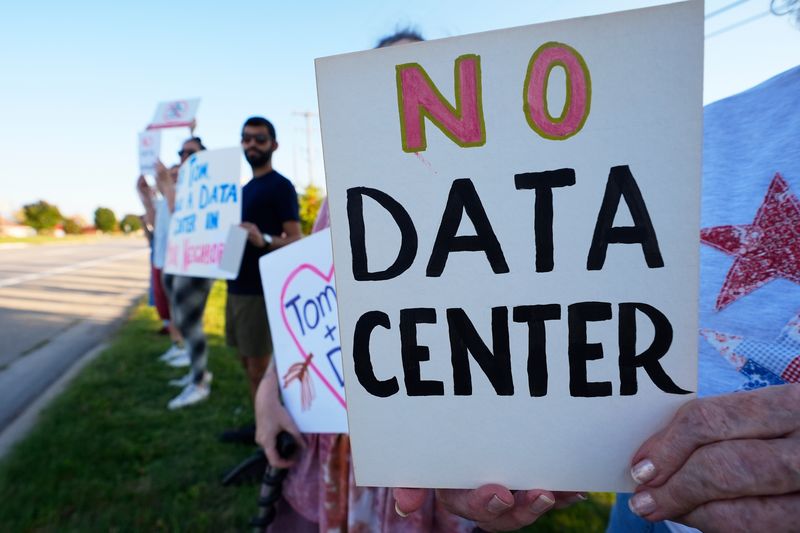
On the 3rd (local time), voices warning that AIDC permits could be blocked grew louder in areas where Democrats won control in the US midterm elections. Meanwhile, across Europe, including the Netherlands and Ireland, opposition from residents is spreading, with complaints that AIDCs—which consume large amounts of electricity and water—drive up household electricity bills and deplete local resources.
By contrast, in South Korea, the government is stepping up efforts to promote the AIDC industry as the AIDC Special Act is set to take effect early next year, raising hopes that the country can seize an opportunity in the AI infrastructure sector. Industry experts have repeatedly advised that South Korea will need to secure power, sites, permits and local acceptance together to turn the benefits of overseas AIDC regulations into reality.
According to industry sources on the 9th, Modo Energy, a UK-based electricity market research firm, said in a report released shortly after the US midterm elections that “data center construction is expected to face disruptions in 11 states, including Texas, Georgia, Ohio, New Mexico, Maine and New Hampshire, as a result of the US midterm elections.” It estimated that “256 GW of capacity—equivalent to 40% of the total 633 GW of AIDC capacity currently under development in the US—has come within the scope of regulation.” It added that data centers with 11 GW of capacity could be halted.
AIDC demand is expanding rapidly
By contrast, infrastructure investment by big tech companies such as OpenAI, Anthropic, Microsoft and Meta Platforms is continuing to grow.
The International Energy Agency (IEA) forecast that capital spending by the world’s major hyperscale operators would exceed $700 billion (about 95 trillion won) in 2026, with most of it going toward new data center construction. Global commercial real estate services and investment management firm Jones Lang LaSalle Incorporated (JLL) forecast that data center capacity worldwide would grow by 97 GW between 2026 and 2030, reaching 200 GW in 2030.
Demand for inference, which requires computing every time a service is used, along with AI training, companies’ adoption of AI agents and countries’ efforts to build their own AI infrastructure, is driving up demand for AIDCs.
As a result, big tech companies have moved quickly to respond to efforts to regulate data centers in the US.
Big tech moves to appease local communities amid AIDC regulation
On the 5th (local time), OpenAI announced its community-benefit plan for areas hosting AIDCs, comprising the “National Community Compact” and the “Compute Campus Policy Blueprint.” Under the plan, companies will cover the full cost of the electricity used by data centers and power grid expansion, disclose their water and electricity consumption, and, as a rule, not enter into nondisclosure agreements (NDAs) with local government officials.
OpenAI also plans to establish community agreements for all compute campuses it directly owns and operates in the future. It will gather residents’ views from the early stages of a project and designate a point of contact whom local residents can approach directly with concerns during construction and operation. The company also plans to publish annual updates on the agreements’ implementation. It has set out specific economic benefits for local residents. In Effingham County, Georgia, OpenAI will provide $4.8 million (about 7 billion won), taking residents’ views into account, to fund free school meals for 14,000 local students. In Pike County, Ohio, where residents identified childcare support as a priority, OpenAI and energy company SB Energy agreed to jointly contribute $6 million (about 8.8 billion won).
Deputy Prime Minister Bae Kyung-hoon: “South Korea must not delay investment”
On the strengthening of AIDC regulations in the US and Europe, Bae Kyung-hoon, deputy prime minister and minister of science and ICT, stressed on the 6th, in connection with the regulations that emerged after the US midterm elections, that “South Korea should not be swept up in the current mood and stop or delay investment.” Bae said, “Even if the US slows down, other countries such as China, France and Canada could instead seize this as an opportunity,” and forecast that the global AI investment race would not lose momentum easily.
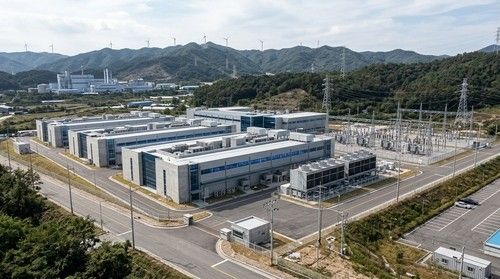
Experts say that US and European AIDC regulations could present a new opportunity for South Korea.
They say the country is well positioned to attract global big tech companies, with a concentrated supply chain for AI infrastructure—including semiconductors, servers and telecommunications—proximity to major Asian markets, strong network capabilities and leading conglomerates successively embarking on AI infrastructure projects.
Samsung SDS has broken ground on an AIDC in Gumi, North Gyeongsang Province, with an initial capacity of 60 megawatts (MW) and a maximum capacity of 120 MW. SK Group plans to build AIDCs with a total capacity of 15 GW by 2035, led by SK Telecom Co., Ltd. (SKT). GS Group also plans to enter the hyperscale AIDC market by combining its energy and construction capabilities, and develop an AIDC with a total capacity of 2.4 GW at the Bukpyeong 2nd General Industrial Complex in Donghae, Gangwon Province.
Naver has partnered with NVIDIA Corporation and Brookfield to ramp up its AI factory business, and plans to bring a 200 MW AIDC online in 2028.
The strategy of these conglomerates is to secure demand not only for their own AI needs but also for global companies’ AI computing needs.
Don’t just wait for spillover benefits ... Build the conditions to attract global demand
Industry experts stress that “South Korea has an attractive location for meeting global demand for AI infrastructure, but it does not yet have all the conditions needed to attract global big tech companies.” They say “practical solutions must be put in place to ensure access to large amounts of electricity when needed and secure sites, as well as to reduce opposition from local residents.”
Calls are growing for the government to disclose the actual amount of electricity available in each region and when grid connections can be made, and to draw up plans to expand power supplies and transmission networks dedicated to data centers.
Experts say swift coordination is needed where government ministries disagree. In particular, they say there is an urgent need for authority to resolve differences between ministries when policies to regulate and promote the AIDC industry conflict.
There are also calls to urgently establish clear standards for new regulations. The Ministry of Climate and Energy plans to introduce a dedicated AIDC grid code this year. Jo Kyung-tae, a lawmaker from the People Power Party, has pointed out that “it is unclear which entities will be subject to the new grid code, when it will take effect, and whether it will apply retroactively to existing projects. This could lead to design changes or delays in the completion of large-scale data center projects already underway.” He said “a clear policy is needed, such as exempting existing projects from the code.”
Opposition from local residents is also spreading. Protests by residents against data center construction have continued for an extended period in Doksan-dong, Geumcheon District, Seoul. Projects have also been disrupted by complaints from residents opposed to AIDCs in Gimpo, Gyeonggi Province, and Daegu.
An expert in the AIDC industry stressed that “South Korea has the conditions to become a powerhouse in AI infrastructure, in terms of both its location and the government’s commitment, but it has been slow to offer swift solutions for reconciling differences among government ministries, supporting AIDC companies and persuading residents.” The expert added that “South Korea should not simply count on spillover benefits from AIDC regulations in the US and Europe, but should work to improve its institutional framework so it can actively seize the opportunities.”
[email protected] Lee Gu-soon Reporter