Descendants of all five independence activists from Yesan’s Daehung Elementary School whose medals had not been presented have been found... Medals to be handed over on the 10th
- Input
- 2026-11-09 14:18:42
- Updated
- 2026-11-09 14:18:42
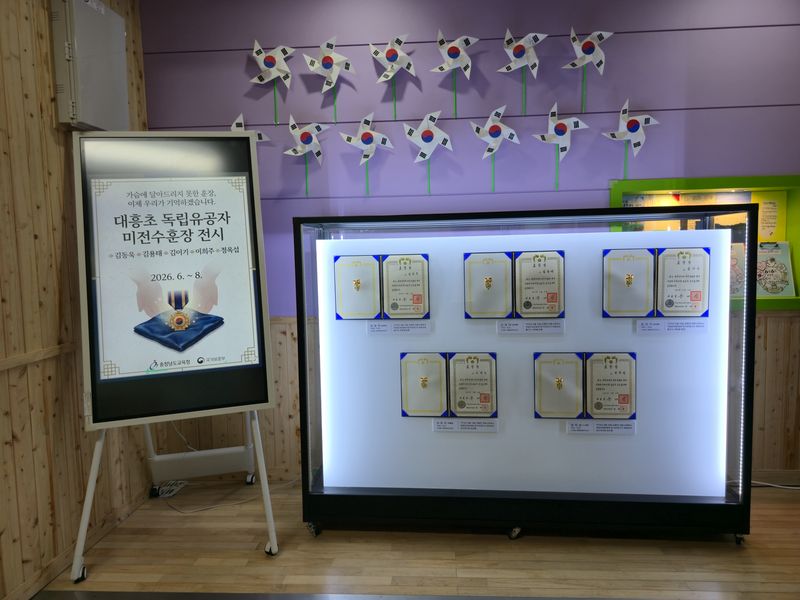
The Ministry of Patriots and Veterans Affairs (MPVA) announced on the 9th that, prompted by an exhibition of medals yet to be presented to independence activists from Daehung Elementary School in Yesan County, South Chungcheong Province, it had found descendants of all five independence activists whose medals had remained without recipients, and would hold a presentation ceremony at the Seoul Regional Veterans Affairs Office on the 10th. The five honorees set to receive medals are Kim I-gi, Kim Dong-uk, Jeong Ok-seop, Lee Hui-ju and Kim Yong-tae, all former students of Daehung Elementary School who took part in the March 1919 independence demonstrations in Yesan under Japanese colonial rule. They were posthumously awarded the Presidential Citation in 2021, but their descendants could not be located.
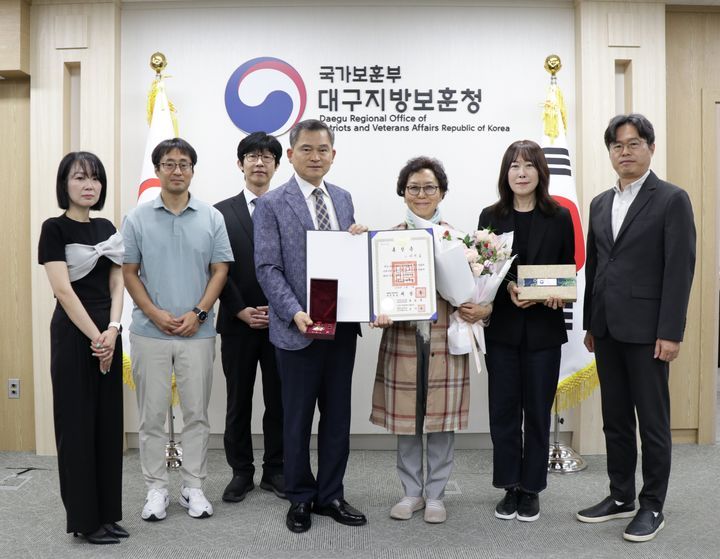
The decisive spark in the search for the descendants was not an investigation centered on administrative databases, but a modest exhibition space set up inside Daehung Elementary School for two months starting in June. After learning through the media about the medals awaiting presentation that were displayed on the school grounds, a descendant of Jeong Ok-seop contacted the MPVA. This led to the remarkable tracing and verification of family information for the remaining four patriots, which had lain undiscovered for more than 70 years. A descendant of Lee Hui-ju received the medal in advance for health reasons. At the ceremony on the 10th, the descendants of the other four patriots and the principal of Daehung Elementary School, among others, will attend and receive the medals directly from MPVA Minister Kwon Oheul.
Security and education experts say this case points to a new milestone for the future of veterans education in South Korea. The current curriculum is increasingly reducing both the recognition given to veterans and education on the history of independence. It is difficult to expect people to unite in a crisis in a country where there is no education about remembering those who gave their lives for the nation. This is also why developed countries visit war memorials from elementary school onward and engrave the names of local heroes on classroom walls, reminding students of their “spirit and ethos.”
Photos of the exhibition of medals yet to be presented at Daehung Elementary School show a modest display rather than anything lavish: paper pinwheels bearing the Korean flag are set into a wooden wall, with medal certificates displayed in a glass case below. Yet this small space opened doors to descendants that had remained closed for decades and served elementary school students as a living history classroom, showing them that “the distinguished alumni of our school were heroes who defended the country.” This is why calls are growing for urgent institutional measures to establish “smart, integrated veterans education,” linking local communities with the grounds of the alma mater, in public education rather than relying on one-way medal presentation procedures.
MPVA Minister Kwon Oheul said, “The presentation comes late compared with the noble dedication of our forebears, who gave everything for the independence of their homeland, but I find it deeply meaningful that the medals are now being returned to their families.” He added, “The government will devote itself wholeheartedly to finding descendants and honoring them so that medals yet to be presented to independence activists can be delivered as soon as possible.”
Building on the successful model at Daehung Elementary School, the MPVA is currently holding medal exhibitions in conjunction with local museums and cultural centers at six locations nationwide, including Seosan, Yecheon and Yangsan. It plans to greatly expand exhibitions centered on school grounds through future cooperation with relevant organizations, including local governments and education offices. Attention is focused on whether the success at Daehung Elementary School in Yesan will lead beyond a one-off heartwarming story to nationwide reform of the veterans education system, raising awareness of security among South Korea’s future generations and inspiring them with the spirit of their forebears.
[email protected] Lee Jong-yoon Reporter