Defense Minister Kang Shin-chul rules out “closing” the three service academies, begins revising basic plan for “Armed Forces Academy”
- Input
- 2026-11-09 12:46:41
- Updated
- 2026-11-09 12:46:41
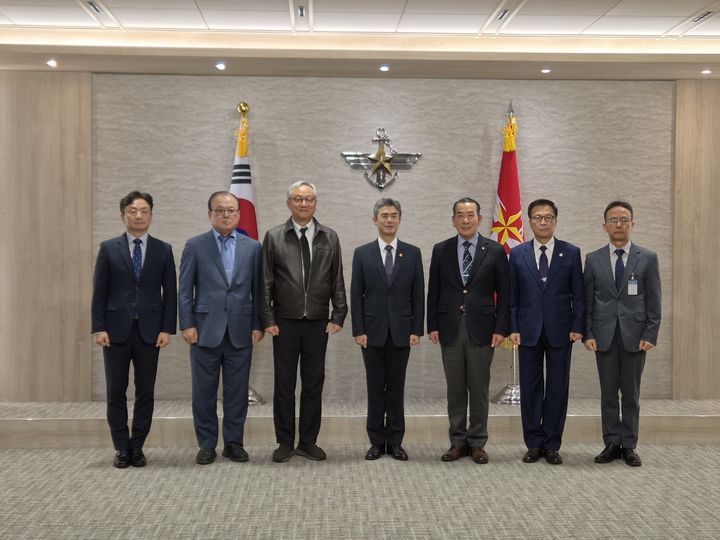
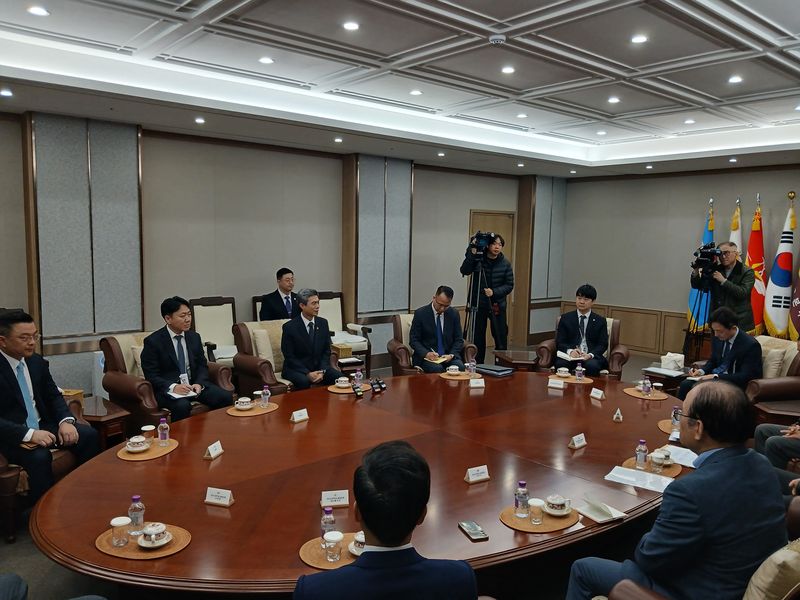
On the morning of the 9th, Defense Minister Kang Shin-chul held his first public meeting since taking office with the heads of the alumni associations of the three service academies: the Korea Military Academy (KMA), the Naval Academy and the Air Force Academy, at the Ministry of National Defense headquarters in Yongsan. At the meeting, Minister Kang said, “I’ve been hearing a lot that parts of the basic plan for the Armed Forces Academy need to be revised, and I’m considering various options,” signaling changes to the existing government plan.
KMA Alumni Association President Park Pan-jun said, “We cannot accept a policy that presupposes the closure of the existing academies.” He added, “It makes me wonder why they are so desperate to drive the KMA out of Taereung. I question whether this situation is about education or defense reform, or whether it has a political purpose.”
Naval Academy Alumni Association President Lee Beom-rim said, “I very much want to see educational reform at the three service academies, but I am questioning whether integration has to be the way to do it.” He added, “I hope an independent review committee made up of national defense and security experts will be formed to compare and analyze the pros and cons of maintaining the current system and of integration, and submit its findings.”
Air Force Academy Alumni Association President Hwang Seong-jin said, “Since moving from Daebang-dong to Cheongju in 1985, the Republic of Korea Air Force Academy has maintained an aerospace-specialized education system optimized for its four-year program, and the related facilities are also being fully developed.” He noted, “Moving it elsewhere would inevitably waste financial resources and would also be inefficient.”
The most notable part of the meeting was Minister Kang’s statement: “I have absolutely no intention of closing the academies.” He stressed, “How can joint operations be conducted without learning each service’s areas of expertise?” and “Before moving to an integrated force, there must clearly be education for each service.”
Two main parallel-education options are reportedly under consideration within the Ministry of National Defense. One would have cadets spend a year at their respective service academies, receive two years of integrated education at the Armed Forces Academy, and then return to their service academies: the “△: separate (first year)–integrated (second and third years)–separate (fourth year)” plan. The other would begin with a year of integrated education at the Armed Forces Academy, followed by separate education for two years and integrated education in the final year: the “integrated (first year)–separate (second and third years)–integrated (fourth year)” plan. Addressing concerns that amending the Armed Forces Organization Act could create a break in the academies’ legal status, Minister Kang said, “The establishment decree can simply be reissued,” and drew a firm line, adding, “The school’s name, each service’s class designations and their distinctive cultures will never disappear.”
Observers are noting that Minister Kang said he would break with the Ministry of National Defense-led, unilateral approach and formally incorporate the views of retired military personnel. When the alumni association presidents raised concerns about the lack of transparency in the civilian advisory committee, Kang acknowledged, “It is not appropriate for the advisory committee to include only people who support us,” and formally asked the alumni associations to nominate representatives who hold opposing views. He also left room to reconsider the location of Jaundae in Daejeon, which had been selected as the site for the integrated academy, saying, “I’ll give it more thought.”
That day, the heads of the three service academies’ alumni associations handed Minister Kang a joint letter and asked him to deliver it to President Lee Jae Myung. The letter called for a complete halt to the integration drive and the formation of an independent review committee. Kang said, “Cadets’ views are the most important in nurturing future talent,” and promised to meet cadets in person the very next day, the 10th, to hear their views, followed by public consultation measures including a survey of officers across all services and public hearings.
Starting with meetings with cadets on the 10th, the Ministry of National Defense plans to conduct an all-service survey and public hearings before announcing its final revised plan.