Jeju education budget rises by 38.2 billion won, but facility project spending falls by 21.2 billion won
- Input
- 2026-11-09 11:37:16
- Updated
- 2026-11-09 11:37:16
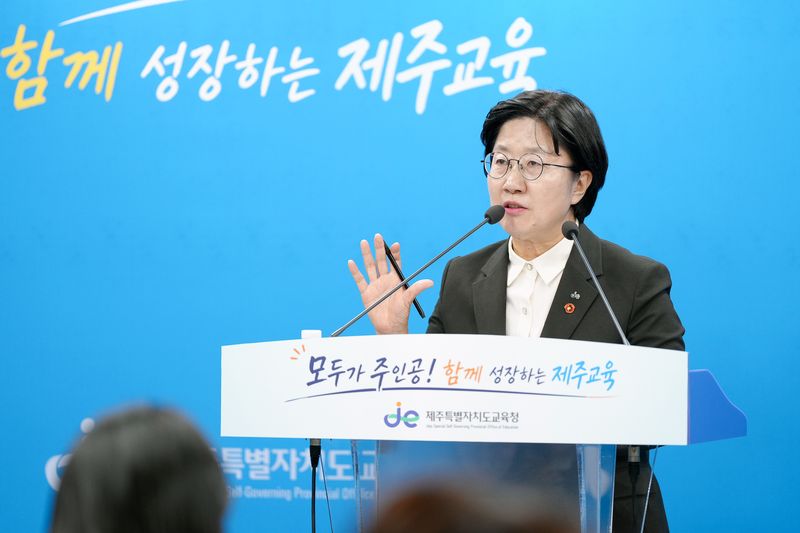
【Financial News, Jeju = Jeong Yong-bok】 The Jejudo Office of Education has drawn up a 2027 budget proposal of 1.617 trillion won, up 38.2 billion won from this year's main budget. Personnel costs are up 55.8 billion won, while school facility project spending is down 21.2 billion won.
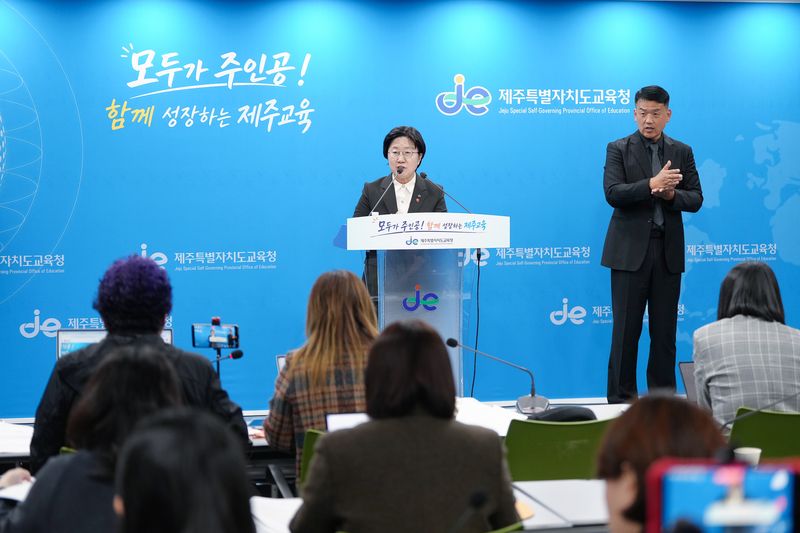
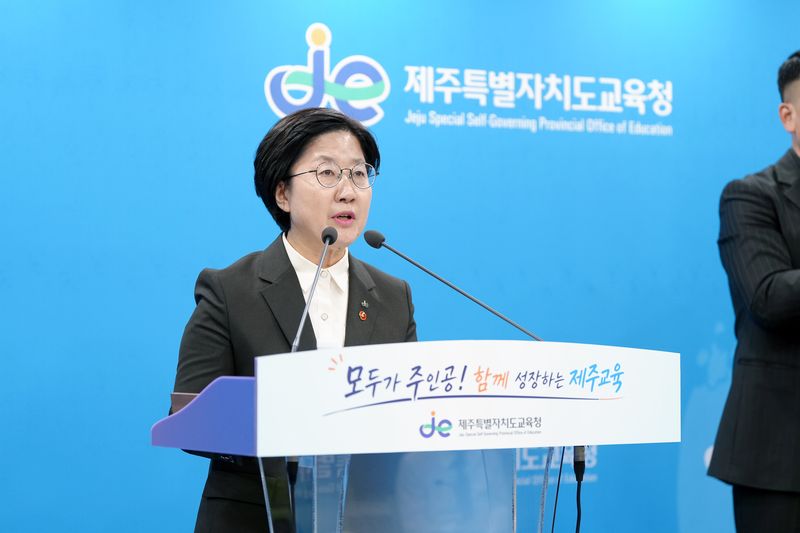
Superintendent Go Ui-suk held a press conference on the morning of the 9th and announced the priorities for the 2027 budget proposal for the Special Account for Education, which was submitted to the Jeju Special Self-Governing Provincial Council on the 6th. The proposed budget is up 2.4% from this year's main budget of 1.5788 trillion won. However, it is 75.5 billion won less than the final budget of 1.6925 trillion won, which includes this year's second supplementary budget.
Although the overall budget is larger than this year's main budget, its spending structure has become more rigid. Personnel-related expenses, including staff salaries and support for salaries at private schools, will rise from 877.6 billion won this year to 933.4 billion won next year. Their share of the total budget will also increase by 2.1 percentage points, from 55.6% to 57.7%.
The 55.8 billion won increase in personnel costs is 17.6 billion won greater than the 38.2 billion won increase in the overall budget. Basic school operating costs will rise by 2.3 billion won, from 165.1 billion won to 167.4 billion won, but the budget excluding personnel costs and basic school operating costs will fall by 19.9 billion won, from 536.1 billion won to 516.2 billion won.
Spending on facility projects, including building new schools and upgrading aging facilities, will fall 16.8%, from 126.2 billion won this year to 105 billion won next year. In other words, investment in educational facilities is being reduced even as the overall budget grows.
The detailed facility-project budget includes 44.2 billion won for building new schools and expanding existing ones. The projects include Jeju Cheomdan Elementary and Middle Schools, Seobit Middle School, Jeju Mirae High School, provisionally named Odungbong Elementary School, and a branch of Jeju Yeongji School. The budget allocates 23.4 billion won to improve the educational environment at existing schools and 11.8 billion won to expand or rebuild classrooms.
Constraints on fiscal management are also apparent in the revenue structure. Transfers from the central government will total 1.2949 trillion won, an increase of 117.2 billion won from this year. By contrast, transfers from local governments will decrease by 27.1 billion won, and transfers from funds will shrink from 103.6 billion won to 53.8 billion won.
In particular, as the funding period for some temporary revenue sources, including the tobacco-consumption-tax component of the local education tax, ends at the close of this year, transfers of the current-year portion of the local education tax will decrease by 26.7 billion won. The overall budget has grown thanks to an increase in ordinary grants from the central government, but reduced revenue from other sources and higher personnel costs have left less room to allocate funds to education programs.
The government's planned reform of the local education finance grant system is another factor. The proposal would replace the existing system, which is linked to domestic tax revenue, with one that takes into account economic growth and changes in the school-age population, among other factors. Debate continues over the stability of education finances and the allocation of funding among regions. The National Assembly's handling of the proposal and its specific fiscal impact on Jeju have yet to be determined.
Superintendent Go Ui-suk expressed concern that, if the government's grant reform proposal passes as is, it could become difficult to secure the funding needed to build new schools, convert schools into general high schools, and improve educational facilities. The office plans to review its revenue and expenditure structure again next year and pursue spending adjustments, including consolidating similar or overlapping programs.
Despite constrained finances, new programs have been included in student safety and educational welfare. The budget allocates 4.2 billion won for grants to help incoming elementary, middle, and high school students prepare for school. The planned grants are 300,000 won for first-year elementary school students and 200,000 won for first-year middle and high school students. Although included in the budget proposal, the program cannot be implemented until the relevant ordinance is enacted and the necessary administrative procedures are completed.
A total of 8.5 billion won has been allocated to support student transportation. The budget includes 8.1 billion won for transportation costs for middle and high school students and 400 million won for operating Safe Taxis and related services. The Safe Taxi service is planned as a pilot program for students who need special transportation support for health reasons and students in transport-disadvantaged areas of towns and townships. It will also provide parents with vehicle location and pickup and drop-off information.
A total of 1.2 billion won has been allocated to support the rural school stay program. It helps students from outside Jeju transfer to rural schools in Jeju to experience education and local life for a set period. The amount of support varies according to factors such as the number of children in the applicant household.
The per-student meal subsidy is also set to increase by 3.6% from this year. A total of 122.3 billion won has been allocated to integrated support, which includes educational welfare, special and inclusive education, alternative education, and support for students from migrant backgrounds.
For school safety, the budget includes 700 million won to support CCTV installation and 600 million won to operate an intelligent monitoring system. The system is designed to use artificial intelligence (AI) to detect and respond to dangerous situations and unusual behavior in school CCTV footage.
The budget allocates 2.6 billion won to support improvements in foundational academic skills and 4.4 billion won to strengthen AI-based teaching and learning capabilities. The funding is intended to tailor educational support to students' learning levels and characteristics and improve the digital learning environment.
A total of 800 million won has been allocated to expand Jeju 4·3 peace and human rights education. Superintendent Go also outlined plans to create a 4·3 Education Division through an organizational restructuring and strengthen related education. The office is also pursuing the conversion of Seongsan High School into an International Baccalaureate (IB) school. The IB is an international curriculum that emphasizes inquiry, discussion, and essay-based assessment.
The education office's organizational restructuring is being pursued again, with implementation targeted for March 1 next year. This follows the rejection of the restructuring-related ordinance at the Jeju Special Self-Governing Provincial Council on October 23, which scuttled the original plan to implement it in January next year.
Superintendent Go said she would take the provincial council's feedback on board and prepare a proposal through consultation. She cited preparations for the new school year and support for schools as key reasons for pursuing the restructuring again.
Superintendent Go said, “I did my utmost to prioritize funding for schools, even if that meant putting the implementation of my campaign pledges further down the list.”
The budget proposal will be finalized after review and approval by the Jeju Special Self-Governing Provincial Council. With personnel costs rising and facility investment falling, a key question is whether the office's plans to expand support for schools will translate into actual budget allocations and spending.
[email protected] Jeong Yong-bok Reporter