From LNG terminals to ammonia bunkering, Port of Ulsan showcases its stature as an energy hub
- Input
- 2026-11-09 14:00:00
- Updated
- 2026-11-09 14:00:00
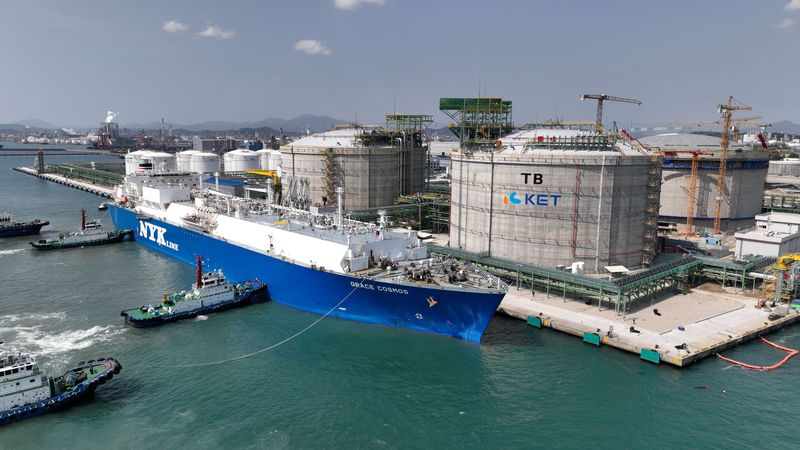
Bunkering to begin by the end of next year, alongside LNG terminal operations
On the 9th, KET was what most clearly conveyed the Port of Ulsan’s status as an energy hub. Its LNG tanks, each three times the size of Jangchung Gymnasium, stood out. KET is a joint venture between Korea National Oil Corporation (KNOC) and SK Gas Co., Ltd. It began commercial operations in 2024 and currently operates three LNG tanks and 12 oil tanks.So far, 55 vessels have called at the LNG terminal, which has supplied five companies through dedicated pipelines. Its cumulative sendout volume stands at 3.19 million tons. Major customers are reported to include Korea Zinc, S-OIL Corporation, SK Energy Co., Ltd., SK Multi Utility and Ulsan GPS (UGPS). With SK Gas Co., Ltd. having signed a terminal use agreement (TUA), KET is structured to earn steady revenue regardless of supply and demand conditions.
A total of 342 vessels have called at the oil terminal, with cumulative throughput reaching 4.65 million kiloliters. Its current users are understood to include France-based integrated energy company TotalEnergies, Saudi Arabia’s state-owned oil company Saudi Aramco, and Japan’s largest oil company, ENEOS Corporation. Unlike the LNG tanks, the oil tanks operate under short-term contracts of one to two years, so KET is focusing its marketing efforts on increasing revenue.
KET intends to build additional LNG or oil tanks if it can secure demand, as unused land remains on the site leased from the Ulsan Port Authority. With electricity demand rising in the AI era and energy imports and exports expanding, a plan to increase capacity is expected to be drawn up soon.
SK Gas Co., Ltd. is also leading an additional project: using surplus energy for bunkering. LNG will be transferred to vessels and used to fuel LNG-powered ships at sea. The plan is to begin full-scale operations once the LNG bunkering vessel ordered from HD Hyundai Heavy Industries is delivered at the end of next year. From the KET pier, HD Hyundai Heavy Industries’ Ulsan Shipyard is clearly visible just across the way. The bunkering vessel is expected to be delivered soon after it is launched.
World’s first ammonia bunkering a major achievement; joint venture plans underway
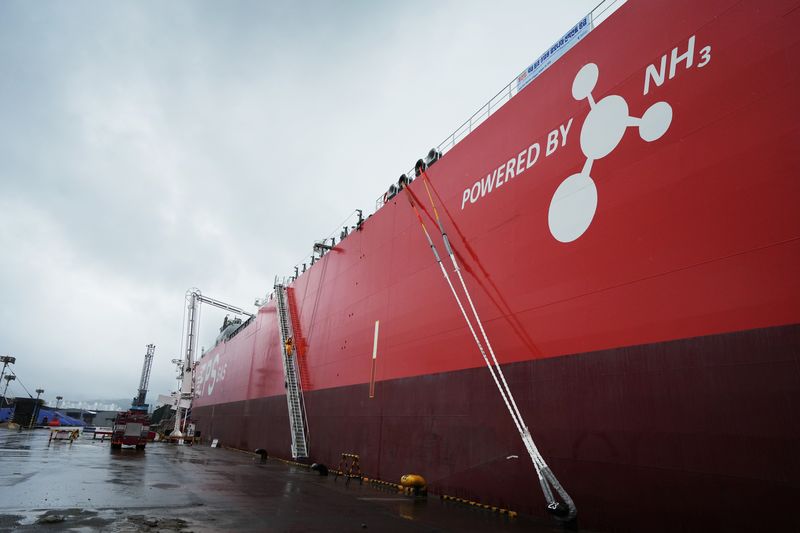
The Port of Ulsan, including KET, is regarded as a global leader in bunkering. That is because it specializes in clean energy, such as ammonia for hydrogen power generation. A notable achievement was importing the world’s first commercially produced clean ammonia, followed by conducting the world’s first ammonia bunkering this April. The feat was made possible by the expertise of Ulsan-based Lotte Fine Chemical, which has handled ammonia for more than 40 years.Last month, a demonstration project was completed at Pier 2 of Ulsan Main Port to supply 800 tons of renewable-energy-based ammonia to the Terra Clove, a very large ammonia carrier (VLAC). Unlike the three previous supplies of ammonia fuel to ships during sea trials, this was a full-scale supply of ammonia fuel to a vessel in commercial operation. Methanol bunkering has also reached a substantial level. In 2023, 1,000 tons of green methanol were supplied to a 16,200-TEU container ship.
Building on its track record of bunkering clean fuels, including LNG, ammonia and methanol, the Ulsan Port Authority and SK Gas Co., Ltd. are pursuing the establishment of a joint venture to run a bunkering business.
A cluster encompassing everything from energy storage to bunkering will be established at the Port of Ulsan. The plan is to develop it by 2030, with a green hydrogen logistics hub equipped with ammonia storage tanks, a hydrogen production complex using LNG cold energy, and a low-carbon energy tank terminal cluster that also includes methanol.
There is optimism that the Port of Ulsan’s clean-energy hub will take off around the time the International Maritime Organization’s (IMO) Marine Environment Protection Committee (MEPC) establishes the Net-Zero Framework (NZF) for international shipping. A Port of Ulsan official said, “The direction of the IMO MEPC is clear. Even if the timing of the NZF’s adoption shifts somewhat, it is only a matter of time before clean energy takes center stage.”
[email protected] Kim Yun-ho Reporter