Kim Woo-young: “The research ethics review process for national R&D projects is inadequate; the system needs an overhaul”
- Input
- 2026-11-09 14:09:52
- Updated
- 2026-11-09 14:09:52
[Financial News] Concerns have been raised that gaps exist in the government’s oversight system for checking whether Institutional Review Board (IRB) reviews are conducted for national research and development (R&D) projects. In particular, the Presidential Security Service under the Yoon Suk Yeol administration carried out an AI-related R&D project worth 24 billion won, and questions have emerged about whether the research ethics review process was sufficiently rigorous, including because military personnel were mobilized to collect biometric information.
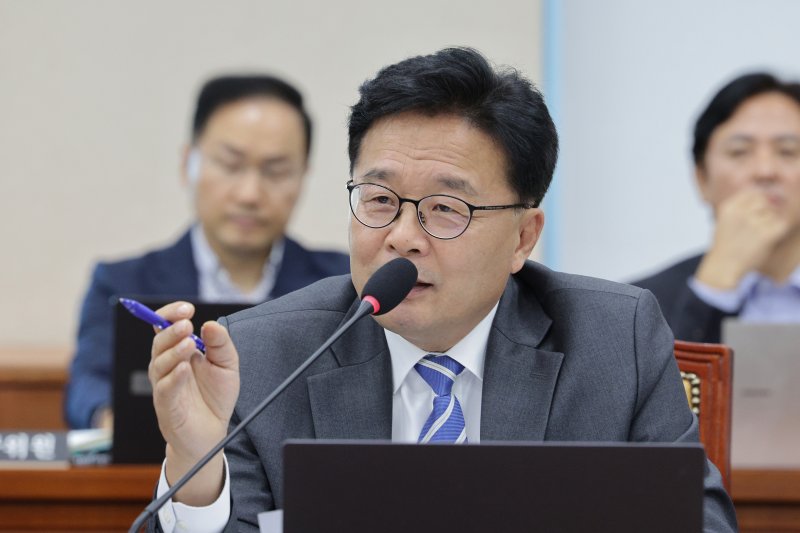
On the 9th, after analyzing materials provided by the Ministry of Science and ICT, Kim Woo-young, a Democratic Party of Korea lawmaker on the National Assembly’s Science, ICT, Broadcasting, and Communications Committee, pointed out that the system for checking compliance with IRB review requirements in national R&D projects was unclear.
When Kim asked about the timing of IRB reviews and the applicable oversight standards, the Ministry of Science and ICT replied, “The law does not clearly specify when an IRB application must be submitted.” The Bioethics and Safety Act currently requires IRB review before research involving human participants begins. However, Kim said the materials provided by the ministry did not set out specific oversight procedures for checking compliance during the selection, contracting, and implementation of national R&D projects.
At the previous National Assembly audit, Kim criticized the fact that no IRB review had been conducted during the initial phase of the Presidential Security Service’s 24-billion-won “Intelligent Manned-Unmanned Integrated Security and Safety Technology Development Project” under the Yoon Suk Yeol administration. The project, an AI R&D initiative led by the Electronics and Telecommunications Research Institute (ETRI), aimed to develop technologies for recognizing crowd behavior and dangerous activities, as well as for video-based analysis of biometric signals and stress levels.
The Ministry of Science and ICT is said to have consulted the Ministry of National Defense to conduct technical demonstrations for the project, then obtained consent from individual military personnel to provide personal information. Kim’s office said, “The military is a special organization with a top-down chain of command,” adding, “It is necessary to examine closely whether military personnel were genuinely free to refuse consent or withdraw it partway through their participation, and whether they faced any disadvantages for declining to participate.”
Concerns about research misconduct by a joint research institution were raised in connection with the project, and a decision was made to suspend it in May 2026. Separately, calls have been made for further scrutiny of compliance with IRB review requirements and of how the collected biometric information has been stored and disposed of.
Kim Woo-young said, “We need to check whether military personnel were able to refuse freely, without worrying about their superiors, in research involving the Ministry of National Defense,” and stressed, “The Ministry of Science and ICT must investigate the entire process—from research ethics reviews to the collection and use of personal information and data management after the project is suspended—and overhaul the oversight system for national R&D.”
[email protected] Lee Hae-ram Reporter