Daehong Communications and Incheon Metropolitan City launch blue crab shell safety collection bag campaign
- Input
- 2026-11-09 13:31:39
- Updated
- 2026-11-09 13:31:39
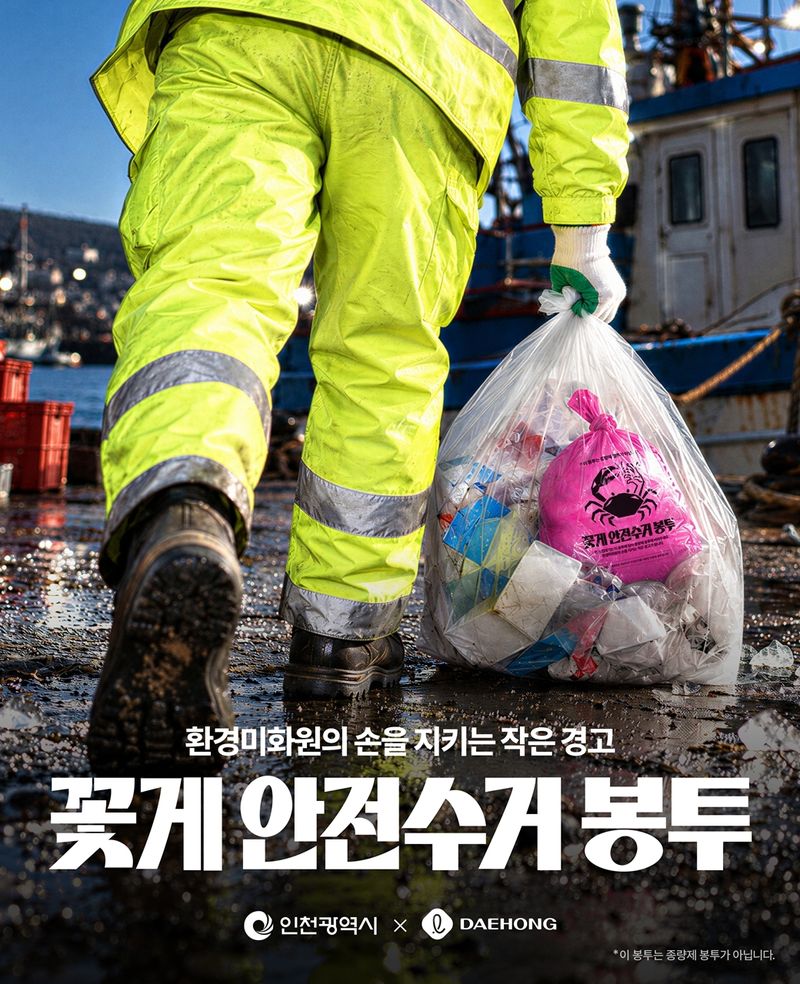
[Financial News] Daehong Communications is launching the “Crab Alert” campaign with Incheon Metropolitan City to prevent sanitation workers from being injured while collecting waste.
According to industry sources on the 9th, the campaign is a public service initiative that uses red “blue crab shell safety collection bags” to make it easier to spot sharp blue crab shells inside pay-as-you-throw bags. It was prompted by concerns that workers have difficulty spotting sharp shells mixed into these bags before collection, as shells left over after eating blue crab are discarded. Incheon is considered one of the country’s major blue crab-producing areas, accounting for 26.4% of national production last year.
In a survey conducted by Daehong Communications among sanitation workers in the Incheon area, 46% of respondents said they had been injured by blue crab shells. By contrast, just 8.7% of citizens surveyed said they knew that blue crab shells could pose a danger to sanitation workers.
Daehong Communications will distribute 50,000 red blue crab shell safety collection bags, which are easy to spot inside pay-as-you-throw bags, to blue crab vendors at major markets in Incheon, including Sorae Port. It will encourage consumers to use them instead of the regular bags provided by vendors. The company also plans to expand the campaign to cover the disposal of other sharp household waste, such as shellfish shells and skewers, using campaign videos and posters to explain the dangers of blue crab shells and how to dispose of them properly.
A Daehong Communications representative said, “Blue crab, a familiar food for us, can become a sharp hazard to sanitation workers the moment it is thrown away.” The representative added, “By adding a safety signal to everyday routines, we hope to help reduce risks at collection sites.”
[email protected] Kang Myeong-yeon Reporter