Five years after a 300 billion won donation, some 20,000 pediatric patients have been diagnosed... The results of Lee Kun-hee’s donation
- Input
- 2026-11-09 15:00:00
- Updated
- 2026-11-09 15:00:00
[Financial News] Rare diseases take an average of 9.2 years to diagnose, and half of patients still do not even know the name of their condition. Launched to bridge this gap, the Lee Kun-hee Child Cancer and Rare Disease Project has diagnosed more than 20,000 pediatric patients over the past five years.
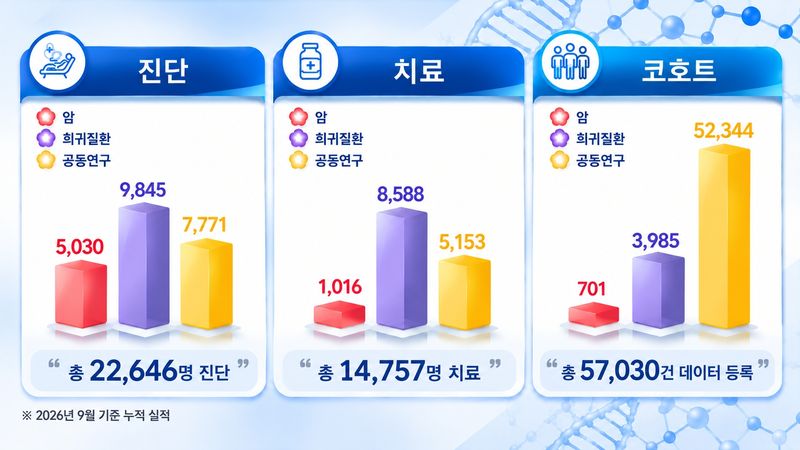
The SNUH Child Cancer and Rare Disease Support Project Group said on the 9th that, through the initiative funded by the 300 billion won donation from the family of the late Samsung Chairman Lee Kun-hee, 22,646 patients had been diagnosed and 14,757 treated as of September this year. The group held an international symposium that day, bringing together experts from Korea and abroad to share five years of research results.
The project began in April 2021. The project group was launched in May that year, with Seoul National University Children's Hospital as its lead institution, and is set to run for 10 years through 2030.
At least 20 new rare diseases identified... Diagnoses available at regional hospitals in 4–6 weeks
In the rare disease field, the project has identified and diagnosed at least 20 previously unknown rare diseases. It has also established a nationwide rare disease diagnostic network. When a regional hospital sends samples and genetic information, a central analysis center examines them and provides diagnostic results within 4–6 weeks. The project also provides genetic counseling and prenatal diagnosis for families of pediatric patients with rare genetic diseases.
In pediatric cancer, the project developed Korea’s first standard treatment protocol for pediatric acute lymphoblastic leukemia. It divides patients into five risk groups to establish treatment strategies and has laid the foundation for precision medicine through genomic analysis and next-generation sequencing (NGS)-based minimal residual disease monitoring.
At least 60% of pediatric solid tumor patients in Korea are registered in STREAM, a precision medicine platform for pediatric solid tumors. The platform is being used to diagnose patients who had previously gone undiagnosed and reclassify existing diagnoses to identify more effective treatment approaches. SNUH has also established a system to manufacture CAR-T cells in-house at its GMP facility, supplying the cells to 21 pediatric patients as of September this year.
Research projects: 7 → 190... 185 institutions nationwide participating
Nationwide research collaboration has also expanded. The number of research projects supported by the project group grew from 7 in 2021 to 190 this year. As of September this year, 185 institutions and 1,411 medical professionals nationwide are participating, and 57,030 data records have been registered in the cohort of patients with pediatric cancer and rare diseases.
Such collaboration is especially important given the shortage of medical resources. There are only 69 pediatric hematology-oncology specialists in Korea, and at least 70% of pediatric cancer patients living outside Seoul travel to other regions for treatment. The project group is connecting medical institutions and researchers nationwide to create an environment where children can receive appropriate diagnoses and treatment regardless of where they live.
International symposium shares the latest research in pediatric precision medicine
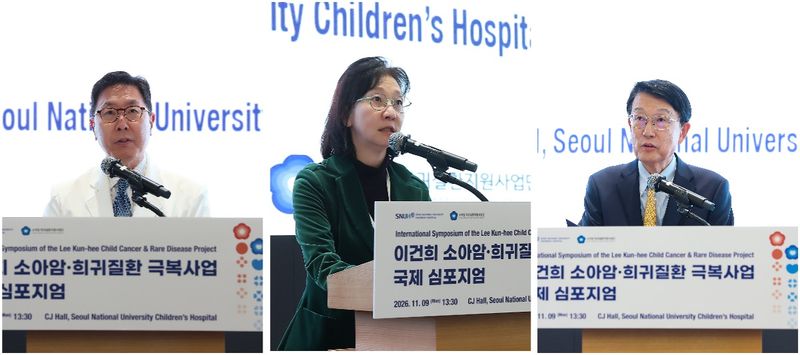
The symposium was held under the theme “Opening the Future of Pediatric Precision Medicine: Cutting-Edge Research in Pediatric Cancer and Rare Diseases.” Eight experts from Korea and abroad, including those from the International Agency for Research on Cancer (IARC) and universities in the United States and the United Kingdom, presented on topics including genomics-based precision medicine for pediatric cancer, CAR-T therapy development, international collaboration and precision gene editing for rare disease diagnosis, patient-derived organoids, and digital pathology research. About 200 people attended.
“Because pediatric cancers and rare diseases affect relatively few patients per condition and have diverse characteristics, many challenges are difficult to address through the efforts of individual research institutions alone,” said Chae Jong-hee, head of the project group. “I hope this symposium will help strengthen the foundation for international collaborative research and provide an opportunity to explore directions for progress over the next five years.”
“The true value of medical research lies in improving patients’ lives,” said Nam-Jong Paik, president of SNUH. He emphasized that “this project demonstrates the potential for a virtuous cycle in which a meaningful private donation supports medical research, and the resulting findings in turn contribute to patients’ diagnosis and treatment.”
“The philosophy of ‘respect for humanity’ that the late Chairman Lee Kun-hee emphasized throughout his life grew into concern and love for all life and for children,” said Jang Seok-hoon, Samsung’s president overseeing social contribution work. “I hope this symposium will help create greater hope and more treatment opportunities for patients with pediatric cancer and rare diseases, not only in Korea but around the world.”
The project group plans to expand its international collaboration network and advance treatment technologies such as CAR-T. It will also develop programs for early diagnosis and prevention, including ultra-rapid genetic testing for infants and young children in intensive care units, newborn genomic screening, prenatal diagnosis, and preimplantation genetic testing. The group plans to incorporate research findings into clinical practice and health policy to broaden patients’ access to diagnosis and treatment.
[email protected] Jeong Myeong-jin, Medical Correspondent Reporter