Musk’s procurement team makes secret trip to Japan, places rush orders: “Deliver within a few months”
- Input
- 2026-11-09 09:12:43
- Updated
- 2026-11-09 09:12:43
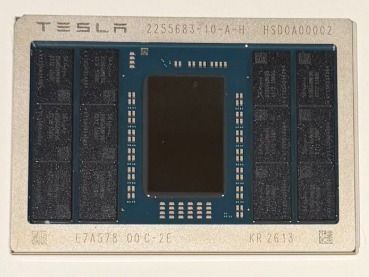
【Seo Hye-jin, Tokyo correspondent for Financial News】The TeraFab mega-scale semiconductor production project being pursued by Elon Musk is moving ahead with preparations for mass production, outlining its ordering plans to Japanese equipment makers. Earlier this month, its procurement team reportedly made a highly confidential visit to Japan and asked some companies to deliver equipment within a few months. Japan’s industry welcomes the arrival of a major customer but is concerned about Musk’s aggressive timeline, given his lack of experience in mass-producing semiconductors.
According to the Nihon Keizai Shimbun (The Nikkei) on the 9th, several TeraFab procurement officials visited Japan earlier this month and held meetings with local suppliers. They began detailed coordination, including arrangements to bring in equipment, to meet Musk’s target—announced last month—of starting mass production in the second half of 2028.
“Not enough chips”: Tesla and SpaceX move to produce them in-house
TeraFab is a semiconductor production project being jointly pursued by Tesla and SpaceX in Texas, U.S. Its goal is to secure chips directly for Tesla’s self-driving cars and humanoid robot Optimus, as well as for SpaceX’s planned space-based artificial intelligence (AI) data centers.
Musk believes that even if existing suppliers such as Samsung Electronics and Taiwan’s TSMC increase production, they will struggle to meet future demand. According to The Wall Street Journal (WSJ), when he unveiled the TeraFab plan last March, he said his partners were expanding production more slowly than he wanted. The idea is to bring together everything from chip design to manufacturing, packaging and testing at a single site, speeding up semiconductor development and production.
The long-term production target is 1 million wafers per month. The Nikkei reported that TeraFab informally told equipment makers and others this fall that it intended to pursue mass production at that scale after 2032. That is 40 times the capacity of 25,000 wafers per month at the plant Rapidus built in Chitose, Hokkaido, Japan.
Of that total, about 700,000 wafers are reportedly to be allocated to memory semiconductors for data storage, and at least 300,000 to semiconductors for computing.
When the plan was announced last March, many in the industry were skeptical. It was difficult to gauge how seriously Musk would enter the semiconductor industry, which requires specialized manufacturing experience. But as concrete orders begin to take shape, more companies are viewing the project as a real opportunity to win business.
An executive at a supplier told the Nikkei, “The biggest topic in the semiconductor industry right now isn’t Kioxia or Rapidus. It’s Elon Musk.”
Even with earlier equipment deliveries, mass production in 2028 will be a challenge
Efforts to secure equipment quickly were already underway before the visit to Japan. At SpaceX’s earnings announcement on the 20th of last month, Musk thanked ASML and its partner companies for bringing forward equipment delivery dates.
Musk is also demanding rapid deliveries from Japanese companies. One equipment maker said TeraFab had set a delivery deadline just a few months away, adding, “It’s an unreasonable order, but we have no choice but to do as much as we can.”
The key challenge comes after the equipment is secured. It typically takes at least three years from planning a state-of-the-art semiconductor plant to starting mass production. Even after the equipment is installed, it takes time to reduce defect rates and produce goods reliably.
TeraFab is being developed in stages: first, the technology will be validated at a research facility in Austin, then the project will expand to a large-scale production facility in Grimes County. Musk said the goal was to obtain the first test chip that functions properly at the research facility in May or June next year and begin mass production in the second half of 2028. He described the timeline himself as “very aggressive.”
TeraFab has also joined forces with Intel to secure manufacturing technology. Intel announced last April that it would collaborate on TeraFab’s chip design, manufacturing and packaging. Collaboration with TSMC is also under discussion, but the specific form of its participation has not been decided.
Another challenge is whether the enormous investment can be recouped. The first-phase investment in Grimes County alone, according to the Texas state government, amounts to $16.8 billion (about 22.843 trillion won). Hisaya Suzuki of market research firm Omdia noted, “With the level of demand for semiconductors for SpaceX still unclear, we’ll have to see whether the plant can smoothly fill its production capacity even after it is completed.”
[email protected] Seo Hye-jin Reporter