iPhone Duo faces app optimization controversy after screen damage concerns
- Input
- 2026-11-09 09:05:55
- Updated
- 2026-11-09 09:05:55
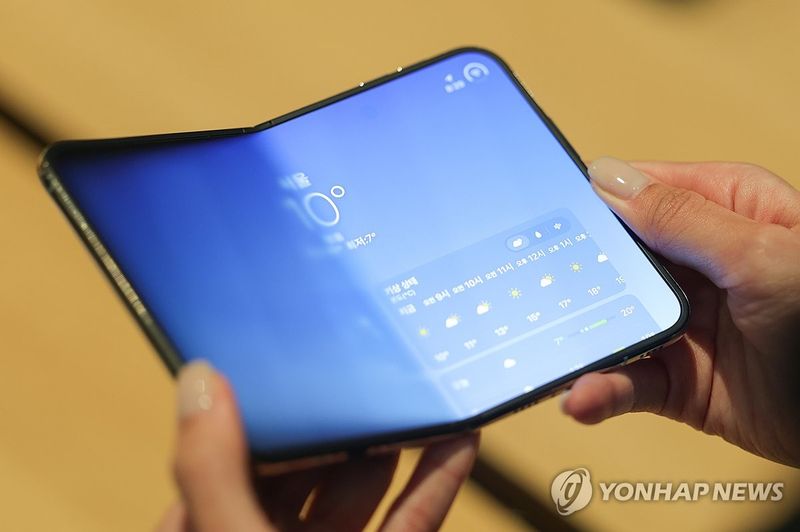
[Financial News] Apple’s first foldable smartphone, the iPhone Duo, is drawing consumer complaints as software optimization problems emerge following controversy over screen damage early after its launch. Major apps do not run optimized for the large inner display, leaving parts of the screen unused, and its multitasking features are also said to be more limited than those of competing models. Concerns over hinge durability and confusion surrounding after-sales service responses have added to the controversy over the device’s overall quality.
Major apps leave black bars when opened... Apple’s own apps also under fire
According to industry sources and foreign media on the 9th, criticism has mounted since the iPhone Duo’s launch that major apps have not been adequately optimized for its large screen. The iPhone Duo has a 7.6-inch inner display, but some apps reportedly run at the size of a regular smartphone rather than using the entire screen.US tech publications CNET and MacRumors, among others, reported that apps not optimized for the iPhone Duo’s 4:3 aspect ratio appear in the center of the screen, leaving black bars on either side. Consumers bought a foldable phone to make use of its wide display, yet they may find it difficult to enjoy the benefits of a large screen in the apps they use every day. Tech publication Tom’s Guide also criticized the experience, saying, “All you see on a device that cost $2,000 (about 2.8 million won) is wide black bars.”
Major apps cited as lacking optimization include productivity apps such as Google Docs, Drive, Sheets and Slides, as well as Microsoft Teams, PayPal, Uber, Starbucks and Wells Fargo.
Some apps have also been criticized for failing to offer a user interface (UI) suited to a large screen even when they fill the display. Gmail appears across the entire screen, but it does not support the two-column layout available on Android foldables, which shows the inbox and the body of an email side by side. As a result, reviewers say it amounts to a regular smartphone screen enlarged horizontally.
Apple’s own apps have not escaped criticism. Users on the international online community Reddit pointed out that even Apple’s official Apple Store app is not optimized for the inner display, leaving black bars on screen.
As the controversy spread, Susan Prescott, Apple’s vice president of Worldwide Developer Relations, sought to allay concerns in a statement, saying, “There are now more than 100,000 apps built specifically for the iPhone Duo on the App Store, and thousands more are being added every day.” Apple has distributed developer tools and also held developer workshops in 19 cities around the world.
But users remain dissatisfied because, regardless of the total number of apps, frequently used major apps have not been sufficiently optimized.
Rotating the screen ends split-screen mode... concerns over hinge durability persist
Limitations on multitasking are also seen as a drawback. According to tech publication PhoneArena, the iPhone Duo supports split-screen mode, which runs two apps side by side, only in landscape orientation. If the device is rotated to portrait while the screen is split, split-screen mode ends and only one app is displayed.It also lacks features supported by the Samsung Galaxy Z Fold series, such as running three apps side by side in split-screen mode or freely opening pop-up windows. Critics say it may be less useful than competing models for workflows that involve running multiple apps at once.
Questions about hardware durability also persist. Foreign media recently reported cases in which internal hinge components on the iPhone Duo temporarily shifted out of position, causing resistance when the screen was unfolded. Some users claimed they had experienced noises while unfolding the device or damage to the inner display.
Some users also complained that the guidance they received during after-sales service differed. They claimed that despite having AppleCare+, they were unable to use the advance replacement service because replacement devices were out of stock, or that a free replacement offered during an online consultation was changed to a paid repair during the actual inspection.
An industry source said, “The iPhone Duo is currently exposing structural shortcomings on both fronts: a ‘screen that breaks,’ stemming from partner suppliers’ failure to manage materials, and a ‘screen that goes to waste’ because the ecosystem was not ready.” The source added, “Despite its ultra-premium price tag, it has failed to guarantee even basic hardware finish and software usability on its large display, and its early sales momentum appears to be hitting the brakes hard.”
[email protected] Yoon Hong-jip Reporter