Expert advice for Samsung Electronics retail investors who say, “I’ll sell when I break even”: “If it’s not borrowed money, don’t cut your losses...”
- Input
- 2026-11-09 14:20:39
- Updated
- 2026-11-09 14:20:39
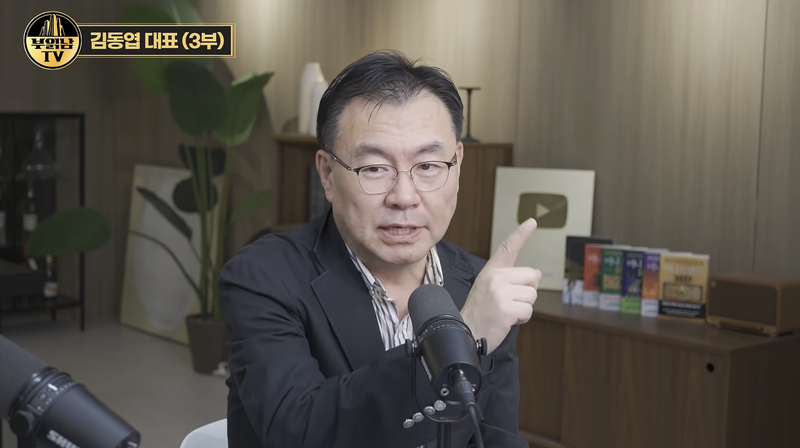
[Financial News] The KOSPI barely held above the 5,000 mark after circuit breakers were triggered on the 6th. An expert has advised that whether individual investors who bought at the highs should cut their losses now depends on the nature of the money they invested: hold if they can leave it invested until the second half of next year, but sell if it will come due before then.
Whether to hold depends on “the nature of the money”... “Hold if you don’t need the money urgently”
Kim Dong-yeop, head of the S1 Investment Research Institute, offered this advice for investors stuck in Samsung Electronics and SK hynix in a video posted on the YouTube channel “Buiknam TV: From Buying Your Own Home to Becoming a Building Owner” on the 8th.
The video was filmed on the 4th, before the sharp drop. The KOSPI was then at the 5,500–6,000 level. Kim described it as “an absurdly low level, though we could see even lower lows.” Two days later, on the 6th, the KOSPI closed at 5,059.69, down 6.02%. Samsung Electronics fell to 193,500 won, while SK hynix dropped to 1,176,000 won.
Kim began by describing the individual investors who are now stuck. “They’re not people who bought when the KOSPI was at 5,000–6,000, failed to sell at 9,000 and got stuck,” he said. “Most bought at 4,000 and sold at 4,500, bought again when it passed 5,000 and sold at 6,000, then bought again when it passed 7,000, and eventually got stuck at 8,000–9,000.”
Kim said that “the nature of the money” was what determined whether investors could ride out the downturn. “The only advantage individuals have over foreign investors and institutions is time,” he said. “Foreign investors and institutions are evaluated quarterly, semiannually and annually, but individuals don’t face that kind of pressure.”
“If it’s money you can leave invested until the second half of next year or the end of the year, holding is the right choice,” he said. “If you’ll need to spend it or it comes due before then, you have no choice but to sell.” Even when the host summed up that investors who scrambled to raise money to invest during the rally might be better off realizing their losses, Kim replied that the deciding factor was whether they could afford to leave the money invested.
“No major rally by year-end... The unsettled market will last another six months”
Kim said, “We’re now in a reverse-financial phase—the autumn—when earnings are strong and interest rates are rising, but share prices are falling sharply. Next comes the winter, the reverse-earnings phase, in the first half of next year.” In that phase, share-price declines will ease, but earnings will slow and interest rates will fall. He forecast that “it won’t fall as shockingly as it has this time, but it won’t rise either, leaving us in an unsettling, nerve-racking period that will last about six months from now.” He did not expect a major rally by year-end.
He recommended that investors with cash buy in installments. “If there are eight or nine months until the first half of next year, that’s about 150 trading days,” Kim said. “Divide the total amount you want to buy into 150 equal parts and buy a portion every day.”
“If you think it’ll fall further tomorrow, you can’t buy,” he said. “Unless you mechanically step in when it falls 5–10% below the price you had in mind, it’s impossible, given how the human brain works, to buy a stock that’s clearly in a downtrend.”
“Samsung and SK hynix to get a multiple re-rating from the second half of next year... They’ll take off,” he forecasts
He pushed back against pessimism. “What has changed compared with six months ago?” Kim asked rhetorically. “Earnings are still strong, spot and futures prices for memory are rising, exports are doing well, and not a single Big Tech company has announced it will cut investment next year.” He also said that if the war in the Middle East ends this year, the U.S. Federal Reserve (Fed) may find it difficult to raise interest rates next year, which could instead help stabilize the market.
He said Samsung Electronics and SK hynix shares were “far too cheap” relative to the scale of their shareholder returns, but attributed the market’s view of returns worth around 100 trillion won as “one-off” to the cyclical nature of semiconductor earnings. Samsung Electronics, he said, is not valued like Taiwan Semiconductor Manufacturing Company Limited (TSMC), whose earnings have risen steadily for a decade, because Samsung has swung between losses and profits every three to four years.
“Once results through the second quarter of next year are confirmed, doubts will disappear,” Kim said. “I think the market will take off from the second half of next year as multiples are re-rated.” He added, “If earnings keep coming in, sentiment will shift toward the view that the concerns were excessive.”
[email protected] Seong Min-seo Reporter