“Their brains are cooked—they even talk nonsense” ... Doctor warns after a string of incidents involving marathon runners
- Input
- 2026-11-09 07:27:57
- Updated
- 2026-11-09 07:27:57
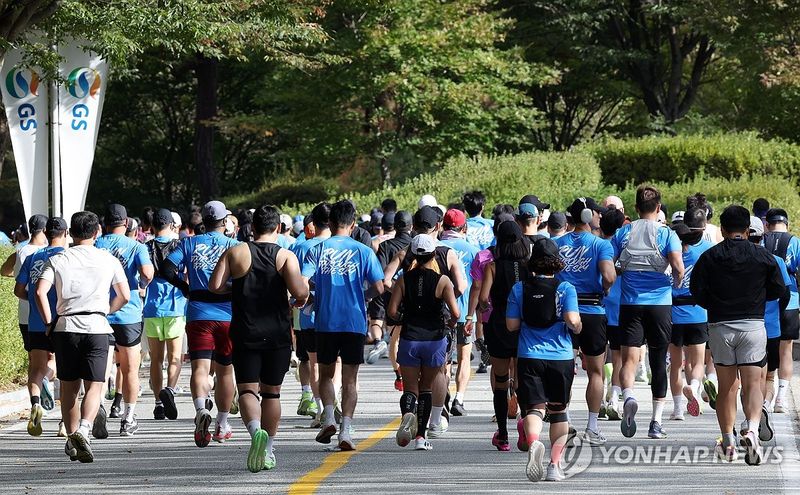
[Financial News] After a series of incidents in which participants collapsed at marathon events in South Korea, an emergency medicine specialist warned of the dangers of overexertion while running. In particular, in hot and humid weather, heat generated during exercise may not dissipate from the body properly, potentially leading to heatstroke.
At the 2026 Seoul Race, held on the 11th of last month, a woman in her 20s competing in the half-marathon collapsed with about 500 meters left to the finish. She received CPR at the scene and was taken to a hospital, but died the following day.
On the 17th of the same month, a woman in her 20s competing in a marathon in Gyeongju, Gyeongsangbuk-do, lost consciousness during the race. She had a high fever and general weakness, but was treated at a hospital and discharged.
Namgung In, a professor of emergency medicine at Ewha Womans University Mokdong Hospital, recently appeared on the YouTube channel Sseoldak and described cases of marathon participants being taken to emergency rooms. He said that patients with body temperatures as high as 41–42°C had actually been brought to the hospital.
Professor Namgung warned that running in hot and humid conditions can prevent heat generated during exercise from dissipating properly, potentially leading to heatstroke.
Professor Namgung explained that emergency patients arise whenever a marathon is held, and that hospitals prepare in advance. “When a marathon is held, our hospital receives an official notice about it and stands by, but patients are bound to come in,” he said. “These days, people run 10 to 20 kilometers, so patients come in at different times.”
He noted that many participants focus so much on improving their times that they put excessive strain on their bodies. When temperatures and humidity are high, heat generated while running may not escape the body sufficiently, increasing the risk of heatstroke.
Professor Namgung also described cases in which patients whose body temperatures had soared to 41–42°C showed altered consciousness and abnormal behavior. “Their brains were cooked, so they talked nonsense and thrashed around. There was even a patient who asked, ‘Doctor, am I dead?’ and thought I was the Grim Reaper,” he recounted.
Professor Namgung stressed that it is important not to overexert oneself in any strenuous exercise, not just marathon running. “Whatever the exercise, doing it strenuously inevitably puts a strain on the body,” he said, urging people to “make sure to rest, run slowly, or drink fluids while running.”
[email protected] Han Seung-gon Reporter