French FM: Europe to Join Abu Dhabi Ukraine Peace Talks; It Cannot Be Sidelined
- Input
- 2026-11-09 01:33:54
- Updated
- 2026-11-09 01:33:54
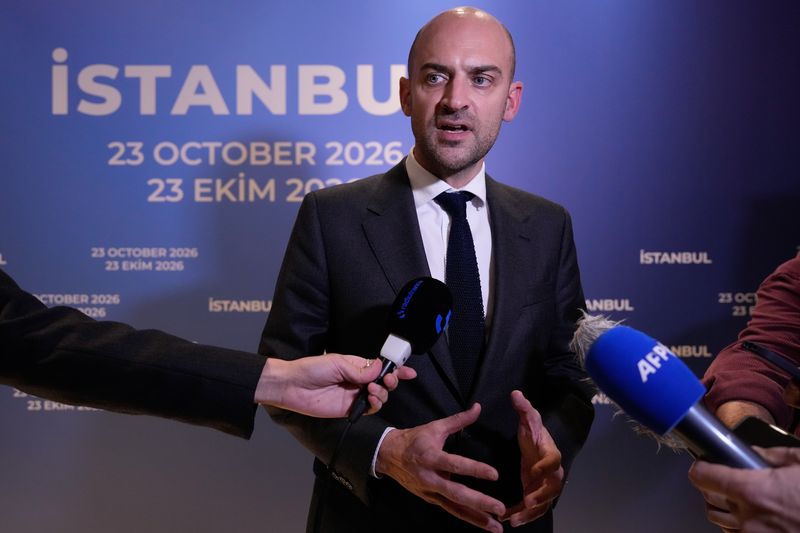
[Financial News] The French government announced that a European delegation would also make a surprise addition to the Ukraine peace talks scheduled for the 10th–11th (local time) in Abu Dhabi, United Arab Emirates (UAE). As concerns mounted that the United States and Russia might pursue a “direct deal” to end the war while excluding Europe, potentially shaking the foundations of European security, France has resolved to take a seat at the negotiating table and make Europe’s voice heard.
On the 8th, according to Agence France-Presse (AFP) and other foreign media, French Foreign Minister Jean-Noël Barrot said in an interview with French public broadcaster RTL that “European countries will send delegations to these talks in Abu Dhabi, and France will also take part.”
Barrot noted, “There have been times when discussions proceeded without Europe,” and stressed, “But we have made it clear to the US mediators that no discussion about the future of this continent (Europe) should disregard our expectations and demands. France will be there to ensure that Europe’s voice is fully reflected.” Barrot did not say who specifically would join the delegation from France or the European Union (EU), but some media outlets had earlier reported that the EU was assembling a delegation led by an official at the level of the European Commission president’s chief of staff.
The Abu Dhabi talks were initially planned as a trilateral working-level meeting, the first in nine months, between senior officials from Ukraine, Russia and the United States, which is acting as mediator. With reports that the US Trump administration is pushing for a “comprehensive agreement” covering Europe’s entire security framework, beyond ending the war in Ukraine, concern in Europe that its interests could be excluded has reached a peak.
The warring sides are sharply divided over Europe’s participation in the negotiations. Ukrainian President Volodymyr Zelensky has consistently welcomed the active involvement of European allies. Russia, by contrast, has taken a negative stance, expressing distrust in Europe’s credentials as a mediator, citing, among other things, past failures to implement the Minsk agreements. Kremlin foreign policy adviser Yuri Ushakov bluntly ruled out their involvement, saying, “They can buy plane tickets and come, but no one intends to invite them to the negotiating table.”
However, there are suggestions that room may open up for Europe to participate, depending on how the negotiations progress. After a Western preliminary coordination meeting in Brussels, Belgium, on the 5th, Jared Kushner, special envoy for US President Donald Trump, said, “Initially, we will consult closely with our European partners separately from the (trilateral) main talks,” but left the door open, adding, “If there is progress in the negotiations, our goal is to transition to broader multilateral talks with Europe participating directly.” Kremlin spokesman Dmitry Peskov has also recently said, “At some point, it will be impossible to hold discussions without the Europeans,” leaving open the possibility of expanding the talks into a multilateral format.
[email protected] Park Ji-hyun Reporter