Iran's Revolutionary Guard Calls US 'Iron Gate' full Land-and-Sea Blockade 'Wordplay'
- Input
- 2026-11-08 23:49:19
- Updated
- 2026-11-08 23:49:19
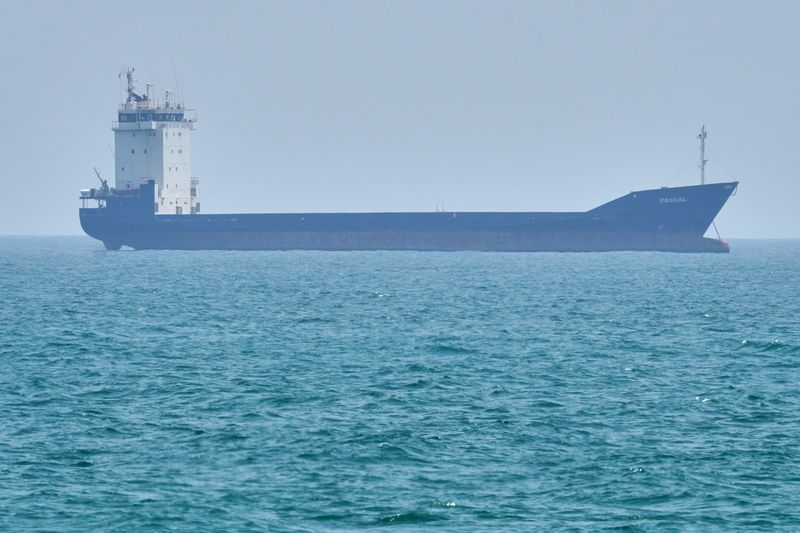
[Financial News] The US military has created a dedicated unit to fully block weapons shipments via land routes and the Caspian Sea, in addition to the naval blockade of Iran it has maintained for months. Iran has countered by saying “there will be no economic collapse” and threatening to lift even its self-imposed missile range limit, bringing the US-Iran standoff over sanctions to a boiling point.
■ US moves to seal off land routes and the Caspian Sea... 'Iron Gate TF' launched
US Central Command officially announced on the 7th (local time) the creation of the Iron Gate task force (TF) to block shipments of advanced weapons and goods subject to sanctions across Iran's land borders and via the Caspian Sea.
Based at Central Command headquarters in Tampa, Florida, the TF consists of about 20 civilian staff and military personnel. Working with other US government agencies, including the Treasury and State Departments, it is tasked with cutting off at the source the movement of advanced weapons systems, dual-use technology, and illicit proceeds.
Central Command chief Brad Cooper said, “The creation of Iron Gate will further strengthen the gains made by the existing naval blockade,” adding, “We will more severely limit Iran's ability to fund terrorist groups, rebuild weapons factories, and replenish its military forces.”
The US military imposed a naval blockade on Iranian ports in the Persian Gulf and Gulf of Oman last July, and is estimated to have blocked Iranian oil exports worth about $25 billion (approximately 34 trillion won) to date. But after signs emerged that Iran had circumvented the blockade and imported more than $2 billion worth of equipment and goods through covert procurement networks, including overland routes through Kazakhstan and Russia and transit via the Caspian Sea, the US tightened its sanctions net.
■ Iran fumes: “It's mere wordplay”... threatens to lift missile range limit
Iran immediately pushed back against the US's sweeping pressure campaign. In an interview with an Iranian semi-official media outlet on the 8th, Islamic Revolutionary Guard Corps (IRGC) spokesman Hossein Mohebbi dismissed the creation of the US task force as “wordplay” and issued a strong warning: “The US will never be able to achieve the level of blockade it wants. Iran's economy will not collapse.” He went on to threaten that if US forces attacked Iranian vessels, “several times as many vessels on the opposing side would be struck.”
The previous day, spokesman Mohebbi also suggested at a press conference that Iran had lifted the 2,000-km limit on the range of ballistic missiles that it had previously imposed on itself. He declared, “The restrictions that applied to us have been lifted, and we will prove our capabilities through action.” The remarks are seen as a show of force directed at the US, in line with Iranian Supreme Leader Ayatollah Ali Hosseini Khamenei's recent order to respond “without geographical limits.”
■ Qatar mediation proposal considered amid sanctions and airstrikes... talks on a knife edge
Even amid the hard-line standoff, behind-the-scenes mediation efforts are continuing. International media, including the Associated Press, reported that Iran is considering a mediation proposal recently put forward by Qatar. The proposal reportedly calls for the US to lift its blockade of Iranian ports and release some frozen assets, while Iran allows International Atomic Energy Agency (IAEA) inspectors access to nuclear facilities that were struck and reopens the Strait of Hormuz.
However, military friction between the two sides continues. On the 6th, the day before the US announced the creation of the TF, President Donald Trump disclosed small-scale airstrikes targeting Iranian air defense facilities around Qeshm Island in the Strait of Hormuz, suggesting that tensions in the Middle East are likely to persist for the time being.
[email protected] Park Ji-hyun Reporter