“My left arm is moving on its own” ... Tests reveal a “hole” in 33-year-old man’s heart [Warning Signs]
- Input
- 2026-11-08 18:00:00
- Updated
- 2026-11-08 18:00:00
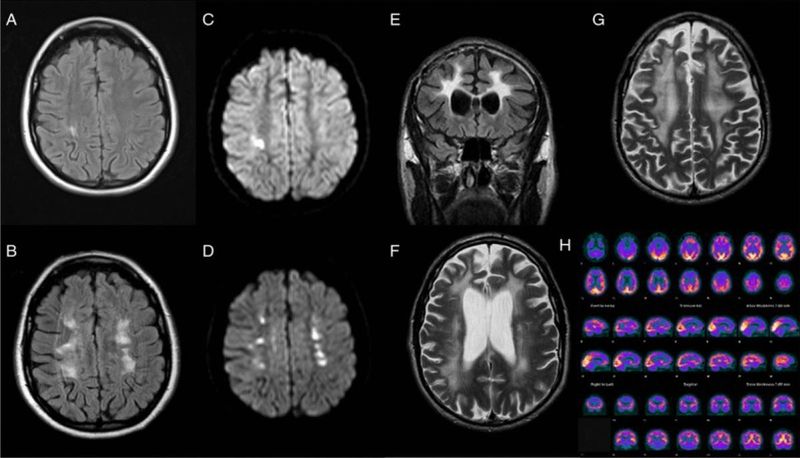
[Financial News] His left arm began moving on its own, against his will. Even when he told it to stop, it wouldn’t obey. He was overcome by a chilling sense of estrangement, as if someone else were controlling it and his arm wasn’t part of his body.
The bizarre symptoms that terrified the 33-year-old man, who had rarely been ill, lasted for a full two hours. It wasn’t simply a problem with his arm. Detailed tests revealed numerous signs of cerebral infarctions throughout his brain, and the real culprit was none other than a “hole in his heart.”
Recently, medical staff at Colombia University Hospital reported in the international journal Cureus a case of cerebral infarction and a congenital heart defect that presented as an extremely rare neurological condition called alien hand syndrome.
The 33-year-old man had experienced similar symptoms 15 days before going to the emergency room, but thought little of them. His second episode, however, lasted two hours and led him to the hospital.
The medical team’s suspicions turned to the brain. An MRI scan revealed several small ischemic lesions—in other words, cerebral infarctions—in the right side of the brain (the frontal and parietal lobes), which is responsible for bodily movement and spatial awareness. The blocked blood flow to the brain had damaged the circuits that control movement, causing alien hand syndrome: his hand moved on its own, beyond his control.
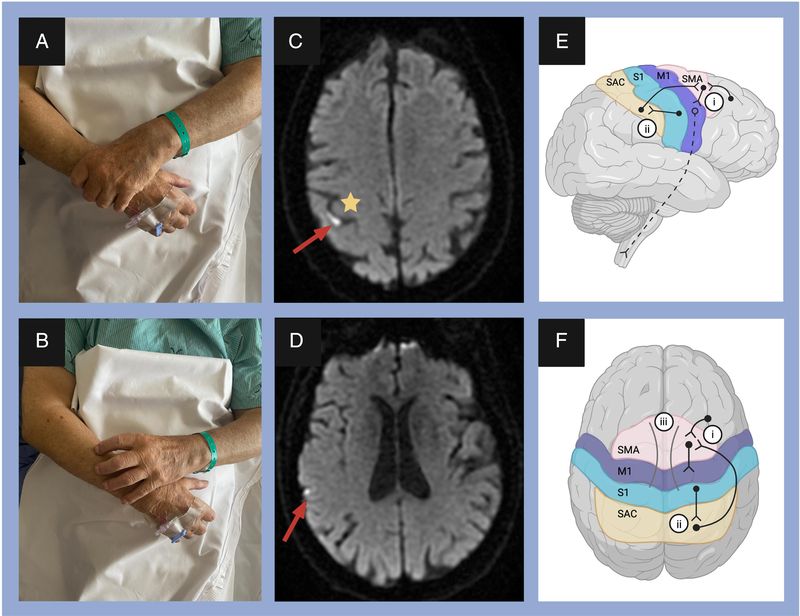
The real mystery came next. Why had a young 33-year-old man with neither hypertension nor diabetes suffered multiple cerebral infarctions?
After thoroughly investigating his blood vessels and checking for arrhythmias, the medical team found a crucial clue on an echocardiogram. A small passage between the man’s right and left atria had not closed: a patent foramen ovale (PFO).
This passage, which helps with breathing in the womb during fetal development, normally closes after birth. But if it remains into adulthood, it can become a dangerous route. If a blood clot formed in a vein passes through this opening, it can bypass the lungs, which filter out clots, and travel directly to the blood vessels in the brain, blocking them. The medical community calls this a paradoxical embolism. The medical team concluded that this mechanism had caused the man’s cerebral infarctions and the strange movements of his arm.
Treatment was swift and straightforward. Rather than opening his chest, doctors inserted a catheter through a blood vessel and successfully sealed the opening in his heart with a percutaneous closure procedure. After six months of antiplatelet therapy, the alien hand syndrome that had been weighing on him disappeared as if by magic, and he returned to his normal life.
Alien hand syndrome is not a fiction born of cinematic imagination, but a clear neurological emergency warning sign of conditions such as stroke. The medical team strongly advises anyone whose arm or leg on one side suddenly moves on its own, or who experiences an unfamiliar sensation as if their body were not their own, to seek an immediate, thorough neurological examination rather than dismissing it as a simple muscle spasm.
[email protected] Jeon Sang-il Reporter