Byun Ju-young's Incheon e-Eum Success Story Tops Kyobo Book Centre's Politics and Society Bestseller List
- Input
- 2026-11-08 17:36:53
- Updated
- 2026-11-08 17:36:53
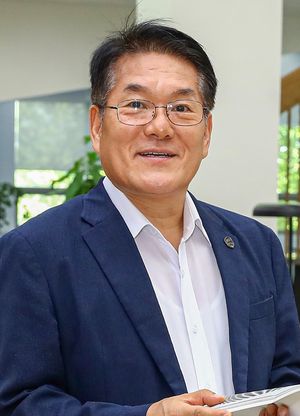
【Financial News, Incheon = Reporter Han Gab-soo】 A book about Incheon's local currency policy and its growth has topped an online bookstore's bestseller list. “THE 2,800,000 People—Incheon e-Eum, the World's First Electronic Local Currency Success Story,” written by Byun Ju-young, CEO of the Incheon Global Campus Operating Foundation, ranked No. 1 on Kyobo Book Centre's online daily bestseller list for domestic books in Politics and Society on the 7th. Byun also ranked first in the author rankings for the category that day.
The same category's rankings also included “What Happened to Liberal Democracy?” (18th), by Daron Acemoglu, a professor at the Massachusetts Institute of Technology and the 2024 Nobel Prize in Economic Sciences laureate; “Why Is Half the World Going Hungry?” (16th), by Jean Ziegler; “A Biography of Roh Moo-hyun” (17th); and Max Weber's “The Protestant Ethic and the Spirit of Capitalism” (21st).
Published on the 13th of last month, the book sold out its first edition in just 15 days, and the second printing is now on sale. It documents the background to Incheon e-Eum's introduction, its growth and its impact on the local economy. It presents the results of a policy designed to address the outflow of local spending and keep money circulating within local commercial districts, focusing on citizen participation.
In the book, Byun wrote that the number of Incheon e-Eum users, which stood at just a few thousand when the first cards were issued in 2018, surged after a cashback program was introduced the following year. New registrations reached 40,000 within a month, and cumulative registrations topped 600,000 three months later. Seoro e-Eum in Seo District, Incheon, also reached its one-year target of 46,000 users just 20 days after its launch.
Residents' voluntary participation played a major role in the currency's spread. Activities by resident honorary ambassadors, information sharing in local online communities and merchants' efforts to offer additional cashback benefits all helped expand its use.
In the preface, Byun emphasized, “Incheon e-Eum's greatest achievement is that it has taken root as an institution created and upheld by citizens together, going beyond the policy of any one leader.” He explained that the participation of Incheon's 2.8 million citizens was the key driving force behind the policy's success.
The second printing also introduced more environmentally conscious production methods. The book's interior pages use eco-friendly paper made with bagasse, the byproduct left after sugar is extracted from sugarcane, instead of conventional wood-pulp-based paper. The publisher said this paper can reduce carbon emissions by about 52% compared with regular copy paper, and that this is the first time it has been used for the interior pages of a book published in Korea. Byun plans to donate all royalties from the book to help disadvantaged neighbors.
[email protected] Han Gab-soo Reporter