Jeju, with a high euthanasia share, pairs 200 animal adoptions with efforts to foster the pet industry
- Input
- 2026-11-08 16:08:18
- Updated
- 2026-11-08 16:08:18

【Financial News, Jeju — Reporter Jeong Yong-bok】 In Jeju, where the share of abandoned animals euthanized has been found to be higher than in other regions, 200 animals have found new families since the Second Animal Protection Center opened.
According to Jeju Special Self-Governing Province on the 8th, 200 animals had been adopted from the Second Animal Protection Center, which opened in Eoeum-ri, Aewol-eup, Jeju City, last December, by the end of October this year. The public animal funeral facility “Eoreumbi Starry Sky Resting Place,” which began operating on July 10, provided funeral services for 677 companion animals by the end of that month.
The Second Animal Protection Center is responsible for sheltering, treating and arranging adoptions for lost and abandoned animals. It can accommodate up to 300 animals and was built to ease capacity pressures on the existing animal protection center and increase adoptions. Until now, Jeju had no animal funeral facilities, making it necessary for people to use facilities in other regions when their companion animals died.
Expanding adoptions is a key task in Jeju’s animal protection policy. This past February, the Ministry of Agriculture, Food and Rural Affairs said it had found that the share of animals euthanized at animal protection centers in Jeju was higher than in other cities and provinces. The government outlined plans to reduce euthanasia by expanding shelter facilities and supporting adoptions.
Protecting lost and abandoned animals remains an ongoing policy challenge nationwide as well. According to the Ministry of Agriculture, Food and Rural Affairs, about 96,000 lost and abandoned animals were rescued nationwide last year, down 10.4% from the previous year. Of the rescued animals, 25.6% were adopted. The 200 adoptions reported by Jeju’s Second Animal Protection Center are the cumulative total since it opened.
As more people raise companion animals, demand for related services and industries is also growing. The 2025 Pet Rearing Status Survey, released by the Ministry of Agriculture, Food and Rural Affairs in February this year, found that 29.2% of households nationwide had a companion animal. The average monthly cost of keeping a companion animal was 121,000 won per animal, including 37,000 won in veterinary expenses.
Jeju Province plans to respond to this demand by developing animal welfare infrastructure and pet-related industries in tandem.
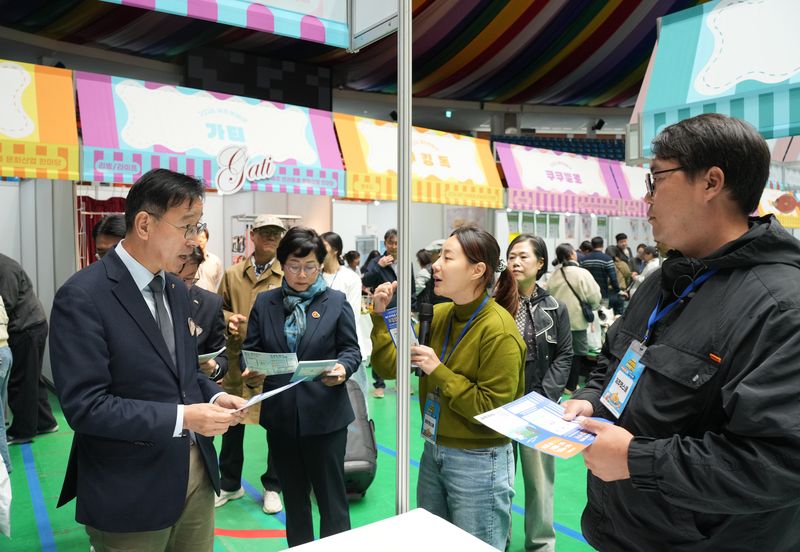
Animal protection policies and plans for industry development were also presented at the opening ceremony of the “2026 Jeju Companion Animal Culture and Industry Festival,” held on the 7th near Halla Gymnasium at Jeju Sports Complex in Jeju City.
Hosted by Jeju Province, the event ran from the 6th through the 8th, combining a companion animal culture festival with the industry expo “Jeju Pet Fair.”
About 50 pet-related companies from across the country, including Jeju, took part in Jeju Pet Fair and operated 65 booths. They introduced food, supplies, health care products and technology-based services, while Jeju-based companies also showcased related products.
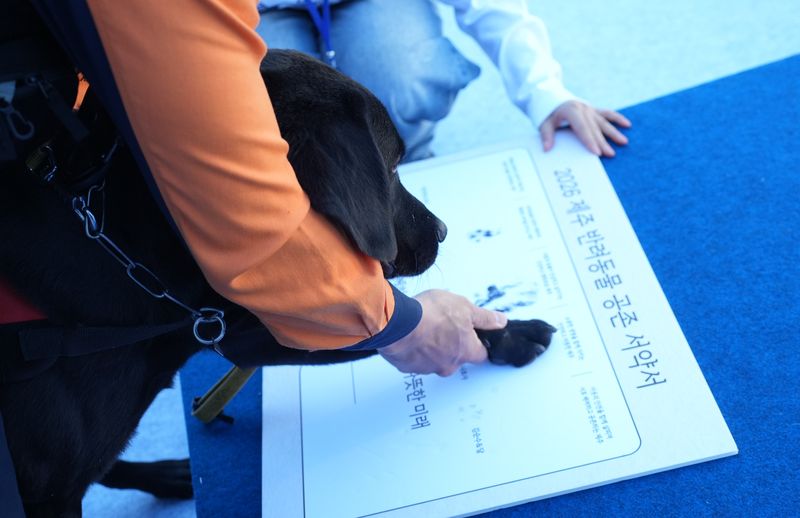
At the opening ceremony, five teams of people and companion dogs—including adopted dogs, tourism-promotion dogs, police dogs, fire service dogs and private patrol dogs—were given the title “Bark-assadors.” The name combines a dog’s bark with “honorary ambassador” and was created to highlight the social role of companion animals.
That day, Jeju Province Governor Wi Seong-gon emphasized a culture in which companion animals and their guardians live together, and outlined plans to promote tourism with dogs and develop related industries in the province.
“We will further advance animal protection and welfare policies by incorporating the voices of pet-owning families,” Governor Wi said. “We will promote tourism with companion animals and actively develop pet-related industries in the province, bringing new vitality to Jeju’s economy.”
The event featured hands-on activities related to pet grooming and behavior, guidance on animal registration and public etiquette, and free veterinary care provided by the College of Veterinary Medicine, Jeju National University. A special lecture by dog trainer Kang Hyung-wook was also included in the program on the final day, the 8th.
The challenge for Jeju Province’s companion animal policy is to translate the expansion of public facilities and industry development into tangible results. Since the policy pursues animal welfare and industry development together, the quality of public services and industrial outcomes still need to be assessed separately.
[email protected] Jeong Yong-bok Reporter