Even a sake maker with a 200-year history joins in as Japanese companies rush to make whisky
- Input
- 2026-11-08 16:32:38
- Updated
- 2026-11-08 16:32:38
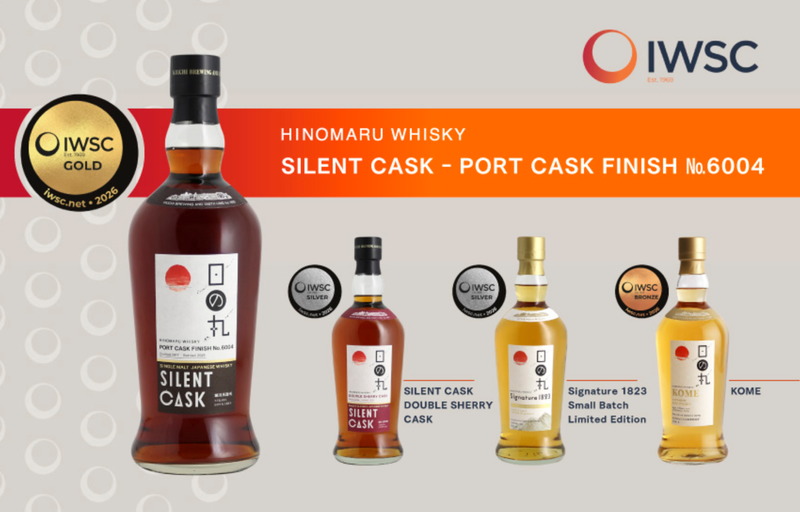
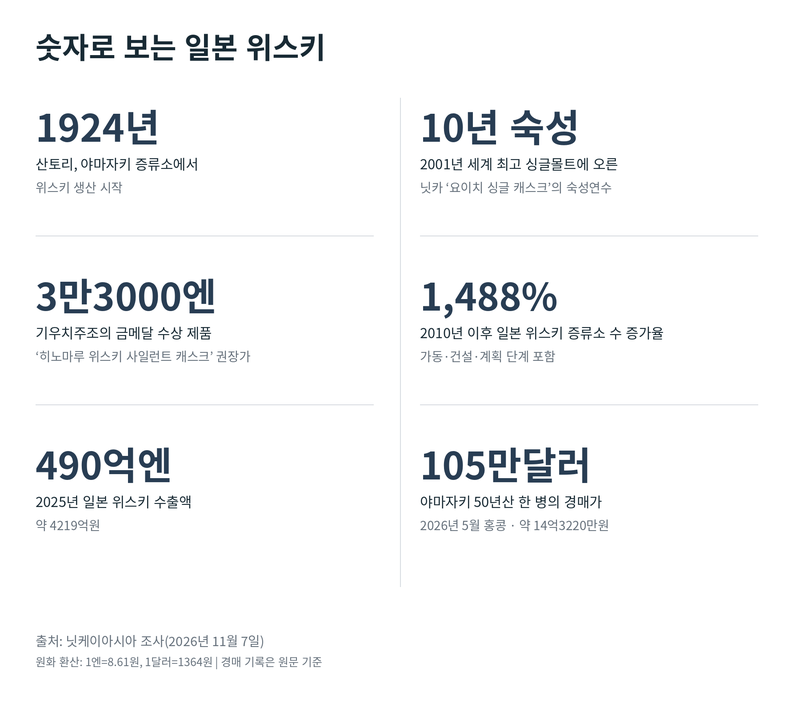
【Financial News Tokyo = Correspondent Seo Hye-jin】Kiuchi Shuzo, a Japanese company that has brewed sake for more than 200 years, has won a gold medal at an international competition for its whisky. It did so about 10 years after entering the whisky business. “Hinomaru Whisky Kome,” which won an award at last year’s London Spirits Competition, is a three-year-aged whisky recognized for the delicate aromas of rice and malt.
More Japanese breweries are trying their hand at whisky. They are seeking new markets by building on the growing popularity of Japanese whisky overseas. But some warn that companies need the financial resources to weather a downturn after the boom, given how long whisky takes to age.
Sake and shochu makers join as exports surge
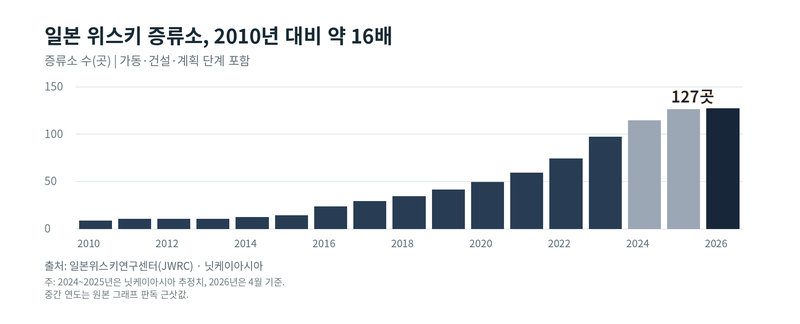
According to Nikkei Asia on the 8th, the Japan Whisky Research Centre (JWRC) counted a record 127 whisky distilleries in Japan as of April this year. The number has grown to 16 times its 2010 level, including facilities in operation and those in the development or planning stages. The 101 distilleries actually in operation put Japan close to Scotland, the world’s largest whisky exporter, which has about 160.
Many of the new entrants are companies that previously made other alcoholic drinks, including sake, shochu and beer. Takumi Suzuki, a senior analyst at Nomura Securities, said many companies likely decided to enter the market while reassessing their business strategies and looking for new opportunities during the COVID-19 pandemic.
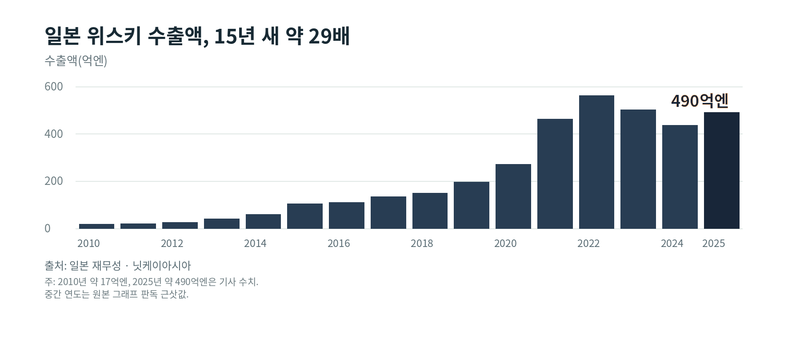
Overseas demand is drawing them in. According to Japan’s National Tax Agency, whisky exports totaled about ¥49 billion (about ₩421.9 billion) last year, up 12% from the previous year. That was about 29 times the ¥1.7 billion (about ₩14.6 billion) recorded in 2010.
Kiuchi Shuzo exports to about 20 countries, including South Korea, Thailand and the United States. It plans to increase annual whisky sales from about ¥400 million (about ₩3.4 billion) to about ¥1 billion (about ₩8.6 billion) over the next 10 years. Its point of differentiation is local ingredients. President Toshiyuki Kiuchi said the company sources about 55% of its ingredients from Ibaraki Prefecture and also uses grains not commonly found in whisky, such as rice and wheat.
A good drink over drinking more...investing in experiences
Despite strong exports, the overall market outlook is not entirely bright. Domestic demand is contracting as the population declines and younger people drink less.
Alcohol-market research firm IWSR forecasts that total Japanese whisky sales volumes will decline by an average of 1% a year from 2025 to 2035. Luke Tegner, IWSR’s head of consulting, said Japan accounts for 95% of all Japanese whisky consumption, and analyzed that overseas growth alone would be unlikely to offset declining domestic demand.
That is why companies are focusing on tastings, tourism and premium products. With sales volumes difficult to grow, they want consumers to understand what makes their products distinctive and pay more for them.
The potential has emerged in the traveler market. According to IWSR, last year Japanese whisky sales in the global travel retail market, including duty-free shops, rose 44% by value and 37% by volume. Interest in Japanese culture, travelers’ curiosity and demand for premium products drove the growth.
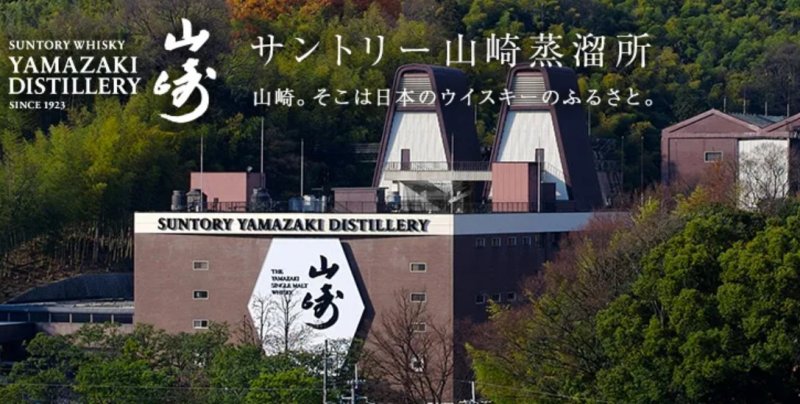
Kiuchi Shuzo runs its own restaurants and shops, where it offers opportunities to sample its whisky. It also plans to open a distillery in Ibaraki Prefecture next March aimed at tourists. Suntory is focused on creating more opportunities overseas for people to experience high-end brands such as Yamazaki and Hibiki firsthand.
Nikka Whisky also serves nonalcoholic and low-alcohol drinks at its flagship store in Aoyama, Tokyo, to attract younger customers who drink less. “More people in their 20s are spending money on a good drink and a memorable experience rather than drinking a lot,” said Eiichi Sakamoto, head of marketing at Nikka.
Will it still be popular when it finishes aging?...Financial resources are key
Time is the bigger test for new entrants. Even if they produce whisky in response to current demand, the market may have changed by the time it finishes aging. They also need the money to hold onto the spirit and maintain inventory until it can be sold.
Kiuchi said the popularity of sake, wine and other drinks rises and falls in cycles of 10 to 15 years. Without another source of income, he explained, a company needs enough capital to maintain inventory for years in order to stay in business.
He predicted that the industry could be reshaped over the long term, with only 30 to 60 of the roughly 120 distilleries currently remaining. His point was that weathering the aging period and market fluctuations is harder than opening a distillery.
“Whisky may take 15 years to age,” Kiuchi said. “To succeed in this business, you have to look 25 to 30 years ahead.”
[email protected] Seo Hye-jin Reporter