26 gardens in downtown Seogwipo... Maintenance after the expo is key
- Input
- 2026-11-08 15:39:57
- Updated
- 2026-11-08 15:39:57
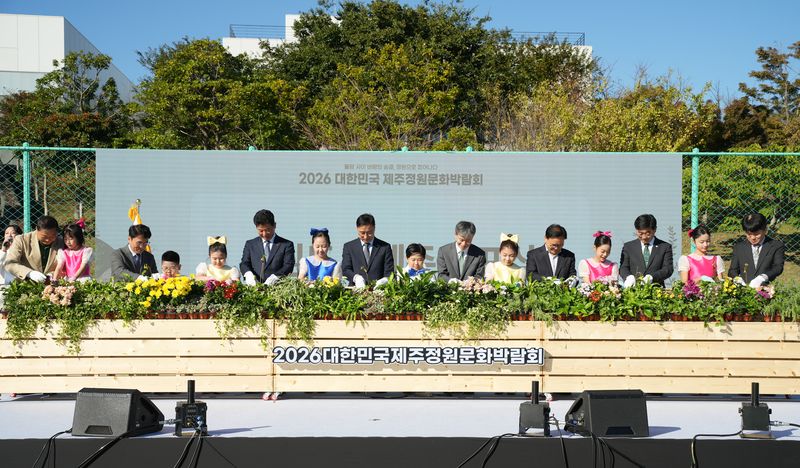
【Financial News, Jeju = Reporter Jeong Yong-bok】 Twenty-six gardens involving artists, residents and businesses have been created at Barammoru Park in Jeju Innovation City, Seogwipo. With plans to keep the major gardens after Jeju’s first garden culture expo and use them as everyday spaces for residents, developing ways to maintain them over the long term has emerged as a challenge.
According to Jeju Special Self-Governing Province on the 8th, the opening ceremony of the 2026 Korea Jeju Garden Culture Expo was held the previous day at Barammoru Park in Seoho-dong, Seogwipo. The expo began on the 6th and runs through the 10th under the theme “The Breath of Wind Between Stone Walls, Blooming into Gardens.”
The event, co-hosted by the Korea Forest Service, Jeju Province and Seogwipo City and co-organized by Jeju Province and Seogwipo City, was designed to express Jeju’s distinctive natural environment and way of life through gardens and to expand public participation in urban green spaces. The 26 gardens created for the expo fall into eight categories, including artist gardens, resident-participation gardens and corporate gardens.
The Korea Garden Show, featuring garden artists from across the country, showcased five works selected from 59 submissions. The works interpret Jeju’s natural environment through garden designs and construction by professional artists.
Ten gardens created directly by residents were also set up. They reflect Jeju’s distinctive community culture and local ways of life, including the lives of haenyeo, stone walls and courtyards. Three organizations and businesses—Innisfree Moeum Foundation, IGIS Asset Management and Snoopy Garden—also took part in creating gardens.
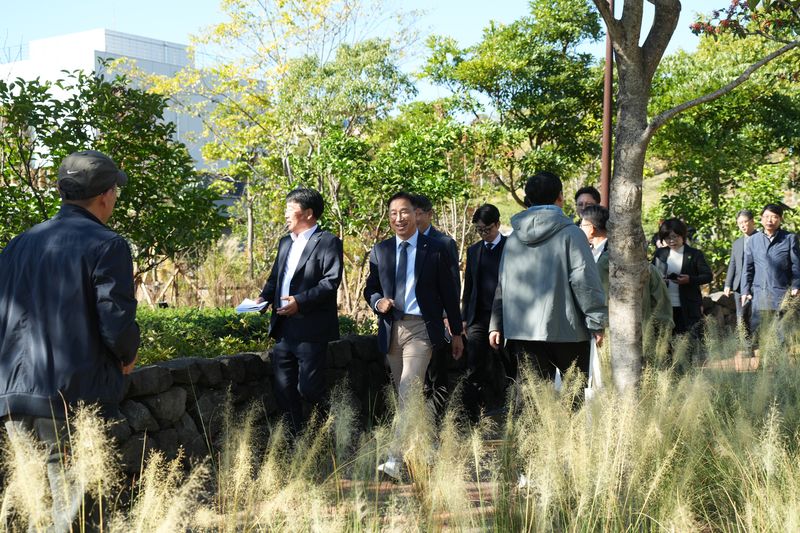
An exchange garden by the Seoul Metropolitan Government and carbon-reduction and upcycling gardens by the Korea National Arboretum were also featured. The carbon-reduction garden demonstrates ways to reduce carbon emissions during garden creation and maintenance, while the upcycling garden shows how discarded materials can be put to new uses.
The expo also features the “Sunureum Garden,” reflecting Jeju’s traditional culture of mutual aid, and the “Earth Gardeners’ Courtyard,” created with the participation of local gardening groups. Sunureum is Jeju’s distinctive community spirit of neighbors helping one another by sharing labor.
Programs also give visitors the chance to tend gardens themselves. They can learn how to create and maintain gardens by planting companion plants, taking garden-maintenance classes, and making planters and small garden beds.
The garden-guided tour program takes applications for 20 people per session at the main information center. A garden bookshop, concerts, film screenings and talks, a garden industry exhibition and a garden market are also being held.
The policy Jeju Province is emphasizing at this expo is how the gardens will be used after the event. The plan is to maintain the major gardens created at Barammoru Park and connect them with existing urban forests, parks and private gardens so residents can enjoy them in their daily lives.
Garden policy in South Korea also treats ongoing maintenance after creation and public use as important challenges. The current Act on the Creation and Furtherance of Arboretums and Gardens defines a garden as a space subject to ongoing maintenance and classifies gardens as national, local, private or community gardens, among other types.
“Jeju, a Garden City,” proposed by Jeju Province, is a policy direction aimed at expanding and connecting the region’s green spaces. It is distinct from designation as a national garden under the law.
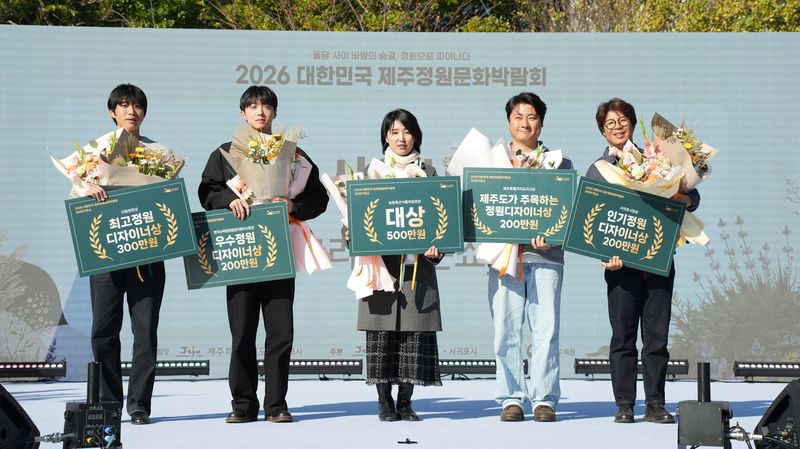
Awards were also presented at the opening ceremony on the 7th for five outstanding works in the Korea Garden Show and three outstanding resident-participation gardens.
Jeju Governor Wi Seong-gon said, “We will increase the number of gardens throughout villages and urban areas so residents can enjoy them more in their daily lives,” announcing a policy to create a garden city by connecting urban forests, parks and private gardens.
Ahn Byeong-gi, head of the Korea National Arboretum under the Korea Forest Service, also encouraged expo visitors to return to the gardens next spring and see how the scenery changes with the seasons.
[email protected] Jeong Yong-bok Reporter