Jeju April 3 Incident Records Head to Tokyo; Filing and Compensation Consultations for Bereaved Families in Japan, Too
- Input
- 2026-11-08 15:29:44
- Updated
- 2026-11-08 15:29:44
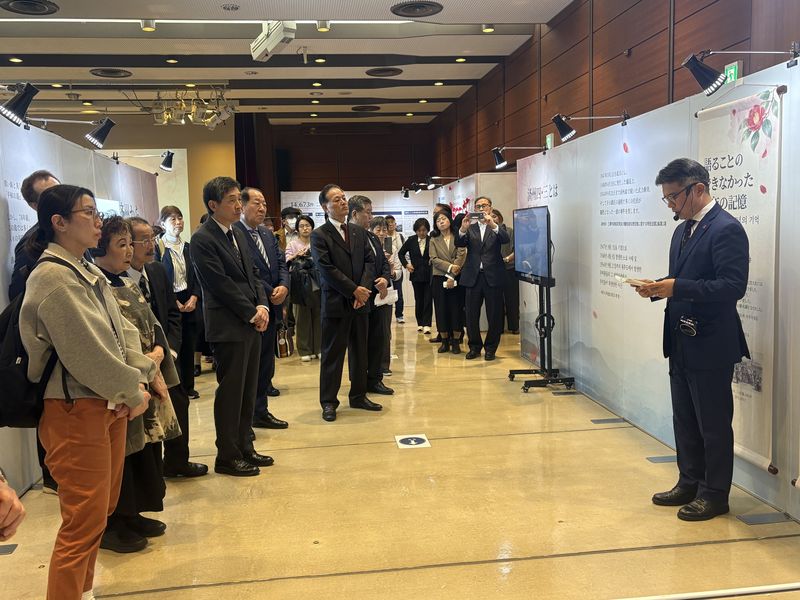
【Financial News, Jeju = Jeong Yong-bok, reporter】 A consultation desk at an international special exhibition introducing records of the Jeju April 3 Incident to Japanese society is providing information on additional reporting and compensation procedures for victims from the Korean community in Japan and their bereaved families. The exhibition shares historical memories of the incident, which was inscribed on UNESCO’s Memory of the World Register last year, while also helping victims living overseas seek the restoration of their rights.
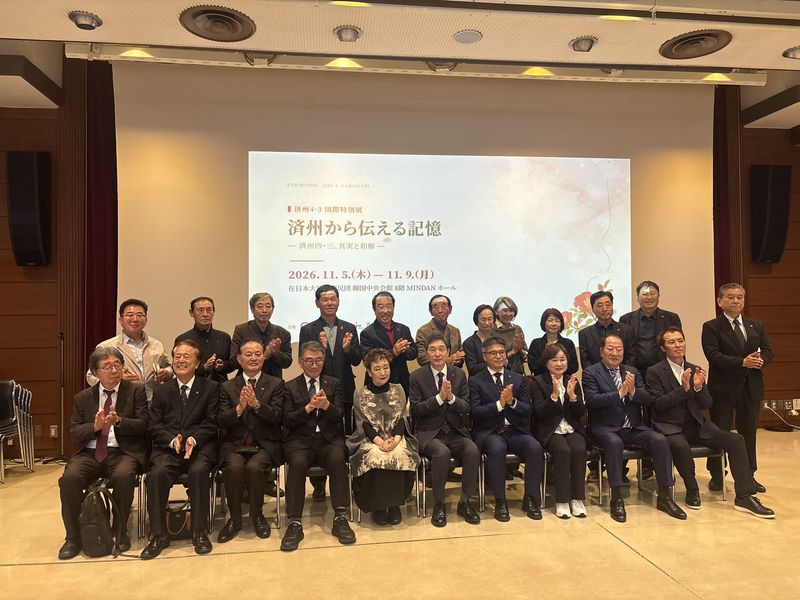
According to Jeju Special Self-Governing Province on the 8th, the opening ceremony for the international special exhibition “Memories from Jeju: Jeju April 3 Incident, Truth and Reconciliation” was held the previous day at Mindan Hall in the Korean Central Hall of the Korean Residents Union in Japan in Tokyo. The exhibition opened on the 5th and runs through the 9th.
About 100 people attended the opening ceremony, including local officials and Koreans in Japan: Lee Hyuk, South Korea’s ambassador to Japan; Oh Young-seok, head of Mindan’s Tokyo headquarters; Jeong Mun-gil, secretary-general of Mindan’s central headquarters; Song Young-min and Kim Seong-jong, vice presidents of the Association of Jeju Residents in Japan’s Kanto Region; and Jo Dong-hyeon, head of the Tokyo chapter of the Jeju April 3 Incident Awareness Group.
From Jeju, Yang Seong-ju, senior vice president of the Association for the Bereaved Families of the April 3 Victims, and Yang Seong-hong, vice chair of the Jeju April 3 Incident Working Committee, also attended.
Tokyo is a historic place where Koreans in Japan have worked to reveal the truth about the Jeju April 3 Incident and commemorate its victims. Commemorative activities have continued there since 1988, and testimony and records preserved in Japan have helped safeguard memories of the incident that Korean society was unable to properly address for a long time.
The exhibition presents the outbreak of the Jeju April 3 Incident, efforts to establish the truth, and the process of restoring the honor of its victims through photographs, video and documents. In particular, it highlights commemorative activities in Japan and records from the Korean community there, inviting visitors to view the history of the incident as an experience shared by communities on both sides of a national border.
Records related to the Jeju April 3 Incident were inscribed on UNESCO’s Memory of the World Register last April under the title “Revealing the Truth: Jeju April 3 Archives.” They comprise 14,673 items, including testimony from victims and bereaved families, records related to prisoners, civil society’s efforts to establish the truth, and the government’s official investigation report.
UNESCO recognized the global significance of records that have helped revive memories suppressed by state violence and advance the restoration of victims’ honor and social reconciliation.
The exhibition also features a virtual reality (VR) program that lets visitors experience historical sites from the time of the Jeju April 3 Incident. Another interactive display uses “Baekbi,” the unnamed stele at Jeju 4·3 Peace Park, to project onto a model of the stele the meaning of April 3 as entered by visitors themselves.
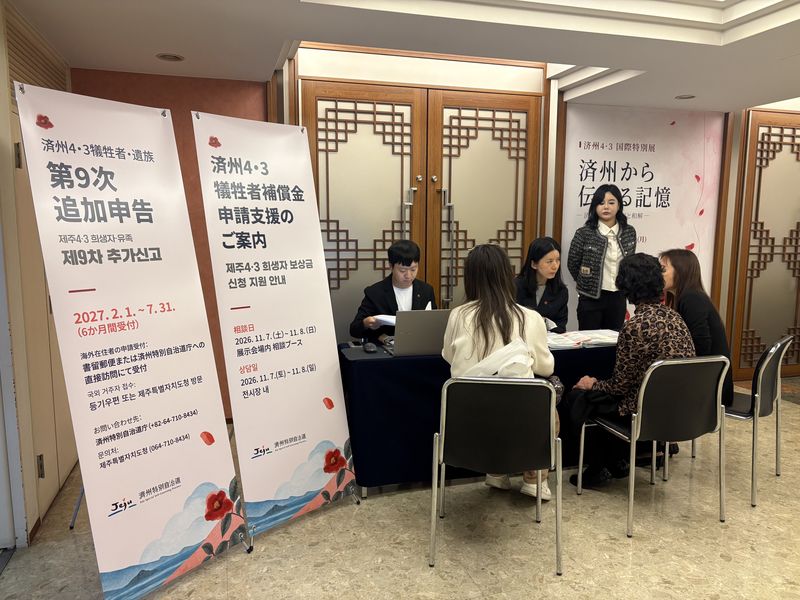
The special exhibition also offers administrative consultations to help victims and bereaved families living in Japan restore their rights. In particular, it provides guidance on the ninth round of additional reporting for victims and bereaved families of the Jeju April 3 Incident, which will run from February 1 to July 31, 2027. The process is resuming four years after the eighth round of reporting in 2023.
The government established a new reporting period through an amendment to the Enforcement Decree of the Jeju 4.3 Special Law, which took effect on September 1. The deadline for victims to apply for compensation was also extended by three years, from the end of 2026 to December 31, 2029.
Deadlines for applications related to the creation or correction of family relation registers and the registration of marriages and adoptions were also extended, until August 31, 2028. This has created an additional opportunity for victims and bereaved families living overseas, who have had difficulty accessing domestic administrative information, to seek redress.
The consultation desk at the exhibition provides information on relevant programs and how to apply. Recognition as a victim or bereaved family member, and the payment of compensation, are decided through separate application and review procedures.
Japanese singer Tokiko Kato, who attended last year’s 77th Jeju April 3 Victims Remembrance Ceremony, also took part in the opening ceremony. She shared her memories with attendees by presenting a poem reflecting on her visit to sites related to the Jeju April 3 Incident.
Jeju Governor Wi Seong-gon said in a video message, “Even in times when we could not speak of the pain of April 3, the memory of the Jeju April 3 Incident that we preserved together with Koreans in Japan remained in the historical record and became part of the Memory of the World Register.” He added, “Jeju Province will stand with you so that those memories can become a force for protecting peace and human rights for future generations.”
South Korea’s ambassador to Japan, Lee Hyuk, also emphasized the significance of the exhibition in bringing the historical records of the Jeju April 3 Incident and the values of peace and human rights to the Korean community in Japan and the international community.
Byeon Yeong-geun, head of Jeju Province’s Special Self-Governing Administrative Bureau, said, “We will continue providing administrative support to ensure that victims and bereaved families living overseas are not left out of the additional reporting and compensation processes.”
The Tokyo special exhibition is significant because it combines efforts to promote the Jeju April 3 Incident records internationally with efforts to help bereaved families overseas restore their rights. Beyond sharing historical memories, work remains to help victims and bereaved families who have not yet been able to file reports gain access to official recognition and compensation from the state.
[email protected] Jeong Yong-bok Reporter