Could China Be Overtaking Us Even in LNG Carriers We Thought We Had the Edge In?
- Input
- 2026-11-08 14:33:28
- Updated
- 2026-11-08 14:33:28
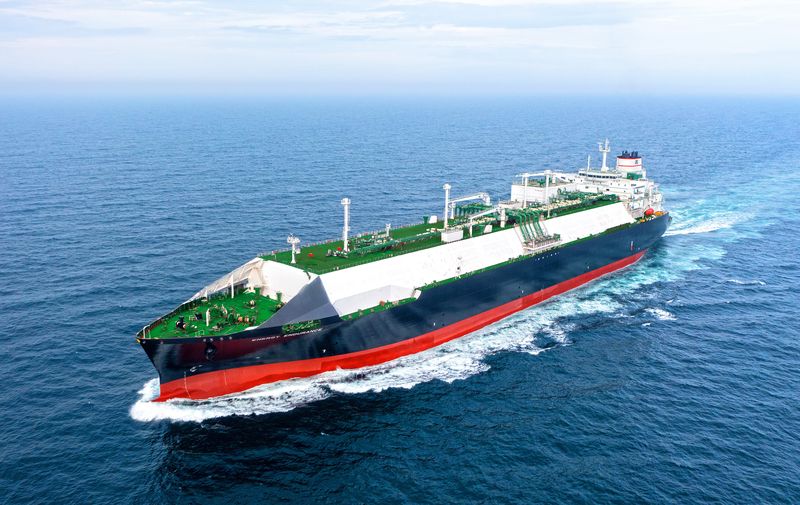
[Financial News] China is rapidly catching up in the LNG carrier market, a key high-value vessel segment for South Korea’s shipbuilding industry. Chinese shipbuilders have secured at least 40% of global orders for new large LNG carriers so far this year. China even moved ahead last month.
On the 8th, according to Clarksons Research, a British shipping and shipbuilding market analysis firm, global orders for large LNG carriers totaled 76 vessels from January to October this year, more than four times last year’s 17. South Korean shipbuilders won orders for 44 vessels, giving them a 57.9% market share, while China accounted for 32 vessels, or 42.1%.
China won just three orders for the entire year last year. Its order volume has surged more than tenfold this year. Last month, China won more orders than South Korea did. Of the seven vessels ordered, China accounted for five, while South Korea won just two.
Hudong-Zhonghua Shipbuilding and Jiangnan Shipyard have driven China’s remarkable order haul. They have expanded beyond their domestic market to target overseas shipowners. For example, on the 16th of last month, Hudong-Zhonghua signed a contract with Malaysian shipping company MISC to build five 174,000-cubic-meter LNG carriers. Including the five vessels contracted in January and February this year, MISC has ordered a total of 10 vessels from the shipbuilder. According to Shanghai municipal government data, following the MISC contract, Hudong-Zhonghua’s LNG carrier order backlog reached 57 vessels, with construction slots secured through 2030 and beyond.
LNG carriers have traditionally required considerable technological expertise, allowing South Korea’s shipbuilding industry to maintain its edge for many years. That is because the safety of the cargo tanks holding LNG at around minus 163 degrees Celsius and the vessels’ operational reliability are crucial.
As China began importing LNG on a large scale, its shipyards and Japanese shipping companies worked together to build up technical expertise. Building on that, Hudong-Zhonghua began operating a new shipyard specializing in LNG carriers on Changxing Island last year.
HD KSOE, a leading player in South Korea’s shipbuilding industry, recently named Hudong-Zhonghua and Jiangnan Shipyard as competitors in the LNG carrier market during an earnings conference call.
With LNG supply facilities being expanded around the world, the LNG carrier market is expected to continue growing. According to the International Energy Agency (IEA), new LNG export capacity scheduled to come online between 2025 and 2030 will total about 345 billion cubic meters a year, based on projects that had reached a final investment decision (FID) and were under construction by early 2025.
There are calls for South Korea’s shipbuilding industry to differentiate itself if it is to seize the opportunity presented by the expanding LNG carrier market. The recommendation is to maintain a competitive edge through technological reliability while diversifying vessel types and making active use of overseas shipyards.
[email protected] Kim Yun-ho Reporter