Jeju to invest 54 billion won in fruit-facility upgrades, 26.4 billion less than the previous year's plan
- Input
- 2026-11-08 14:20:29
- Updated
- 2026-11-08 14:20:29
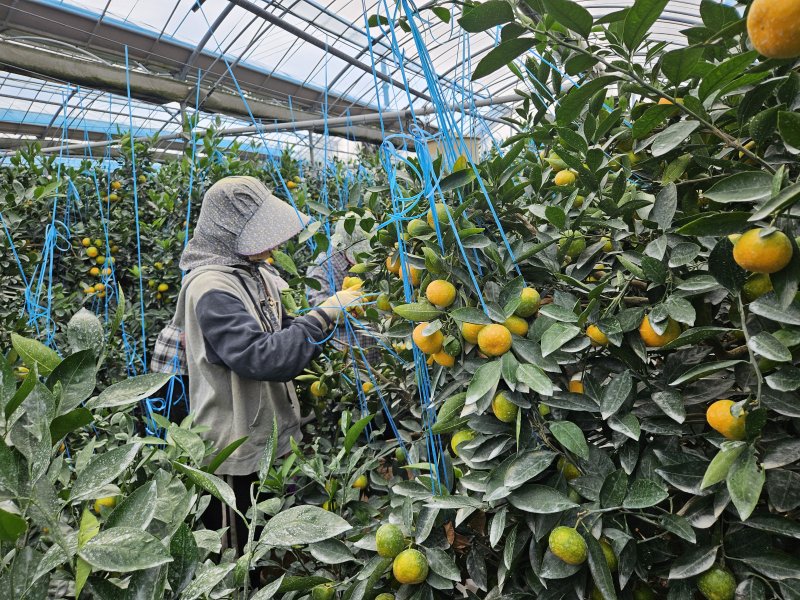
【Financial News, Jeju = Jeong Yong-bok】 Jeju plans to invest 54 billion won in its fruit-production facility modernization program next year. That is 26.4 billion won (32.8%) less than the planned 80.4 billion won announced when applications opened for this year's program, but eligibility for farmers will be eased and the support area for rain-shelter greenhouses will be expanded by 65%.
According to Jeju Special Self-Governing Province on the 8th, applications for the “2027 Free Trade Agreement (FTA) Fund Program to Modernize High-Quality Fruit Production Facilities” will be accepted from the 9th through the 23rd, in partnership with the Jeju NongHyup Joint Business Corporation and the Citrus Agricultural Cooperative.
The total project budget is 54 billion won: 10.8 billion won in national funding, 17.5 billion won in provincial funding, 15.6 billion won in interest-rate support, and 10.1 billion won in farmers' contributions. Jeju will receive 45% of the Ministry of Agriculture, Food and Rural Affairs' 24 billion won budget for the program next year. Interest-rate support is a form of financial assistance that covers part of the interest burden when farmers borrow policy loans.
The amount planned for this year's program when applications opened, announced by Jeju Province last October, was 80.4 billion won. Next year's planned amount is 26.4 billion won less. National funding will fall from 16.1 billion won to 10.8 billion won, and provincial funding from 26.4 billion won to 17.5 billion won.
Three support criteria will change. First, entry-level smart farms will be added as a new eligible item. The program helps farmers integrate information and communications technology, such as automated controls, into existing facilities to manage farm work more efficiently.
The threshold for total income excluding agricultural income will also be raised from 37 million won or less to 47 million won or less. Eligibility will be determined based on total income from employment, business and other sources earned separately from agricultural income.
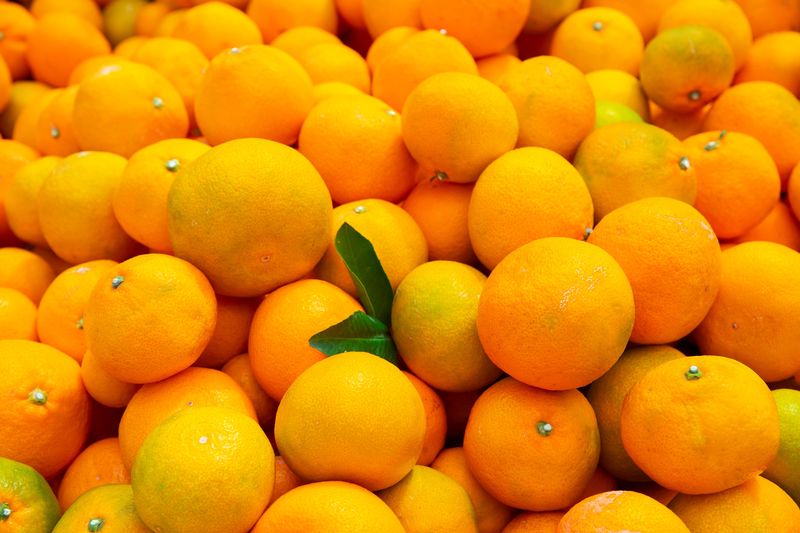
The support area for rain-shelter greenhouses will increase by 1,300 m2, from 2,000 m2 to 3,300 m2 per agricultural business entity. A rain-shelter greenhouse is a growing facility with a roof that keeps rain from falling directly on tangerine trees and helps manage growing conditions such as rainfall and humidity.
The number of support categories will increase from 15 when applications were accepted this year to 16 next year. They include rain-shelter greenhouses for tangerines, rainwater-use facilities, orchard renovation, automatic opening and closing devices, irrigation and fertigation facilities, unmanned pest-control facilities, thermal curtains, heaters for disaster prevention, and repairs and renovations to aging greenhouses. Orchard renovation improves the production base by changing the varieties in old orchards or transplanting trees.
The FTA Fund facility modernization program supports efforts to strengthen the production competitiveness of Korea's fruit industry in response to the opening of agricultural markets under free trade agreements. In Jeju, it is used to upgrade production infrastructure in response to aging tangerine-growing facilities and damage from fruit cracking and high temperatures caused by abnormal weather.
Eligible applicants are farmers who ship their produce through local agricultural or citrus cooperatives. This system involves farmers shipping their produce through joint distribution organizations such as NongHyup. Orchards are ineligible, among other cases, if the applicant's total income excluding agricultural income exceeds 47 million won or if the citrus orchard was newly established after January 1, 2022.
Farmers wishing to apply can obtain an agricultural business registration certificate and a performance certificate, among other documents, from a town or township office or a neighborhood community service center and submit them to their local agricultural or citrus cooperative. After applications close, Jeju Province plans to rank applicant farms by priority and finalize the recipients next January following review by the FTA Fund Project Implementation Council.
Kim Youngjun, head of Jeju Province's Agriculture, Livestock and Food Bureau, said, “We will expand the scope of support through improvements to the program that reflect feedback from the field, including the introduction of entry-level smart farms and an expansion of the support area for rain-shelter greenhouses.”
[email protected] Jeong Yong-bok Reporter