With KOSPI’s 5,000 mark under threat, companies that announced share buybacks hold up well
- Input
- 2026-11-08 15:06:25
- Updated
- 2026-11-08 15:06:25
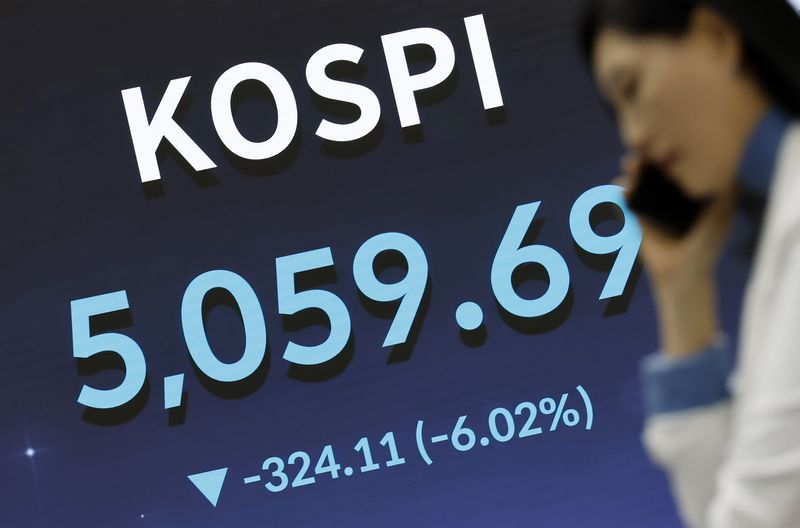
[Financial News] Share buybacks and cancellations are proving to be a support in the sharp market downturn. Companies including Krafton and Kakao, which announced shareholder-return measures, held on to their gains despite the shock of the “Blue Tsunami” (a Democratic Party landslide in the U.S. midterm elections). Stronger supply-demand dynamics from share buybacks and hopes that cancellations will enhance shareholder value appear to have supported investor sentiment.
According to the Korea Exchange on the 8th, Krafton closed at 220,500 won on the main board on the 6th. That was 21.22% above its closing price on the 3rd, when it decided on a 300 billion won share buyback and the cancellation of all shares acquired. The stock surged 16.55% on the 4th and rose another 4.25% on the 5th; even on the 6th, when the KOSPI plunged more than 6%, it fell just 0.23%. In other words, it maintained its post-surge price level despite selling pressure in the market.
Including Krafton’s latest acquisition of treasury shares, its shareholder returns this year have reached 917.2 billion won. This is the largest annual total since the company began returning value to shareholders in 2023. In February, Krafton announced its shareholder-return plan for 2026–2028, saying it would return at least 1 trillion won to shareholders over three years.
Kakao jumped 10.65% on the 5th after announcing a 150 billion won share buyback and cancellation. It rose another 0.31% on the 6th to close at 32,300 won. That was an 11.00% gain from the 4th, the day before the announcement.
Having held on to its gains, Kakao also brought forward the timeline for its next shareholder return. The buyback and cancellation will be carried out before the spin-off, accounting for half of the 300 billion won in shareholder returns that Kakao X plans to pursue over three years after the spin-off. The remaining 150 billion won is slated to be returned next year. Jung Hae-chang, a researcher at Daishin Securities, said, “This measure demonstrates the company’s commitment to shareholder returns while increasing confidence in execution.” He added, “If consumer benefits and contributions to platform revenue are confirmed following the large-scale expansion of AI services, a reassessment of earnings forecasts and valuation could make it possible to raise the target price.”
A range of other companies are also announcing shareholder-return measures. Hyundai Green Food rose 8.52% on the 3rd, the day it announced a 5.25 billion won share buyback and cancellation. Trading volume increased to about 6.7 times the previous day’s level. Its closing price on the 6th was 20,250 won, 5.14% above the price on the 2nd, just before the announcement.
Samsung E&A surged 16.14% on the 22nd of last month, the day it announced plans to acquire 780 billion won worth of treasury shares and cancel 690 billion won worth of them. At the time, Cho Jeong-hyeon, a researcher at IBK Securities, cited strong earnings, upgraded guidance, and the share buyback and cancellation, and raised the target price from 68,000 won to 72,000 won. The stock fell 5.91% to 60,500 won on the 6th, but remained 26.83% above its closing price on the trading day before the announcement.
KT&G also held up well in the sharp market downturn by expanding its shareholder returns. Along with its earnings announcement on the 5th, it unveiled a shareholder-return plan worth a total of 5 trillion won for 2027–2030. Of that amount, 1.2 trillion won is earmarked for share buybacks and cancellations, and the stock fell just 1.80% on the 6th. Kwon Woo-jeong, a researcher at Kyobo Securities, said, “As defensive stocks become more attractive amid heightened uncertainty in the stock market, the company’s globally competitive shareholder-return plan is expected to support a steady share-price performance.”
[email protected] Joo Won-gyu Reporter