Jeju’s dedicated school liaisons, eight months into operation, face a test of their effectiveness in handling complaints and protecting teachers’ rights
- Input
- 2026-11-08 11:51:33
- Updated
- 2026-11-08 11:51:33
【Financial News, Jeju = Jeong Yong-bok】 The Jejudo Office of Education is strengthening the on-site support function of its dedicated liaison system for each school, introduced in March. With 63 cases of infringement on educational activities recorded in the province last year, up from the previous year, whether school complaints and requests to protect educational activities lead to actual resolutions is key to the system’s success.
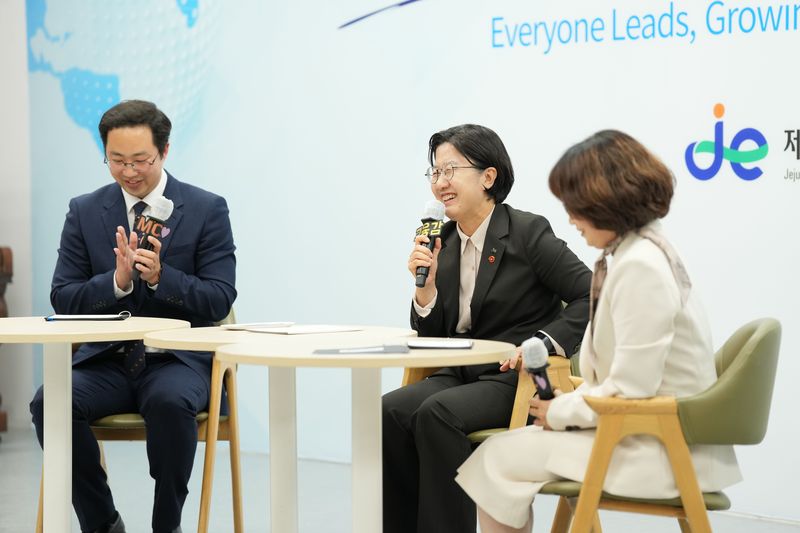
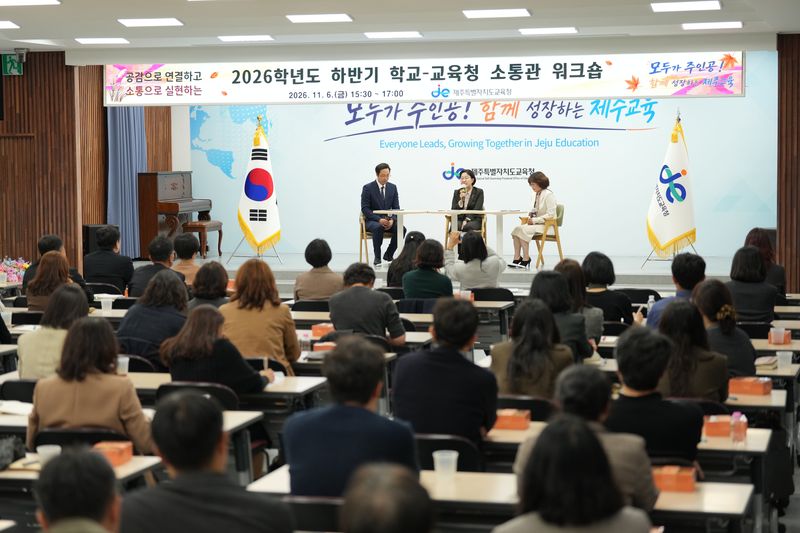
On the 8th, the Jeju Special Self-Governing Provincial Office of Education said the “2026 Second-Half School–Office of Education Liaison Workshop” was held on the afternoon of the 6th in the main conference room of the provincial office, for education professionals from its headquarters and district offices of education. Superintendent Ko Ui-suk also attended and discussed support for schools and ways to improve educational administration.
The School–Office of Education Liaison System began operating on March 24 this year. It expands the role of existing school support supervisors by assigning education professionals from the headquarters and district offices of education to serve as dedicated liaisons for individual schools.
The liaisons serve as the first point of contact, conveying school issues and complaints to the education office and discussing solutions with the relevant departments. The system is designed to explain education policies to schools while gathering requests for improvements from the field and helping incorporate them into policy.
Under the operating plan, liaisons visit their assigned schools at least once each semester and regularly gather feedback by phone, message and other means. They are to forward requests to the relevant departments and then report the review results and support measures back to the schools.
Protecting educational activities and supporting school administrative work are also areas of coordination. Liaisons relay schools’ requests related to protecting teachers’ rights to the relevant departments. The system is designed to support guidance on procedures and preventive efforts for school administrative tasks such as contracts, construction and field trips, in cooperation with integrity support officers made up of administrative officers from the education office.
The need for support in schools is also evident in figures on infringements on educational activities in Jeju Province. According to the Jejudo Office of Education, 63 cases were recognized in the province last year, five more than the 58 in 2024. Including the 70 cases in 2023, the total over the past three years reached 191.
Last year’s types of infringement included 17 cases of insult or defamation, 11 of acts causing sexual humiliation or disgust, 10 of deliberate obstruction of legitimate student guidance, and eight of injury or assault, among others.
In particular, in connection with the death of a teacher at a middle school in Jeju City in May last year, the regional Teachers’ Rights Protection Committee recognized repeated complaints by a student’s guardian as infringement on educational activities in October of that year. This was part of the context behind calls for a more coordinated response to school complaints and stronger systems to protect teachers.
However, the School–Office of Education Liaison System is not a body that directly deliberates on whether an infringement on educational activities has occurred or makes legal determinations. Its role is distinct from existing procedures for protecting educational activities, as it is an administrative support system that conveys school issues and requests for assistance to the relevant departments and coordinates the response.
The workshop on the 6th was organized to share plans for on-site support in the second half of the year following the launch of the liaison system. It included briefings on key education policies, the sharing of school support cases, a special lecture by the superintendent and a talk concert.
Superintendent Ko discussed with education professionals how to incorporate views from schools into education policy and the role of field-oriented administration.
Superintendent Ko Ui-suk emphasized the role of liaisons in connecting schools and the education office, saying, “When schools and the education office trust and communicate with each other, education policies that support students’ growth can bring about tangible change in schools.”
[email protected] Jeong Yong-bok Reporter